
Last Updated on December 16, 2025 by Ketki Gadre
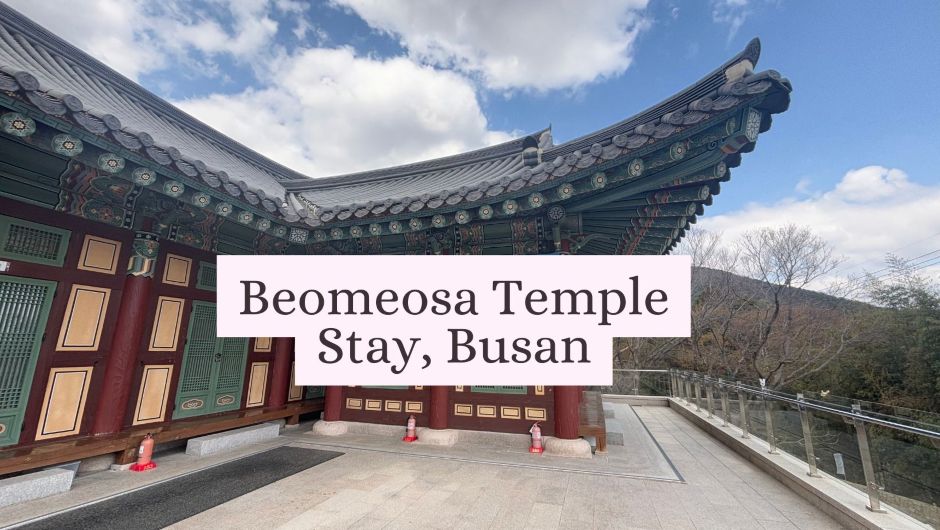
Want to experience authentic Korean Buddhist culture in South Korea? If so, doing a Beomeosa temple stay in Busan is an unforgettable experience you must add to your itinerary.
On my recent trip to South Korea to chase the Korea Cherry Blossoms, I enrolled in an offbeat experience! While I only spent one day in Busan, I spent 2 days in a Korean Buddhist temple located in a far corner of the Busan mountains.
I was intrigued by temples in Korea, and a temple stay seemed to check all the right boxes for me to choose.
Although I have stayed at temple guesthouses, also known as a dharamshala in India, I wanted to know how temple stays in Korea work. And in many ways, it was similar – participating in rituals, volunteering in temple work, eating vegetarian/vegan temple food.
Read on for my honest review of my Busan temple stay experience and tell you everything you need to know if you’re thinking about signing up for the program.
| Planning a trip to Busan? Here are a few quick recommendations for you! I suggest booking these services and activities in advance! 🚅 Getting There: – Get your Korail pass (Great option if you plan to travel all over Korea) or Individual train tickets (Ideal if you’ll only be transiting between Seoul & Busan) – Affordable and Sustainable airport transfers: Gimhae Airport to Busan by Private car 👣 Activities & Tours: – Skip the line and travel effortlessly in Busan with the Visit Busan Pass |
Table of Contents
SOUTH KOREA TEMPLE STAY
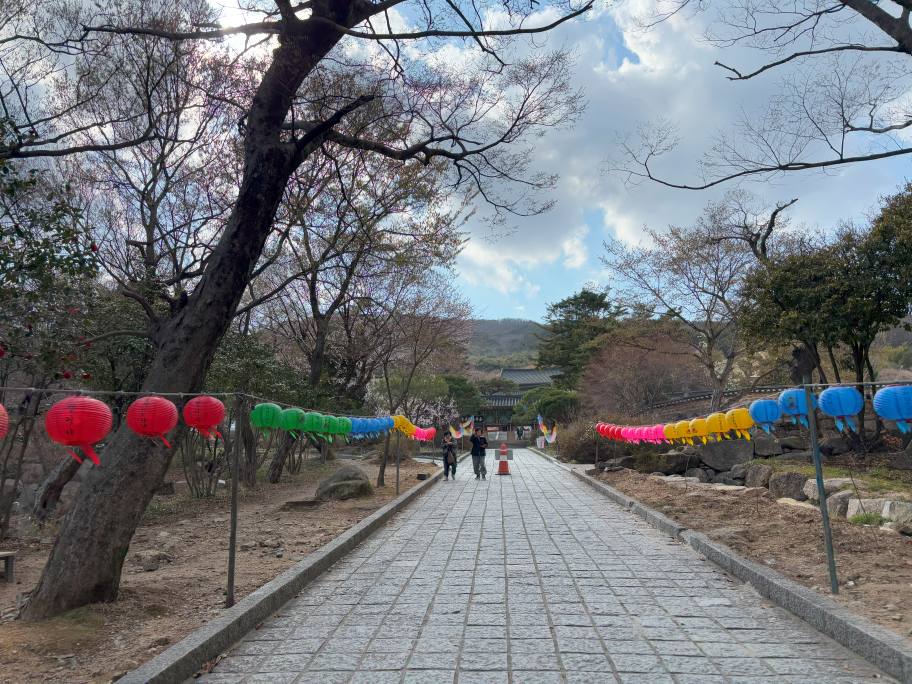
South Korea has an amazing nationwide temple stay program, with over 100 temples across the country opening their doors to curious travellers. Transcending the notion of simple ‘temple experience’, they instead propose a much-needed form of rest, recovery and recalibration of relationships.
Naksansa in Gangwon-do province is situated near Surfyy Beach, a popular surfing destination. Here, patrons can combine surfing and spiritual practice.
Yukjijangsa Temple in Gyeongg-do province focuses on cleansing of the body. The temple stay centers around fasting, consuming apple-carrot juice, and moxibustion with mugwort. There are also 108 prostrations and walking meditation on the mountain trail. This regimen is designed to promote mental clarity.
Bulguksa Temple in Gyeongju offers a chance to train body and mind through venerable discipline. Patrons are supposed to plunge into the sea, which supposedly awakens the mind and body together.
In Mireuksa temple in Jeungpyeong, visitors can enrol in ‘Daengpeulstay’, where visitors can stay with their pets. Pet owners and their furry companions change into temple attire and walk the temple grounds together.
While all of these sounded tempting, I promised myself to try these adventurous temple stays later and enrolled in a traditional one at Beomeosa temple stay. Since it is near Busan and I had one day in Busan, I popped over to Beomeosa and spent 1N and 2 days there.
About 30 temples offer English-friendly programs, which can be pre-booked on the official Templestay website or by visiting the Templestay Information Center across from Jogyesa in Seoul.
BEOMEOSA TEMPLE STAY
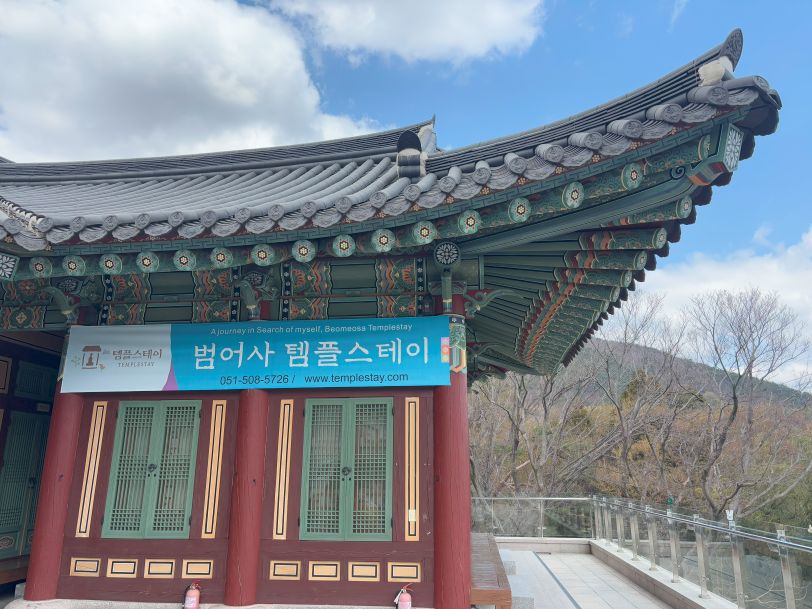
Beomeosa is Busan’s most renowned Buddhist temple and the only one in the city that offers a temple stay experience. Although it lies within Busan’s city limits, its location high on the slopes of Mount Geumjeong (Geumjeongsan) gives it a peaceful, secluded feel, surrounded by nature and stunning views.
The temple offers two types of stays:
Relaxation Templestay (70,000 KRW / approx. 50 USD per adult): A flexible, rest-focused program designed for those seeking quiet time and personal reflection. This program is available on weekdays.
Experiential Templestay (100,000 KRW / approx. 72 USD per adult): A more structured program that includes guided activities and cultural experiences. This program is available on certain weekends.
I chose the Relaxation Templestay, which allows more freedom with the schedule, including later wake-up times and optional participation in activities.
How to Book a Temple Stay at Beomeosa
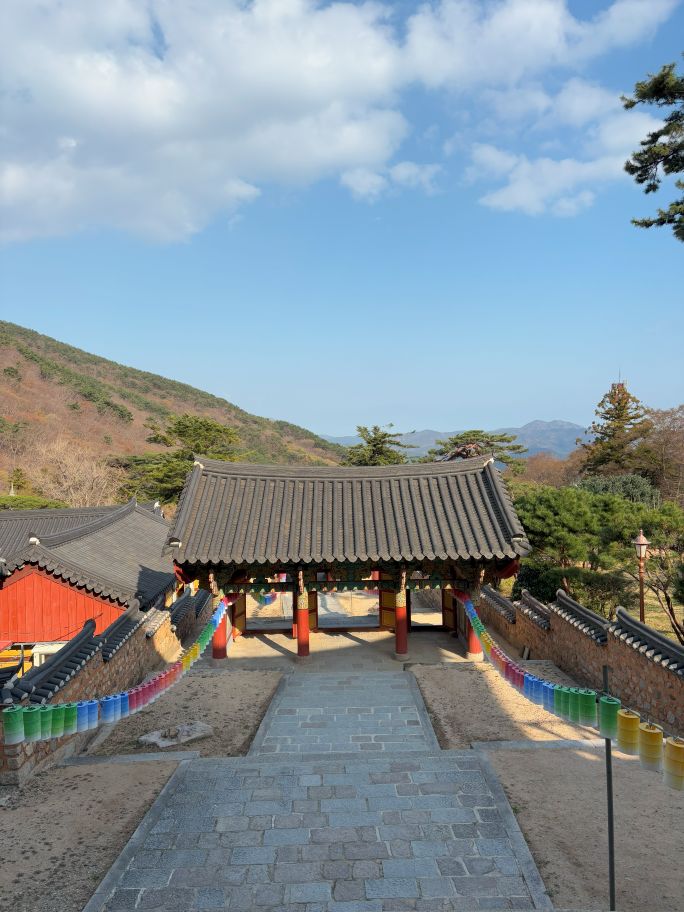
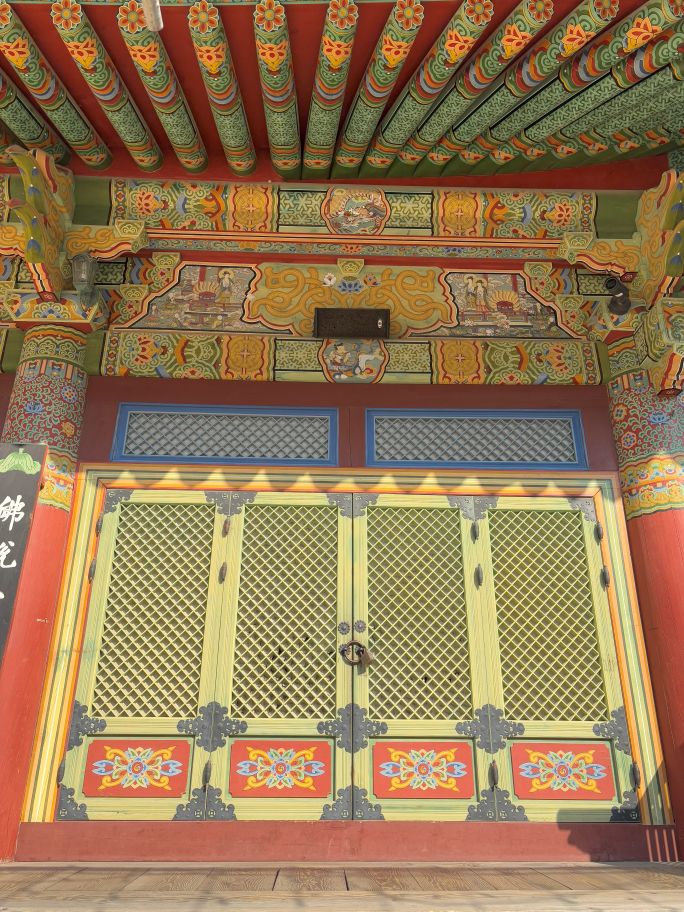
In order to book a Beomeosa temple stay, this is the official website.
Dates for both types of temple stay programs at Beomeosa are released only two months in advance. So, if a temple stay is a priority during your visit to Busan, it’s best to wait and confirm your reservation before booking your flight.
Once your booking is confirmed, you’ll receive an email with detailed instructions on how to reach the temple and other important information. Payment is made in cash upon arrival unless you’re a resident of Korea with a local bank account, in which case you can pay via bank transfer.
You can cancel your reservation if your plans change and there are no cancellation fees; however, the temple stay authorities need to be informed.
When I was about to visit, there were wildfires in the entire area, and I wrote to the temple stay to ask if I could cancel/postpone, and although they assured me that there was nothing to fear near the temple, they would be happy to accommodate my request.
Getting to Beomeosa
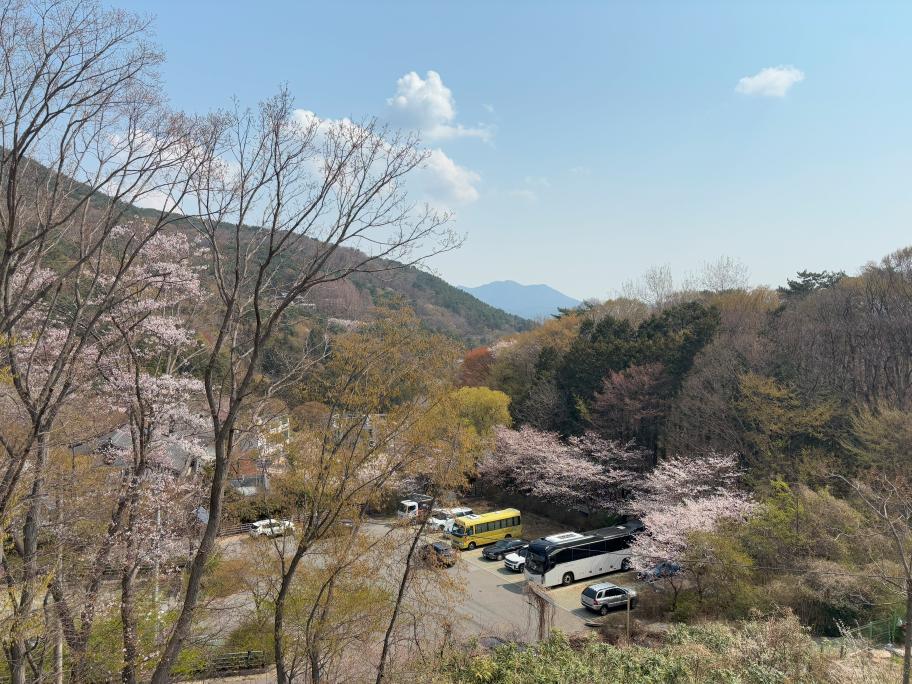
Beomeosa Station (Stop #133) is the second-northernmost stop on Line 1, the orange subway line. Travel times to Beomeosa Station are roughly 30 minutes from Seomyeon, 45 minutes from Nampo, and 55-60 minutes from Haeundae.
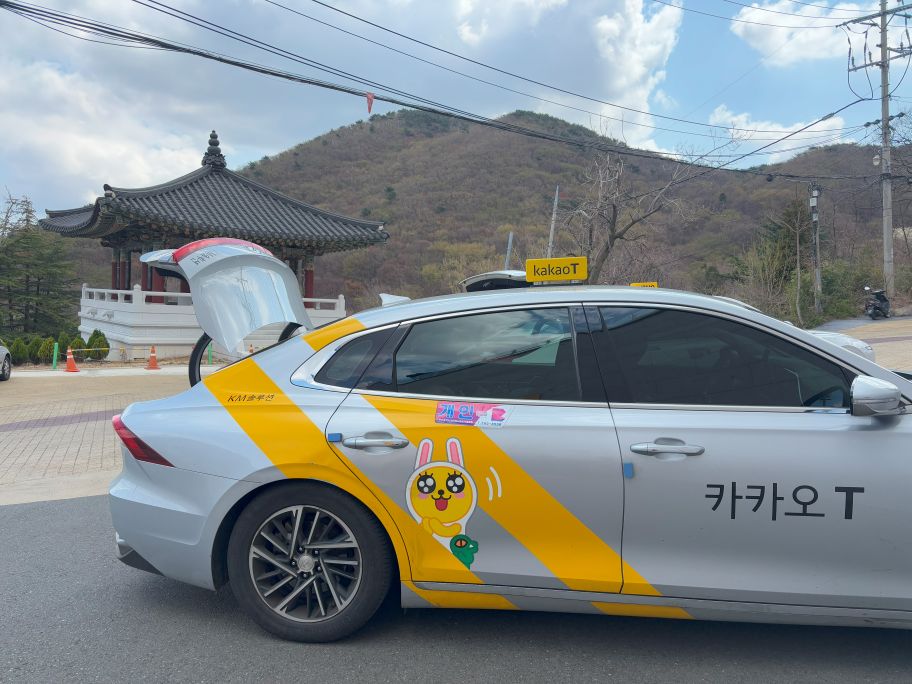
From the station, the quickest way to reach the temple is by taxi from Exit 5 or 7. The ride takes about 10 minutes and costs around 10,000 KRW.
The next best option is to walk up the street between Exits 5 and 7—this stretch also has several restaurants—and catch bus #90 at the designated stop. The ride to the temple takes 15–20 minutes, and you pay by T-money card.
Since I was staying near Songjeong Beach and travelling with two others and large luggage, we booked an Uber XL. The drive took about 40 minutes and cost around 32,000 KRW (approximately USD 23).
Arriving at the Temple Stay
Check-in is strictly at 1:00 pm, so there was no point in arriving early.
Thanks to Uber, we reached the Beomeosa Temple Stay entrance around 1:30 pm. After carrying our bags to the reception office, we were given our room keys and told to return for an orientation session at 2:00 pm. To our surprise, we were the only participants in the program that week.
We were given temple uniforms—loose-fitting pants and a sleeveless vest—and instructed to wear them while on temple grounds. Since the vest didn’t offer much warmth and it was quite cold, I layered it over my jacket.
We then unlocked our assigned rooms, which were in traditional hanok-style buildings. There were seven of us, and instead of a shared dormitory, we booked four private rooms.
The rooms were very minimal, furnished only with a low table, a few books, and a cupboard holding the bedding. Our large suitcases took up much of the floor space, and we were left wondering where we’d lay out our bedding.
Each room had an attached bathroom, though it was compact and not ideal for taking a full bath. At this point, towels and soap were not provided.
Temple stay orientation session
To begin the temple stay, we all sat on cushions in the temple stay building. We were handed out the print-out of the relaxation program and also given a scarf as a temple stay souvenir. Templestay Associate Lee Jin Ho welcomed us once again and went over the program and some of the most important etiquette to be followed.
| Day | Time | Title |
| Day 1 | 13:00~14:00 | Check-in |
| 14:10~15:10 | Orientation of Templestay (mandatory) | |
| 15:10~16:50 | Walking on the forest path & Temple tour | |
| 17:00~17:30 | Dinner offering | |
| 18:00~18:30 | Move to Beomeosa Great Hero hall (Individually) | |
| 18:30~19:00 | Evening Buddhist Ceremony (Individual attendance) | |
| 19:00~22:00 | Freetime | |
| 22:00~00:00 | Sleep | |
| Day 2 | 04:30~05:00 | Morning Buddhist Ceremony (Individual attendance) |
| 07:00~07:30 | Breakfast offering | |
| 07:30~09:00 | Freetime | |
| 09:00~09:40 | Meditation (mandatory) | |
| 09:40~10:00 | Check-out | |
| 10:00~11:00 | Visit Beomeosa Museum (Individual visits) |
Instructions:
- Clothing: Dress modestly—avoid revealing attire.
- Behaviour: Maintain silence or speak softly at all times.
- Prohibited: Smoking, alcohol, and meat are strictly forbidden on temple grounds. Only vegan meals will be served.
- Conduct: Physical contact between genders is not allowed.
- Inclusivity: People of all faiths are welcome.
- Posture: Keep your hands respectfully folded—one hand resting over the other in front of your body.
- Respect: Always bow when a monk passes by.
- Etiquette: Never use the center door when entering temple buildings—those are reserved for monks. When greeting others, offer a small bow. You must also bow toward the Buddha statue every time you enter or exit the temple hall.
We were also shown the right way to conduct a prostration (a series of movements for bowing to the Buddha). Mr Lee informed us that if we were to attend the Buddhist ceremony, we would have to conduct 108 prostrations along with the monks in the hall.
We were asked to fill our water bottles from the water filter and also take hand towels.
We went on our first activity, of forest walk, after the orientation session.
Forest walk and Beomeosa Temple Tour
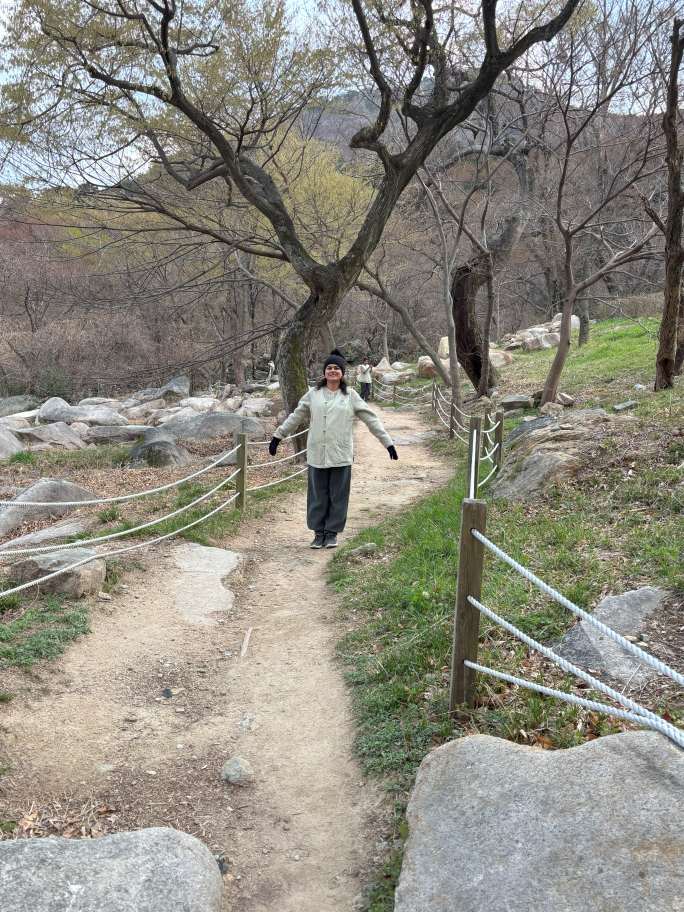
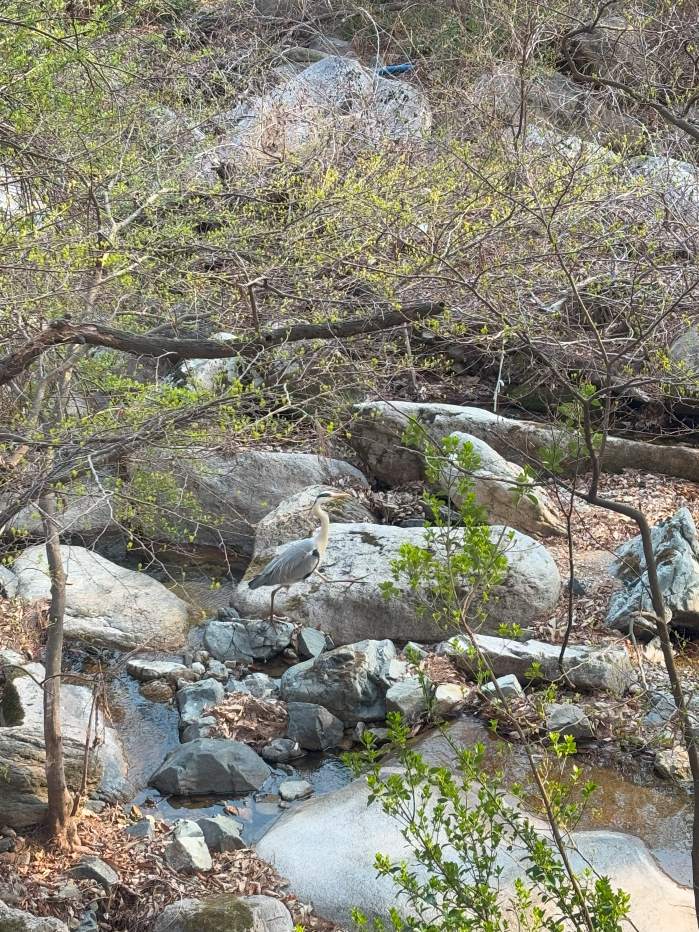
We started our walk towards the Beomeosa temple through thick woods guided by the resident monk. It felt surreal crossing gentle mountain streams, hiking uphill trails, and listening to birdsong echoing through the trees.. Of all the things I wanted to do in Korea, trekking was never on the list, but glad that I was doing it.
After a 20-minute trek, we reached the ‘One-pillar gate’. This gate is called Jogyemun and is a renowned masterpiece in the country because of its unique style of holding the roof. Although four stone pillars make up this gate, when looked at from the side, it looks like one gate holding the gate, hence the name ‘one-pillar gate’.
We then crossed the second gate containing four fierce temple guardians, the third representing the Buddhist concept of non-duality, and the final one holding up an entire structure on it.
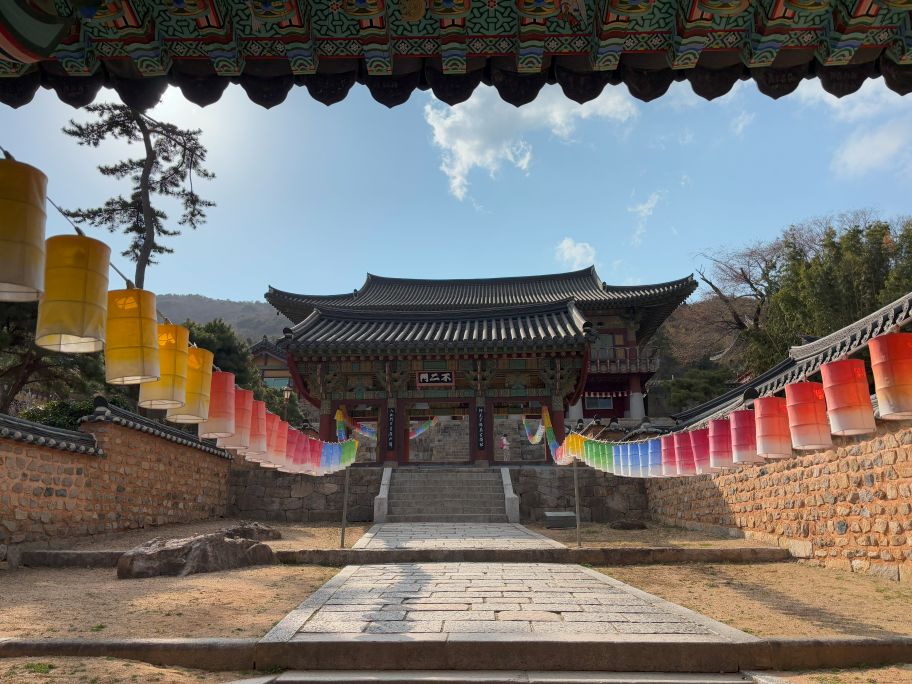
These gates led us into the temple’s main courtyard. From there, we climbed a short flight of stairs to Daeungjeon, the main hall, also known as the Dharma Hall.
Despite being the main hall, two buildings to its left and right are more popular: to the left, a small building behind an enormous engraved stone harks back to pre-Buddhist times. Devoted to the mountain god, it is the only place at Beomeosa where devotees are permitted to place alcohol as an offering on the altar.
To the right of the main shrine, Gwaneumjeon Hall is Beomeosa’s most popular temple, as it is where Avalokitesvara, the Bodhisattva of Compassion, answers people’s wishes.
We clicked pictures of the beautifully painted wood roofs and spent some time here. We started heading back at 4:30 pm since we would be served dinner at 5 pm.
Beomeosa Temple Stay Dinner
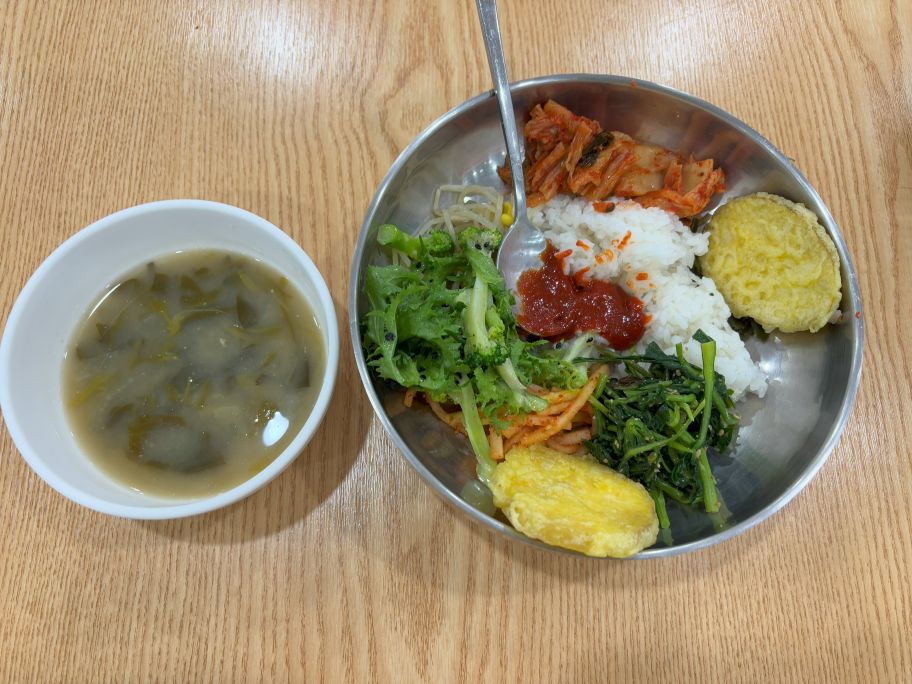
The dinner was served on the ground floor in the main building. A huge hall comprising tables and chairs welcomes us. It was time for our barugongyang, or vegetarian monastic meal.
Since we were the only visitors, a buffet of a few dishes was set up along with their names in English. Thankfully, this was one place where I did not have to enquire if the sauce had shrimp pate or the soup had fish oil it because everything was vegan! All the ingredients screamed Bibimbap so I picked up a steel bowl, poured a spoonful of rice and all the ingredients I would love on it – bean sprouts, radish, seaweed, bracken and kimchi and added a spoonful of chilli pepper paste. On another plate, I got some salad and sweet potato fries, and voila, I loved this dinner.
Post dinner, we rinsed our bowls and neatly kept them on the sink counter. And got a pre-mix coffee which was set up near a corner and filled up our water bottles since the kitchen hall, and the office closed at 5:30 pm.
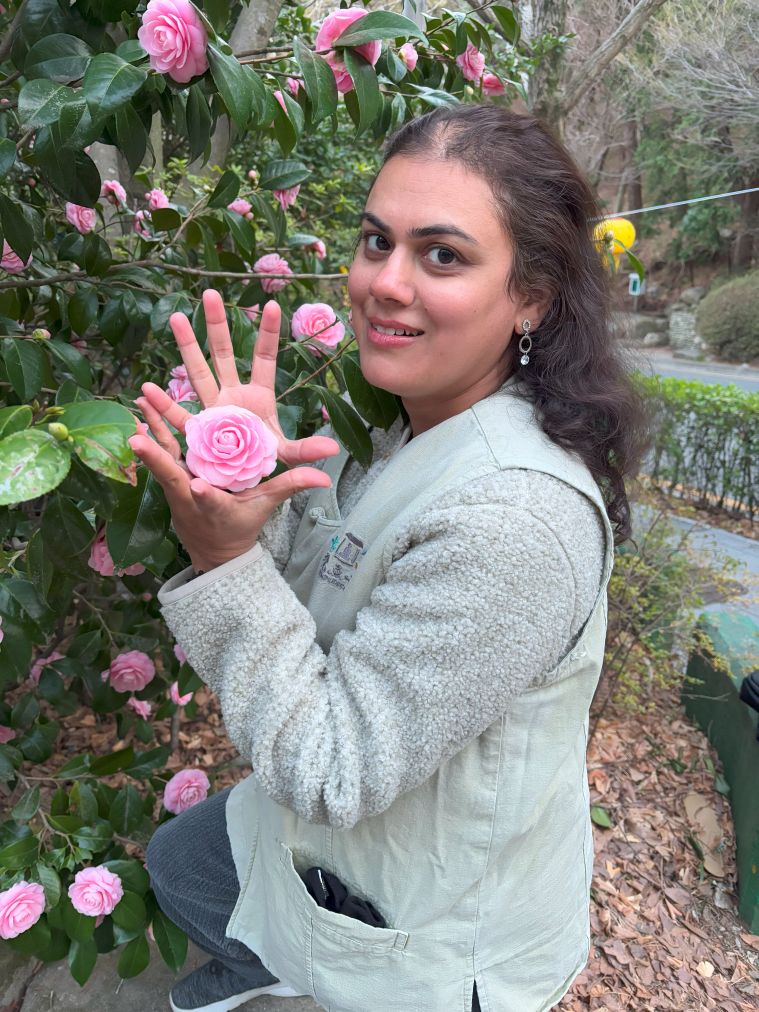
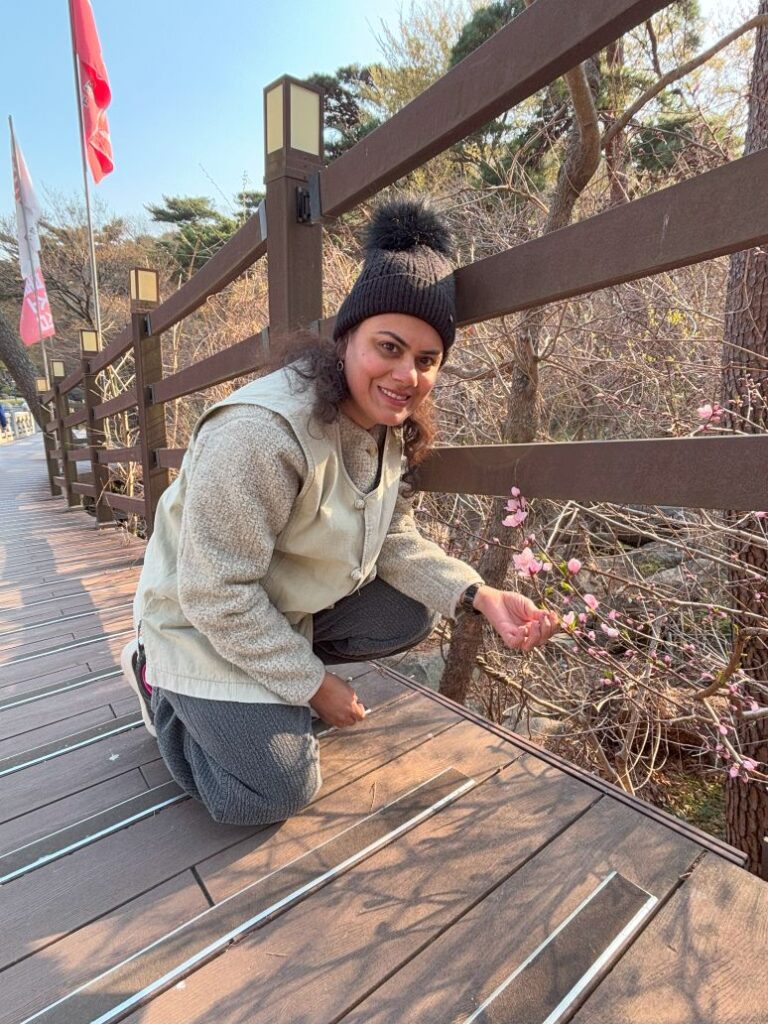
Since we had free time after dinner, some of them went back to the Beomeosa temple to watch the Buddhist ceremony, and some, like me, went on a walk on the main road. I wanted to see the actual road leading up to the temple instead of the forest path. I also wanted to capture cherry blossoms and other flowers on the way.
After the walk, since there was not much to do, we simply chilled in our rooms and slept off early.
Evening Buddhist Ceremony
Those who went back to the temple shared that the monks went into the drum tower near the main courtyard and drummed. It was basically a call that the ceremony was going to begin.
Many monks then gathered in the main hall for the ceremony, where everyone started doing the prostrations. If visitors want to be in the main hall, they have to be part of the prostrations as well.
Morning Buddhist Ceremony
The evening ceremony is repeated in the morning, which begins at 5 am. In order to reach the Beomeosa temple from the temple stay, it requires 15 minutes, so essentially you will have to wake up at 4:15 am and start walking by yourself on the empty, dark roads. None of us wanted to do that, so we slept in and woke up in time for breakfast.
Breakfast
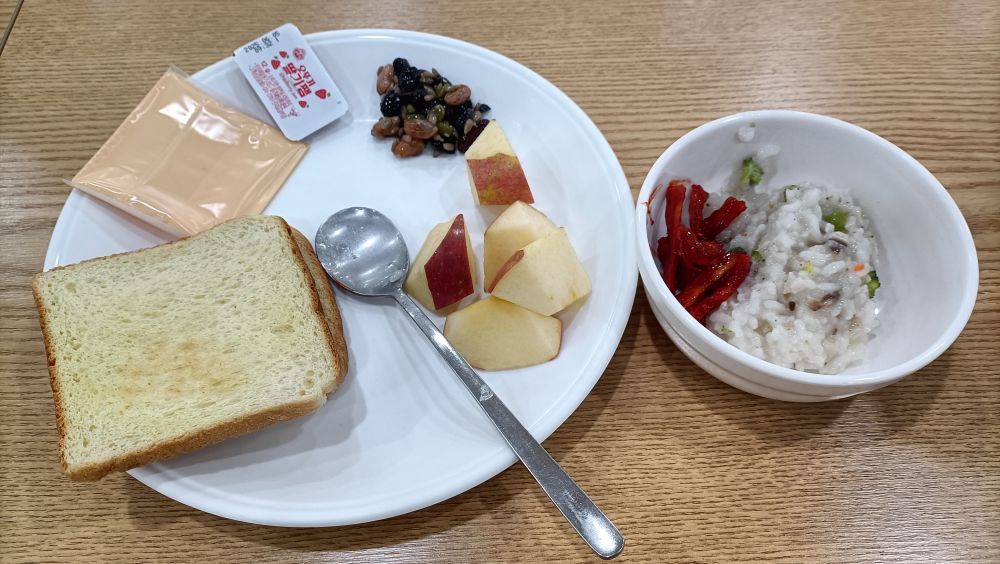
Thanks to the early dinner, we were all hungry at 6:30 am and wanted breakfast. It was served exactly at 7 am in the same hall as yesterday. Breakfast options consisted of porridge, bread, jam and cut fruit.
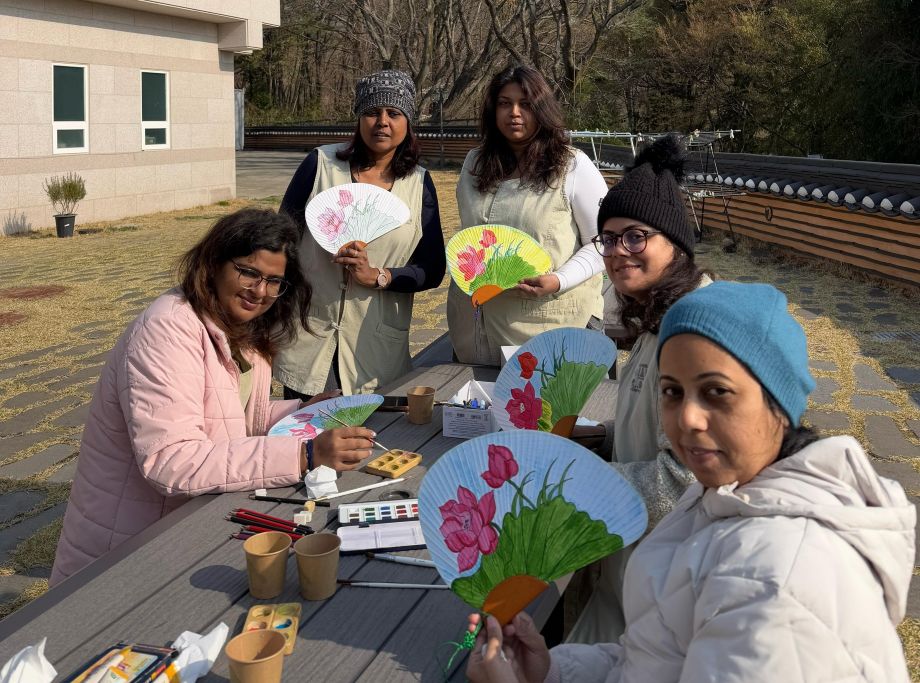
We again grabbed some coffee post-breakfast and indulged in creativity during our free time. We painted Korean hand fans – a form of creative meditation under the cold sun and had a lovely time.
Meditation
We then gathered for the mandatory meditation session with the monk. Having been practising meditation for over 20 years, I was eager to meditate in this temple stay hall.
Jang-san Sunim, the resident monk, welcomed us and started introducing Buddhism to us. He said since we came from India, we would have an idea about Buddhism as a religion and did not want to delve into it in detail.
Next, he talked to us about Buddhist meditation in general and the similarities and differences between meditation techniques in different countries.
Korean Seon Buddhism, like Chan and Zen, is differentiated by the use of hwadu – a Zen Buddhist meditation method that uses a short phrase or question as a subject of focus to help practitioners transcend thought and realise a state of no-mind or emptiness
The monk then asked us to face the wall, empty our minds and meditate for 20 minutes, sitting cross-legged on a cushion on the floor. And we did.
Most of us were comfortable sitting in that position. But 20 minutes is a very short time to meditate, so we just sat in silence.
Jang-san Sunim then encouraged us to ask any questions that we may have about meditation or Buddhism, or about the life of monks in general. We spent the next 10 minutes in Q&A, and then it was time for us to leave. We were again given gifts – bead bracelets as souvenirs to take back home.
It was time for us to check out, and before doing so had to put the bedding back together and into the cupboard, return the hand towels and clothes and clean the room.
We did all of that, kept our bags in the main courtyard and then headed to the Beomeosa Museum for a quick visit.
Beomeosa Museum
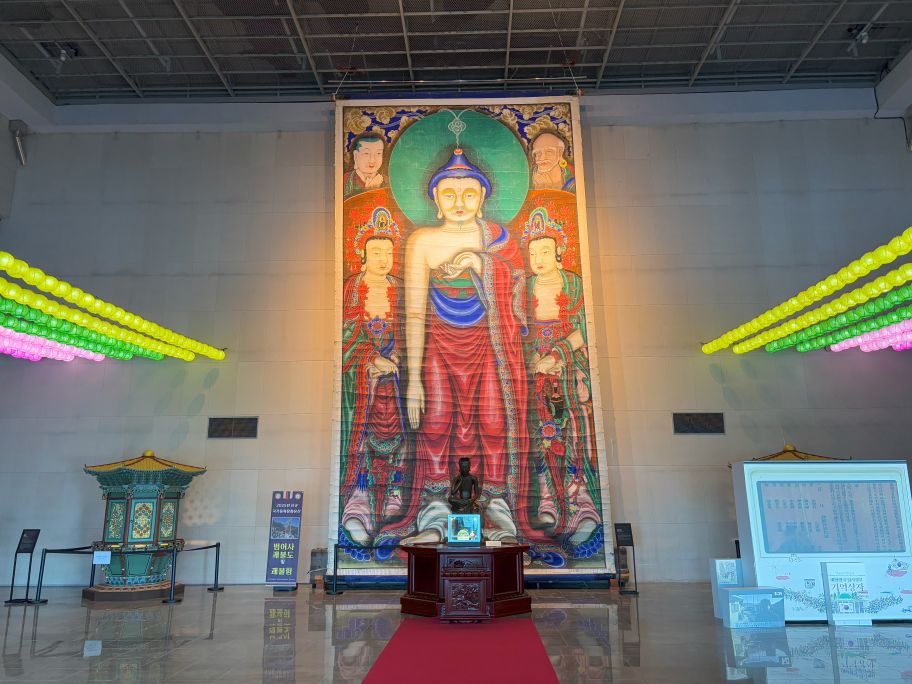
A short walk away from the Beomeosa temple stay is the Beomeosa Museum, dedicated to Korea’s rich Buddhist heritage. Housed in a traditional-style building, the museum showcases relics, scriptures, ritual objects, and art dating back centuries. Highlights include ornate ritual implements, ancient wooden printing blocks, and beautifully preserved Buddhist paintings. With thoughtfully laid-out displays and bilingual explanations in Korean and English, the museum is perfect for visitors wanting a deeper understanding of monastic life, religious practices, and Korean Buddhist artistry.
There is also a small souvenir shop to pick up some knick-knacks related to Beomeosa.
FINAL THOUGHTS ABOUT BEOMEOSA TEMPLE STAY
Doing a temple stay in Busan was truly the highlight of my entire South Korea trip. The peaceful environs, the vegan food and the guided temple walk were truly enchanting.
I also appreciated the opportunity to have open, personal conversations with the monks.
Although this was a good introduction to the temple stay program, it was in no way relaxing. For a relaxed program, you need to stay there for a minimum of 3 days, wherein there is time to read and relax. Although we had free time, other activities kept us busy.
Need More South Korea inspiration? Read these posts
- One day in Seoul
- One day in Busan
- Cherry Blossoms in South Korea
- Souvenirs from South Korea
- Best Hotels in Seoul Myeongdong
- Jinhae Cherry Blossom Festival
- DMZ Tour from Seoul
- Things to do in Gyeongju
- Vegetarian Food in South Korea
Disclaimer: This post contains affiliate links. It means it adds no extra cost to you if you book through the link, but I get a referral bonus, which helps me earn a little to keep this website up and running.
PIN THIS POST!

10 comments
I did not go to Busan when in SK but we did stay at another temple near Seoul. Such a great experience. This one looks really lovely and I would really like to visit.
I hear there are about 30 temple stays across Korea that are foreigner friendly. Even I would love to explore more the next time I’m in the country.
I think three nights would be the best amount of time to spend to allow myself to calm down and appreciate the quiet and meditation. Great post!
Thank you Terri. I agree with spending 3 days here for proper relaxation.
The cherry blossoms are beautiful and the temple stay sounds relaxing.
My entire Korea trip was around cherry blossoms so it was at the center of all my plans. So glad I caught them everywhere across the country.
Thank you for sharing this beautiful glimpse into Beomeosa Temple. I hope to visit someday and experience the peaceful atmosphere myself
You should plan your Korea trip soon!
This sounds very interesting, and I would love to do this if visiting Korea. I love that everyone is welcome, no matter what faith. I have stayed in temple lodgings several times in Japan, from “full immersion” with prayer services to where the temple lodging was more like a hotel, loved them all, and on the whole I second that temples make very lovely places to stay
I’m so impressed with the Temple stay in Korea that I want to explore the same in Japan and Taiwan.