Last Updated on December 16, 2025 by Ketki Gadre
Planning a DMZ tour from Seoul? Wondering how to go about it? Thinking and rethinking whether it is worth going to the Demilitarized zone in South Korea? I will put your mind to rest with this guide, answering all questions.
Visiting the DMZ is one of the most popular things to do in Seoul. While there are always questions in the discussion forum about whether the DMZ trip is worth the visit and the answers are 50-50.
I love places with history, and on my Korea Cherry Blossoms trip last spring, I was very sure I wanted to go on a DMZ tour in South Korea.
In my personal opinion, if this is your first trip to South Korea, the DMZ day trip should be on your itinerary.
Let’s dive in.
Table of Contents
HISTORY OF DMZ
The origins of DMZ, officially known as the Korean Demilitarised Zone, can be traced back to the end of World War II, when Japan gave up control over the Korean Peninsula. In 1945, as a temporary measure, the United States and the Soviet Union agreed to divide Korea along the 38th parallel – a temporary solution.
By 1948, two separate states had emerged: the Republic of Korea (South Korea) in the south and the Democratic People’s Republic of Korea (North Korea) in the north. Both governments asserted sovereignty over the entire peninsula, leading to heightened tensions.
These tensions escalated into open conflict in 1950, when North Korea launched an invasion of the South, triggering the Korean War. The war continued until 1953, concluding not with a peace treaty but with the signing of an armistice agreement, leaving the two nations technically still at war.
As part of the Korean Armistice Agreement, a new boundary was drawn between the two Koreas. This border extended approximately 248 kilometres and, unlike the original division at the 38th parallel, followed the natural contours of the landscape, cutting across the peninsula in a southwest-to-northeast direction.
This border was named the Military Demarcation Line.
The area surrounding this border was designated as the Demilitarised Zone, a buffer intended to prevent further military confrontation.
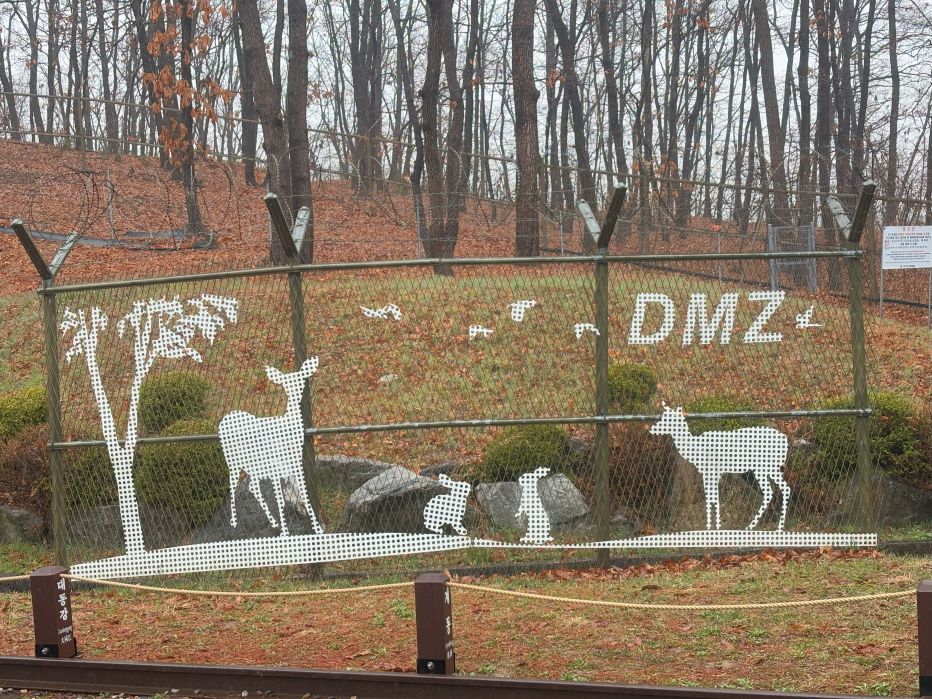
On either side of this line, a buffer area was declared, about two kilometres in each direction. And it’s this four-kilometre-wide stretch of land the entire way along the border that is the DMZ.
DMZ TOUR FROM SEOUL: A PERFECT ONE-DAY TRIP
DMZ is one of the most heavily militarised borders in the world. Both North and South Korea maintain a strong military presence on either side. Which is why visiting this historic site isn’t as simple as just showing up; rather, taking an official tour is mandatory. You cannot go solo for a DMZ tour, and there is no hack for it otherwise.
Visitors have to book a visit through various companies which provide pick-ups from designated areas. These tours are carefully organised to ensure visitor safety and follow all regulations. I booked through Get Your Guide along with the Red Suspension Bridge, and it was this one – Seoul to DMZ Tour.
Alternatively, if you want to add Boat Voyage along with suspension bridge and DMZ, then go for this tour on Klook – DMZ Adventure.
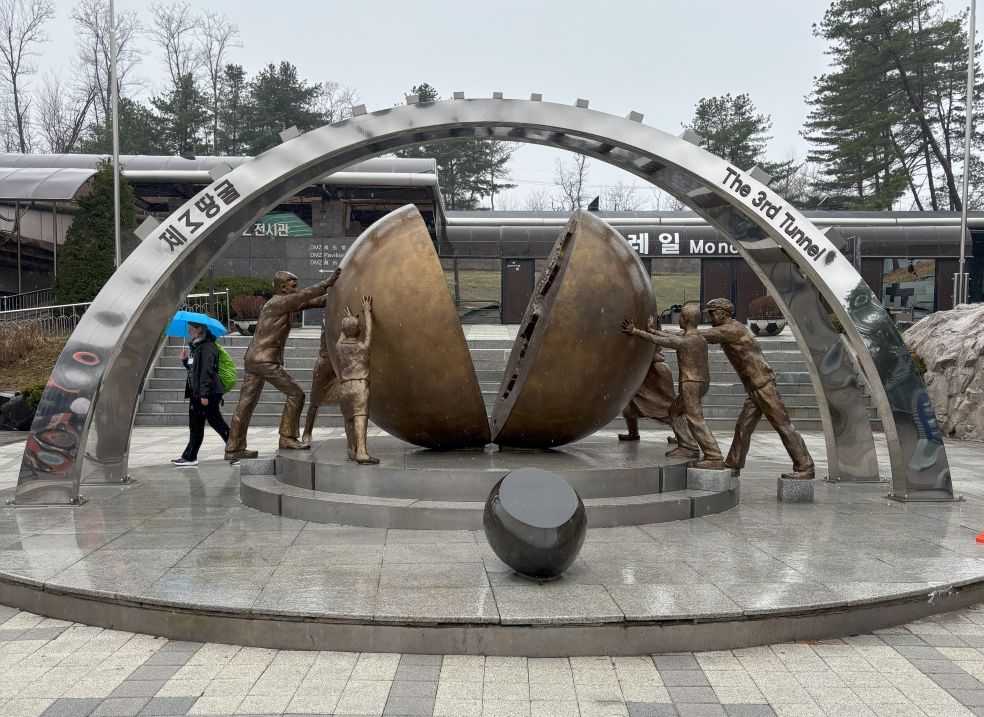
The entire tour is guided with history talks, photo sessions and anecdotes. If you think that you will catch some shut-eye on the commute from Seoul to DMZ, sorry to break it to you, but you can’t. The continuous commentary full of information will keep you glued to what the guide has to say.
The only way in is through an official tour company, accompanied by a registered guide.
DMZ Tour Pick-up Points in Seoul
Most tours have a route, and visitors will be picked up from there. Most common pick-up points for DMZ tours from Seoul are
- City Hall Station Exit 6.
- Myeongdong Station Exit 9.
- Hongik University Station Exit 3.
Some tours also offer pick-up from hotels. But the charges may be extra. Check before booking.
Once the pick-up is complete, the guide will introduce himself/herself and the itinerary and rules. They will inform you of the best place for lunch and the best place to pick up souvenirs. They will instruct on how to identify the bus and the importance of arriving on time to adhere to the day’s schedule.
They will then provide a brief history of the DMZ, which I have outlined above.
The Seoul to DMZ distance is 23 km, and it takes approximately 60-90 minutes to traverse the distance on the express highway, depending on the traffic.
WHAT DOES THE DMZ TOUR FROM SEOUL COMPRISE?
If you have chosen the suspension bridge, the tour will start at the DMZ and end at the suspension bridge. However, on the day of my visit, it was cloudy, and the guide informed us that the weather would be worse in the second half of the day and suggested we complete the suspension bridge first. So that is where we started.
Gamaksan Suspension Bridge, Paju
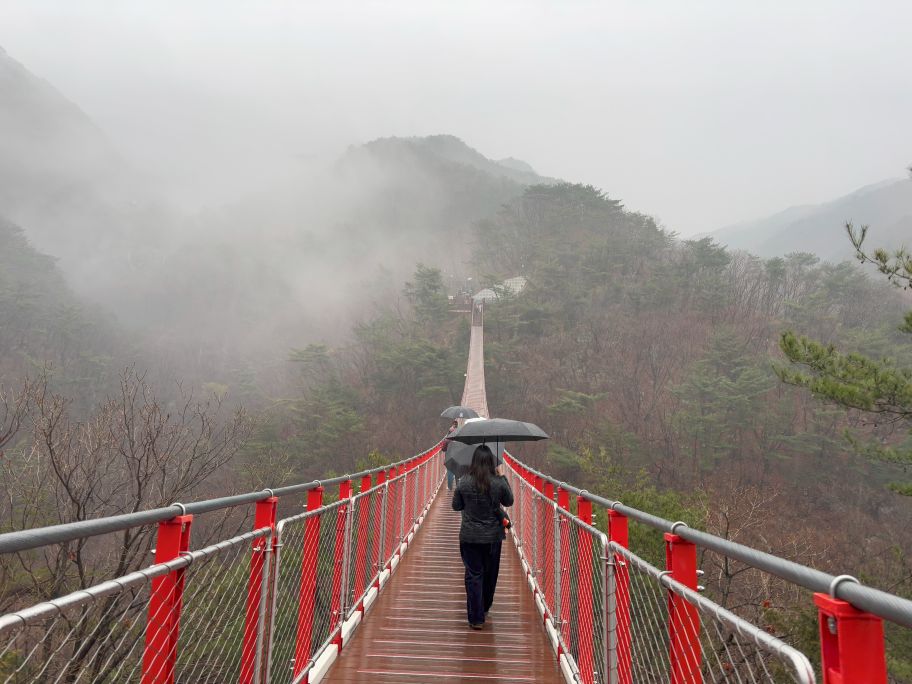
The official name of the bridge is “Gloucester Heroes Bridge” and is dedicated to the 1st Battalion Gloucester Regiment of the British Army, which fought in the Korean War, but unfortunately lost. The bridge commemorates the sacrifices they have made in a foreign land.
A short hike of 10 minutes along a laid-out trail among tall trees leads to the Gamaksan Suspension Bridge in Paju. Standing bright red against the beautiful green mountains, it is 150 meters long, which makes it the nation’s longest tower-less suspension bridge.
Since it was already raining when we started the hike, it took us close to 20 minutes to reach the suspension bridge. We spent about 10 minutes clicking pictures before scurrying back down because a literal downpour had begun.
I wish I could cross the bridge and go to the other side. I would have if it wasn’t a rainy day. Hopefully again some other day when I can check out other places such as Ungye Falls.
Imjingak Peace Park
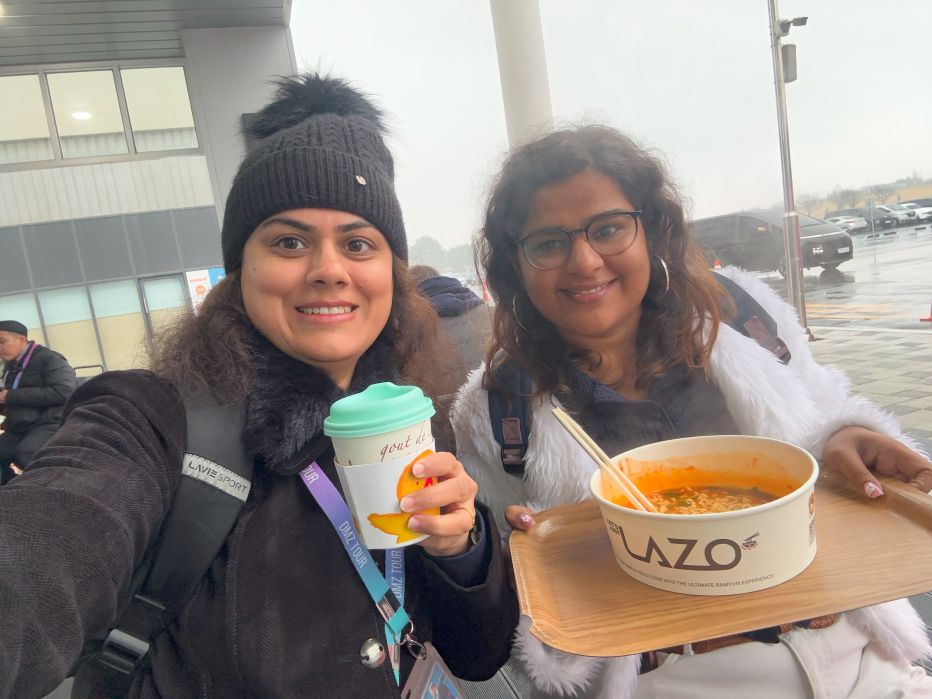
The first stop was Imjingak Peace Park, a civilian area near the DMZ.
One of the major highlights in the area is the Freedom Bridge, historically significant as the route taken by South Korean and UN soldiers returning from the North after the armistice. Nearby stands the Wall of Remembrance, etched with the names of those who lost their lives or were separated from loved ones during the Korean War.
Imjingak is also home to Dorasan Station, the northernmost railway station in South Korea.
The area features a small amusement park known as Pyeonghwa Land. Due to its proximity to the North Korean border, Imjingak draws numerous visitors, particularly those with personal ties to the war—many of whom were separated from their families and continue to visit in remembrance and hope.
We could not go down here because of the heavy rains, but we saw it from the windows of our bus.
Dora Observatory
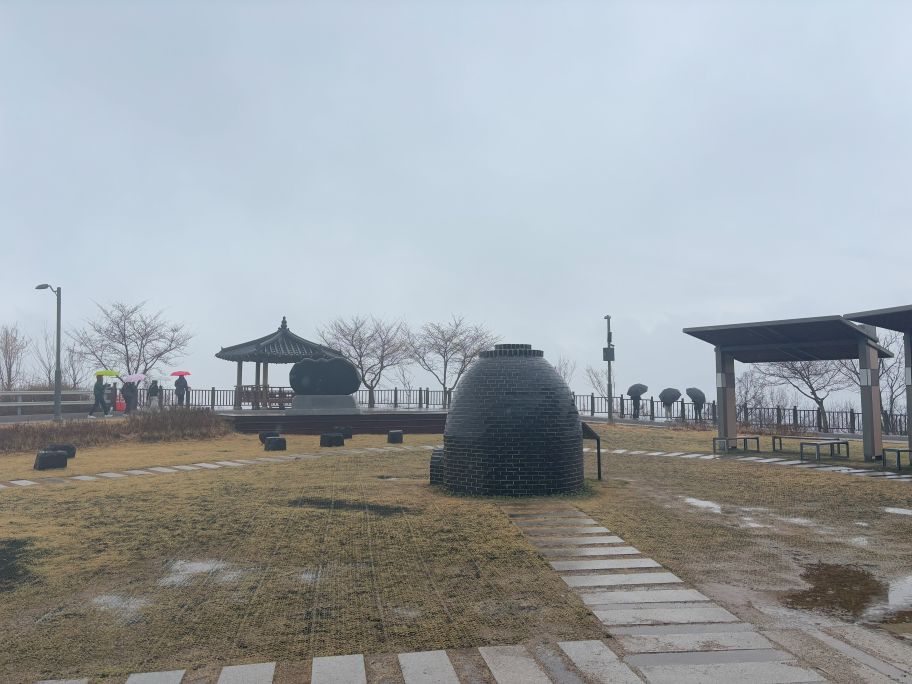
Our next stop was the Dora Observatory. En route, we passed through a military checkpoint where South Korean soldiers boarded the bus to verify our passports against the official passenger list.
Perched atop Mount Dora, the observatory provides sweeping views across the border into North Korea. From this vantage point, visitors can see notable landmarks such as the Kaesong Industrial Complex, the city of Kaesong, and the Military Demarcation Line that separates the two nations.
Before making our way to the observation deck, we viewed a short documentary offering context about the Korean War and the significance of the DMZ. The observation deck previously used to be on the terrace in the open, but due to some incident, the terrace is off limits, and the telescopes are now behind a glass wall.
The observatory is equipped with telescopes that allow for a closer look into North Korean territory. With a bit of focus, it’s even possible to spot the North Korean soldiers and the flagpole standing tall across the border.
There is a cafe serving beverages and snacks here, so you can purchase something if hungry.
Note: Taking pictures of North Korea from the glass windows is strictly prohibited, and if caught, you may be fined. So just keep the camera away and enjoy the sights.
The Third Tunnel
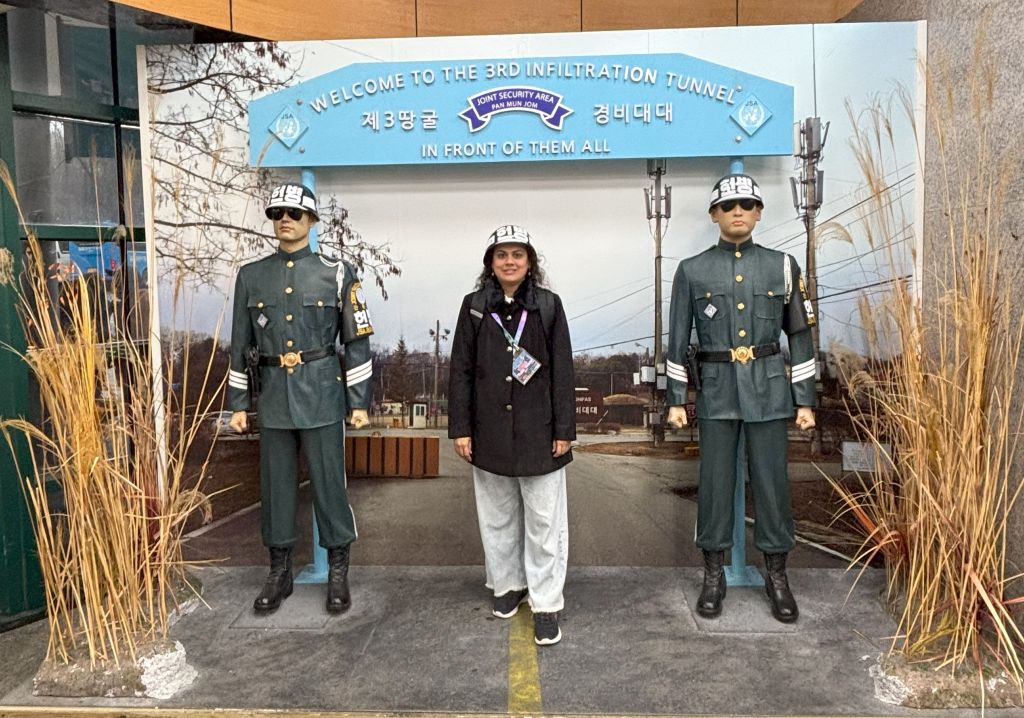
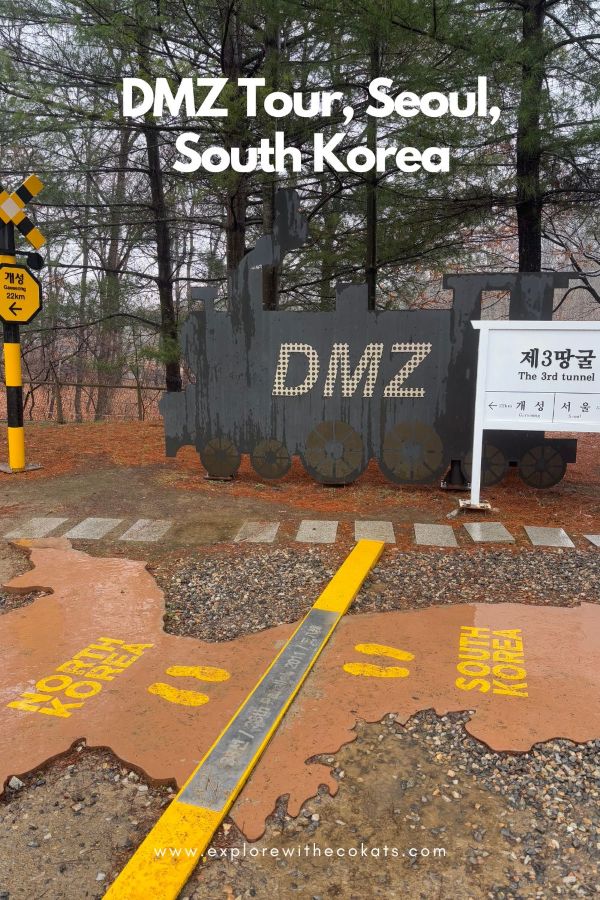
The Third Tunnel of Aggression is one of four known tunnels under the border between North Korea and South Korea, extending south of Panmunjom. It is believed to have been dug by North Korea as part of a plan for a surprise attack on South Korea and was discovered in 1978.
The tunnel is about 1.7 kilometres long, with a height and width of just 2 metres each, and it was dug straight through solid rock.
Before going in here, we had to keep all their belongings in a safe – no bags, water bottles, or phones were allowed! A free safe and key will be provided to us where we had to lock our stuff. Then we passed through a metal detector and were given hard hats for safety.
I am claustrophobic, but I decided to give it a try. I have been to Cu Chi tunnels near Ho Chi Minh City, Vietnam and wondered if this would be worse? Thankfully, it was not. I did not have to crawl at any point, so trust me, everyone can comfortably go in.
The only challenge here is the climb back up, which is steep, so be prepared to catch your breath. Thankfully, there are rest spots with benches and even a water fountain if you feel thirsty.
After coming out of that damp space, we felt a sigh of relief, picked up our stuff from the lockers and headed to photograph around.
Unification Village
This was a pass-by on our tour. Daeseong-dong, also known as Unification Village, is a small, tightly regulated farming community located within the southern portion of the DMZ. Remarkably, it is the only civilian settlement permitted inside the zone, with residents living under strict rules and constant government oversight.
One of the most striking aspects of the village is its use of loudspeakers to broadcast music and messages into North Korea. This strange exchange creates an almost surreal atmosphere.
Before leaving, we visited a small shop in the village selling DMZ-themed snacks and souvenirs – a lighthearted end to a tour that offered a profound glimpse into the lives of people living on the edge of history.
Lunch
I am honestly not sure the place where we stopped for lunch. However, our guide informed us that this was the place to buy ginseng products without tax. So on one side of the complex, there was a small shopping mall comprising groceries, beverages, chocolates and ginseng products. And on the other side, there is a buffet restaurant serving Korean lunch.
Since they had very less vegetarian options – only bibimbap, I skipped lunch and just had some snacks I had carried with me.
And with this, our DMZ Tour from Seoul had come to an end.
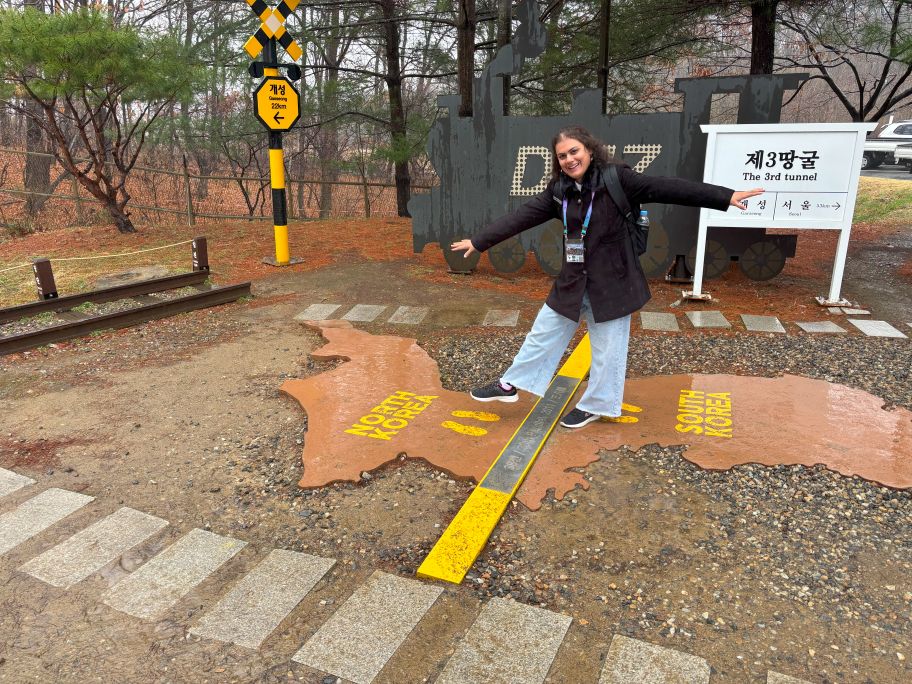
TIPS FOR DMZ TOUR FROM SEOUL
- Dress appropriately: North Korean soldiers have been known to photograph visitors wearing casual or torn clothing—like ripped jeans—and use those images in propaganda to depict foreigners as impoverished or disorderly. To avoid being misrepresented, it’s best to dress neatly.
- Carry your passport: This is non-negotiable. Without your passport, you won’t be allowed to enter the DMZ, so double-check before you leave.
- Bring key medicines and warm clothing: If you rely on medication like an asthma inhaler, keep it on you at all times. The return walk from the Third Tunnel is both steep and cold, so a light jacket is highly recommended. While large bags must be stored in lockers, small essentials can be carried in your pockets.
FREQUENTLY ASKED QUESTIONS ABOUT DMZ TOUR FROM SEOUL
Can tourists visit the DMZ?
Yes, but only through guided tours. Independent access to most parts of the DMZ is not allowed due to strict security measures.
What do I need to bring for a DMZ tour?
You’ll need your passport for identification and entry. Comfortable walking shoes and weather-appropriate clothing are recommended, as some parts of the tour involve walking or steep climbs.
Which is the best DMZ Tour from Seoul?
There are many official tours. Choose the one that best suits what you want to do and your time. There are half-day tours that only offer a visit to Dora observatory and the Third Tunnel, and full-day ones that offer Gamaksan Suspension bridge, Gondola ride, Lake ride, etc. You can check Klook, Get Your Guide or Viator for a choice of your tour.
Is it safe to visit the DMZ?
Yes, DMZ tours are well-regulated and designed with visitor safety in mind. However, it’s still an active military zone, so adhering to the tour guide’s instructions is crucial.
Is the Joint Security Area (JSA) open to visitors?
As of now, JSA tours are suspended due to a security incident in 2023, when a U.S. soldier recently crossed into North Korea during a tour, prompting the United Nations Command to indefinitely suspend all tours in the area, including the JSA and surrounding Panmunjom village; this incident is considered a major security breach at the highly sensitive border between North and South Korea. There’s no confirmation on when they will resume.
Can I take photos during the DMZ tour?
Photography is restricted in certain areas, such as military checkpoints and inside the Third Tunnel. Guides will inform you where you can take pictures.
How long does a DMZ tour take?
Most tours last about 6–8 hours, including travel time from Seoul.
Is there a souvenir shop at the DMZ?
Yes, there are shops at stops like Imjingak Peace Park and the Unification Village, selling unique items like North Korean currency and stamps.
Is there a chance of seeing North Korean soldiers?
You may spot North Korean soldiers through the telescope from the Dora Observatory.
FINAL THOUGHTS ABOUT DMZ TOUR FROM SEOUL
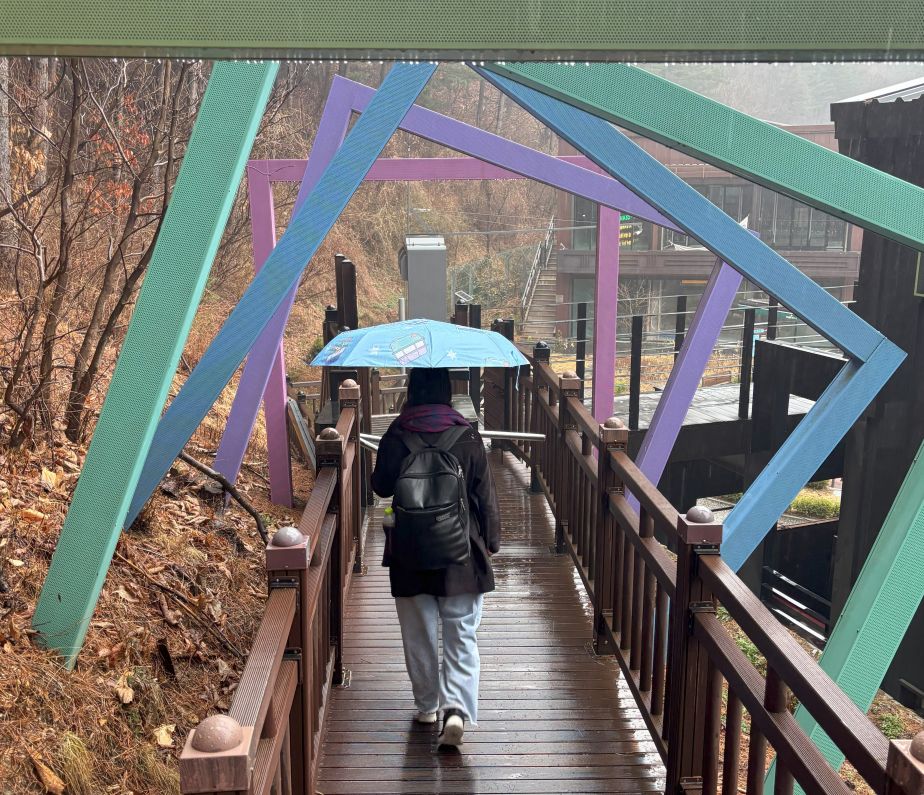
Visiting the DMZ from Seoul was one of the most memorable parts of my trip, both intense and eye-opening. It’s one thing to read about the Korean War and the division of the peninsula, but quite another to stand at the edge of one of the world’s most fortified borders and feel the weight of it all.
It happened to be a rainy day, which only added to the sombre atmosphere as we moved through checkpoints and watched the landscape blur behind fogged-up windows. The most physically challenging part was the descent into the Third Infiltration Tunnel. I’m claustrophobic, and the low ceilings, narrow path, and damp air made me feel uneasy. Still, I managed to push through, and in the end, I’m really glad I did.
Every stop on the tour—from the Dora Observatory to the symbolic Unification Village—offered a deeper understanding of Korea’s divided past and its complicated present.
It’s hard to describe the feeling of standing so close to North Korea, separated only by a fence and years of conflict. More than just a historical tour, it was a glimpse into unresolved tension and cautious hope.
If you’re in Seoul, I’d recommend making time for the DMZ. It’s not your typical tourist spot, but it leaves you with a lot to think about, and for me, that’s what travel should do.
Need More South Korea inspiration? Read these posts
- Beomeosa Temple Stay
- One day in Busan
- Chasing cherry blossoms in South Korea
- Souvenirs from South Korea
- Best Hotels in Seoul Myeongdong
- Jinhae Cherry Blossom Festival
- One day in Seoul
- Things to do in Gyeongju
- Vegetarian Food in South Korea
Disclaimer: This post contains affiliate links. It means it adds no extra cost to you if you book through the link, but I get a referral bonus, which helps me earn a little to keep this website up and running.
PIN THIS POST!