
Last Updated on December 16, 2025 by Ketki Gadre
Are you a vegetarian or vegan travelling to South Korea? Are you worried if you will find vegetarian food in South Korea since the country heavily relies on meat dishes? Check out this food guide to navigate like a pro and not miss out on local flavours.
Being a vegetarian or vegan while travelling can be tricky, especially in countries that heavily rely on meat in all meals. It is particularly challenging in South Korea since fish oil and shrimp powder is very commonly used in most dishes.
However, thanks to the tourism boom, restaurants, cafes and street kiosks are aware about global dietary preferences and are ensuring they have meat free and dairy free options.
Another reason why it’s easy to get vegetarian food in South Korea is because of Buddhism followers. There are temple-stays in Korea such as Beomeosa Temple Stay and restaurants that cater to barugongyang, a vegetarian monastic meal rooted in Zen Buddhism.
I spent 2 weeks in South Korea as a vegetarian and travelled across Seoul, Busan, Jinhae and Gyeongju during the Cherry Blossom season in Korea.
Let’s jump to all the possible foods you can try as a Vegetarian in South Korea!
Table of Contents
VEGETERIAN FOOD IN SOUTH KOREA
While the following options can be traditionally vegetarian-friendly, it is best to confirm that there is no meat in this. doesn’t mean they always are.
Bibimbap
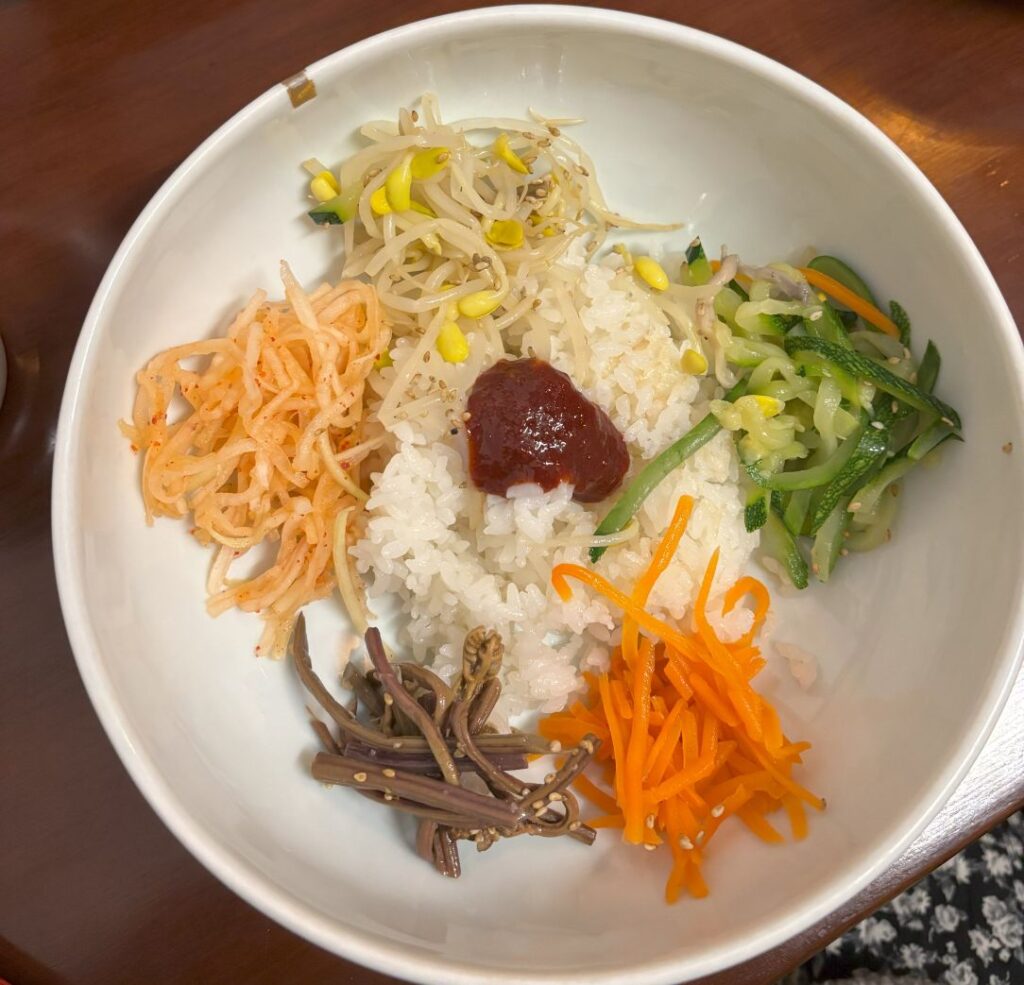
Bibimbap is to Koreans what Dal-chawal is for Indians – soul food!
A bowl of warm rice topped with neatly arranged vegetables – blanched spinach, bean sprouts, carrots, mushrooms, zucchini and sometimes a fried egg. A heap of sweet and sour gochujang sauce on top with a trickle of sesame oil completes the dish.
The joy of Bibimbap is in mixing it all up, customizing the amount of veggies, the quantity of sauce and then destroying that Instagram-worthy arrangement without guilt. Every spoonful tastes slightly different, which is exactly why it never gets boring.
Be aware that the gochujang sauce doesn’t have meat broth and shrimp paste which are traditional ingredients.
Tteokbokki
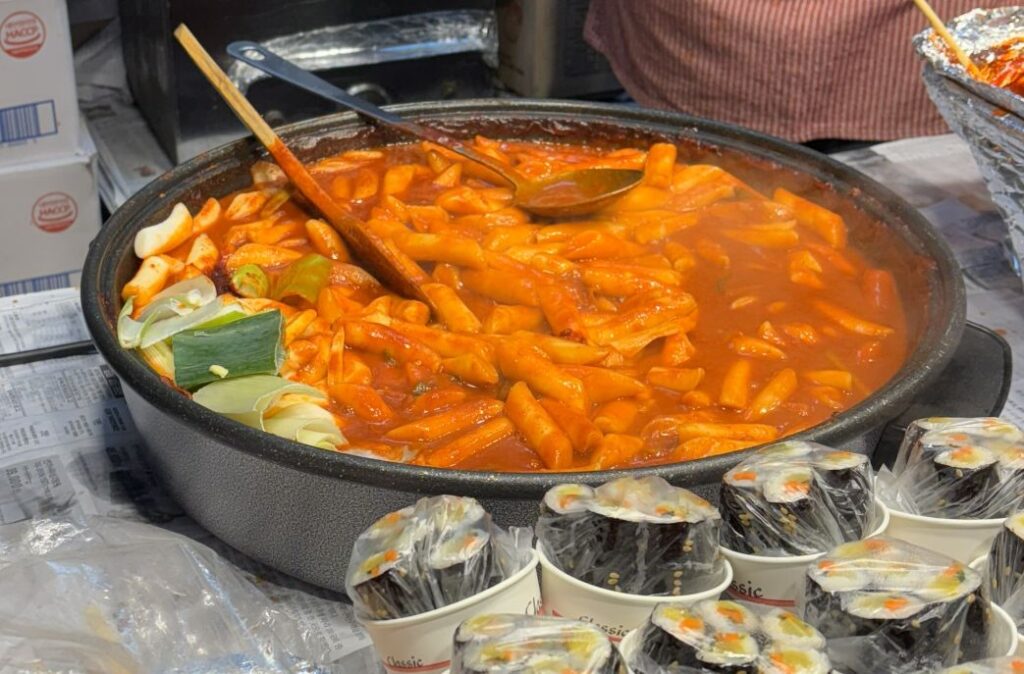
I loved it even before I tasted it because it is my favorite K-drama actor’s favourite dish!
Yes, it’s fiery. Yes, it stains everything it touches. And yes, I can still go back for more.
Tteok are chewy rice cakes that swim in a bright red gochujang sauce that balances sweet, spicy, and addictive. Vegetarian versions swap fish cakes for cabbage, scallions, or ramen noodles. It’s a street food that feels like a dare and a hug at the same time which is why it is a go-to for students, tourists and office-goers for a quick snack.
Japchae
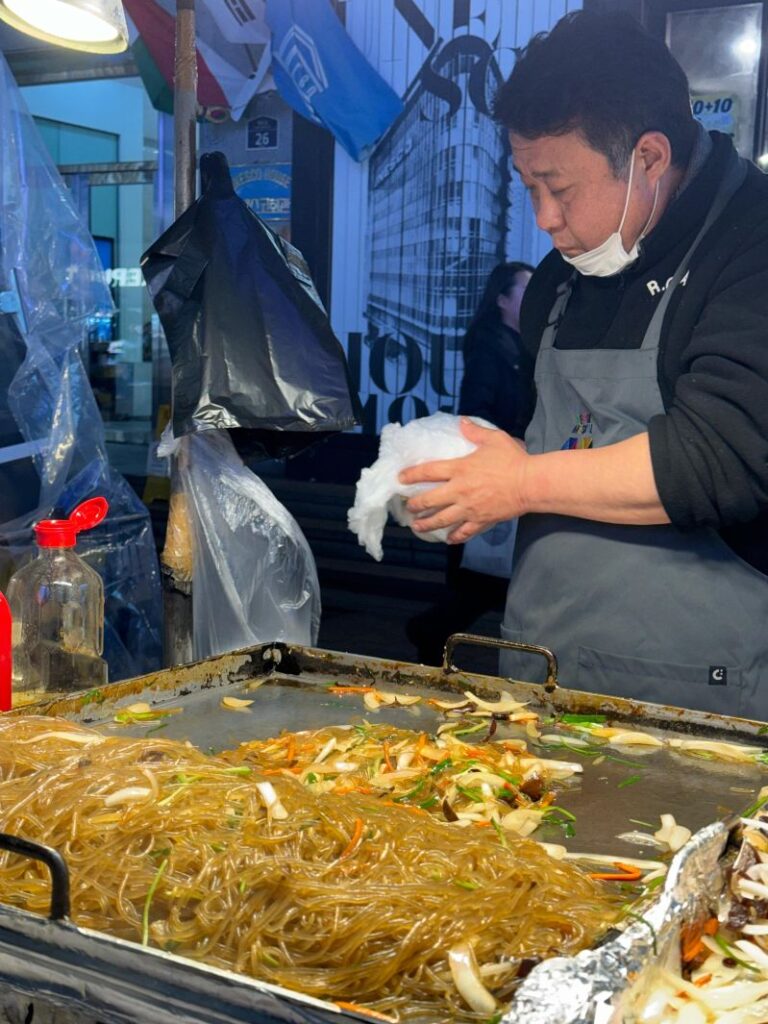
Japchae is proof that glass noodles deserve a standing ovation.
Made from sweet potato starch, these slippery noodles are stir-fried with mushrooms, spinach, carrots, onions, and sesame oil. Slightly sweet, deeply comforting, and suspiciously elegant for something sold at food courts and served at hotel breakfasts.
Gimbap
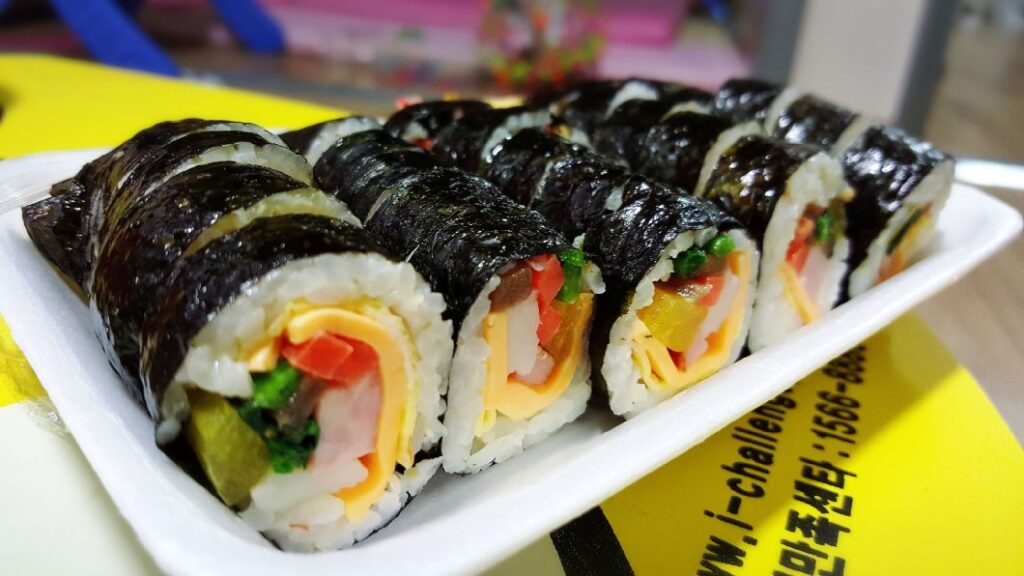
Often called Korean sushi, but let’s be honest, gimbap or kimbap doesn’t want that comparison.
Rolled with sesame-oil-seasoned rice, pickled radish, spinach, carrots, burdock, and sometimes tofu or egg, it’s heartier and more casual. This is picnic food, train food, “I’ll eat one roll and accidentally finish three” food. Portable happiness, neatly sliced for those on-the-go cravings!
While Gimbap is served in restaurants and kiosks, it is also easily available in Korean Convenience Stores like GS25, CU, and 7-Eleven.
Kimchi
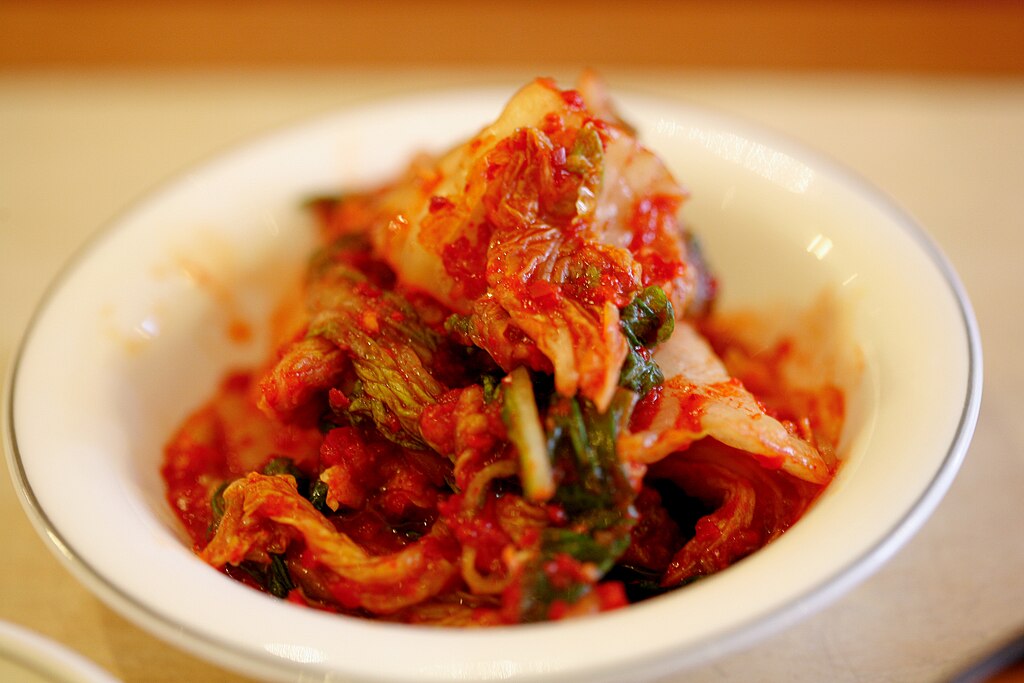
Fermented cabbage with chili flakes, garlic, ginger, and a punch of personality. Traditional kimchi uses fish sauce, but vegetarian versions rely on soy sauce or kelp stock—and lose none of the drama.
Koreans say kimchi isn’t a side dish, it’s a lifestyle. Being a pickle eater in India, I kind of agree with what they mean.
Bindaetteok (Mung Bean Pancakes)
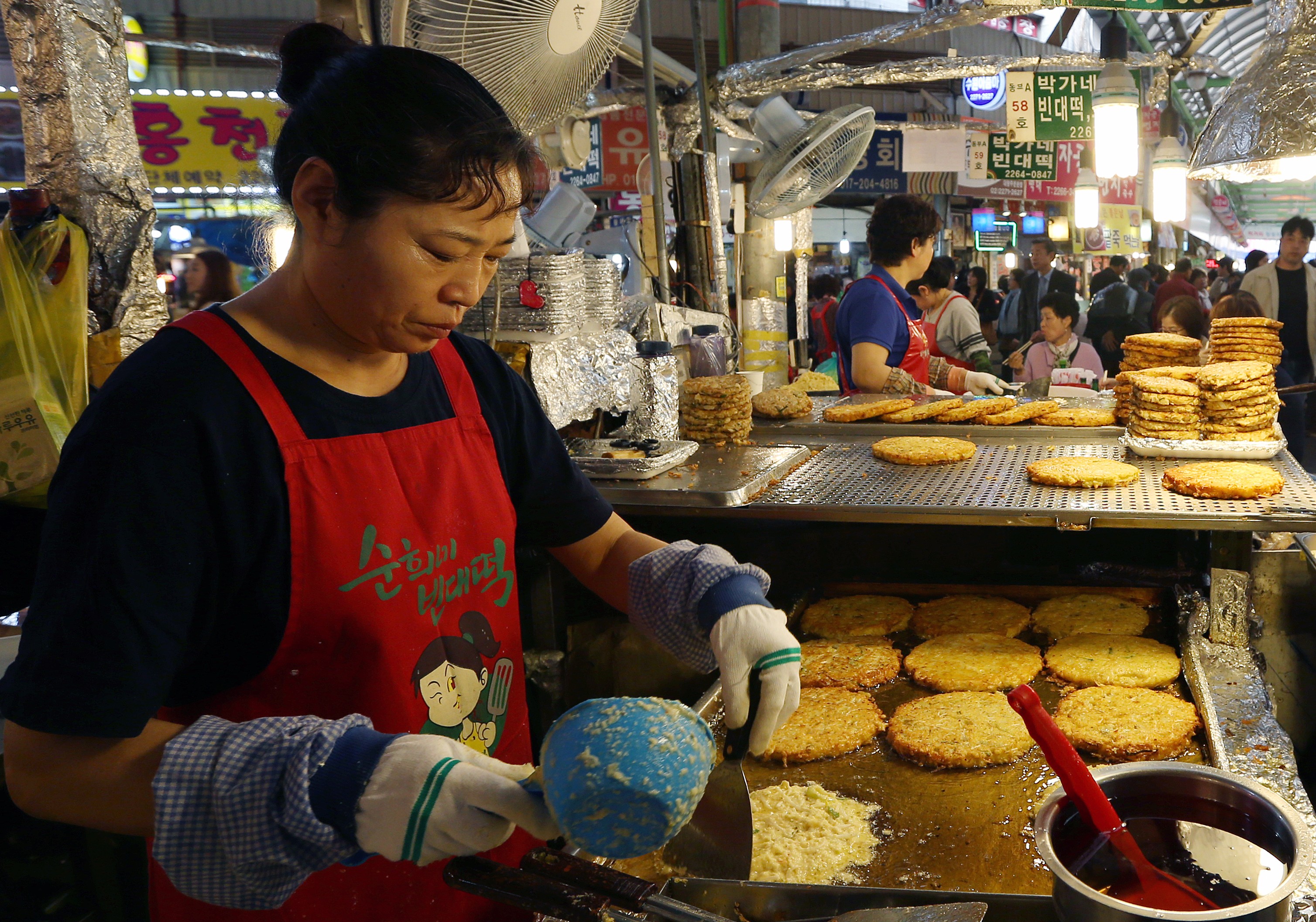
Golden, crispy, and deeply satisfying, these pancakes are made from ground mung beans mixed with vegetables like kimchi, scallions, and sprouts. Fried until crackly on the outside and soft within.
For locals, this is a must have on a rainy day. Rain or not, I’ll take two, always!
Jjajangmyeon (Noodles in Black Bean Sauce)
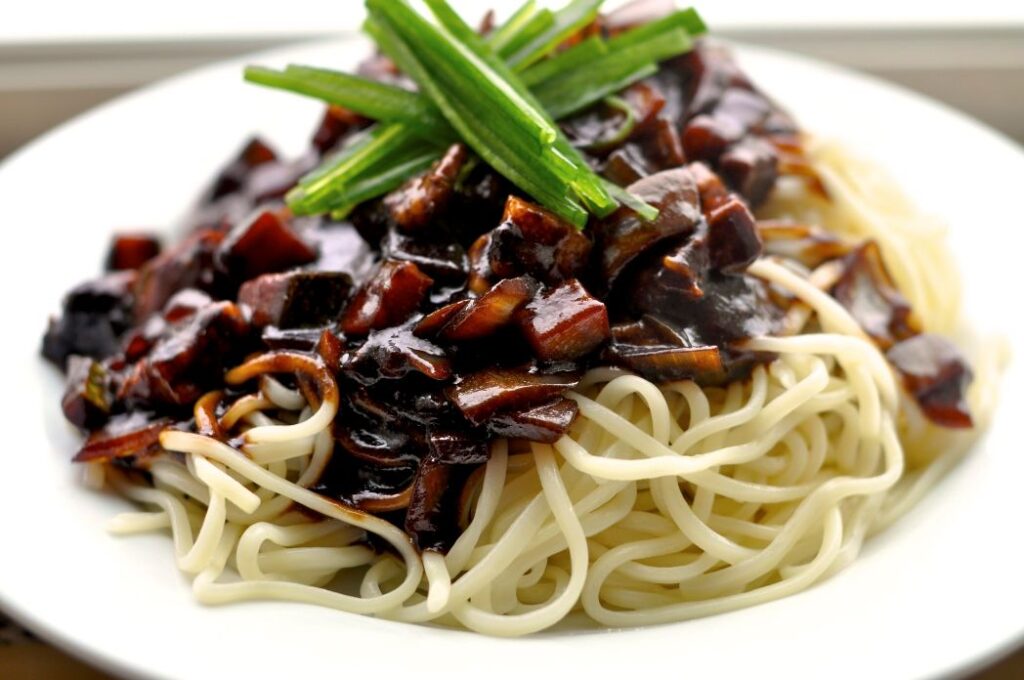
Koreans celebrate the first day of office joining or moving houses with Jjajangmyeon. But I feel it is the kind of dish you order when you’re hungry, indecisive, or mildly emotional.
Jjajangmyeon are thick wheat noodles that disappear under a glossy, inky-black sauce made from chunjang (fermented black soybean paste), sautéed with onions, zucchini, cabbage, and sometimes potatoes or mushrooms. Vegetarian versions skip pork entirely, letting vegetables do the heavy lifting.
The flavour is deep, savoury, and slightly sweet—comforting in a way that feels both nostalgic and indulgent. It’s messy, unapologetic, and deeply satisfying. You’ll slurp, you’ll stain your shirt, and you won’t care.
Banchan
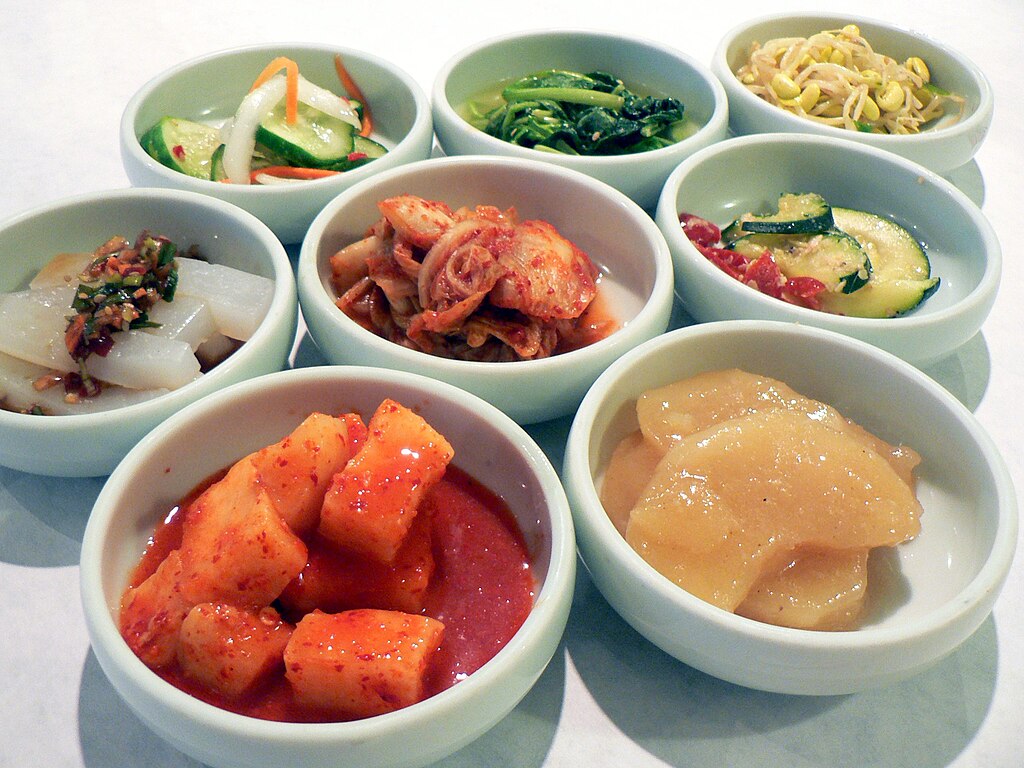
Banchan are side dishes that come with the main dish you order in a restaurant.
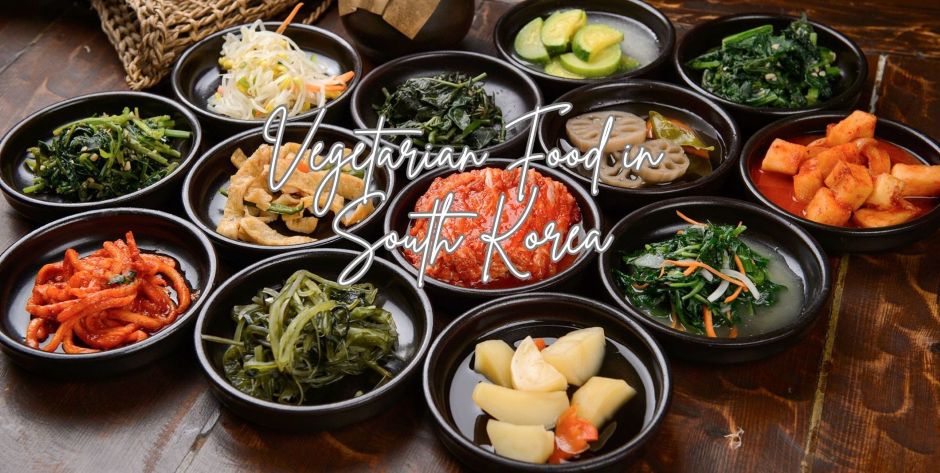
Tiny plates of seasoned spinach, braised potatoes, pickled radish, cucumber salads, lotus root, and more arrive unannounced and leave you overwhelmed, in the best way. Each one is a lesson in balance: salty, sweet, fermented, fresh.
If you are ever at a restaurant where you can’t trust the main dishes or the servers don’t understand your translation (read hand movements) or if it’s a busy local buffet restaurant as lunch, trust me and fill up on banchans and you are good to go!
Mandu (Korean Dumplings)
Soft, plump dumplings stuffed with glass noodles, tofu, cabbage, mushrooms, and garlic chives. Steamed, pan-fried, or floating in broth, mandu are comfort food that transcends language barriers. One bite and you’ll understand why they show up at celebrations, holidays, and whenever someone needs cheering up.
Traditionally filled with pork, there are vegetarian options available!
Pajeon (Scallion Pancakes)
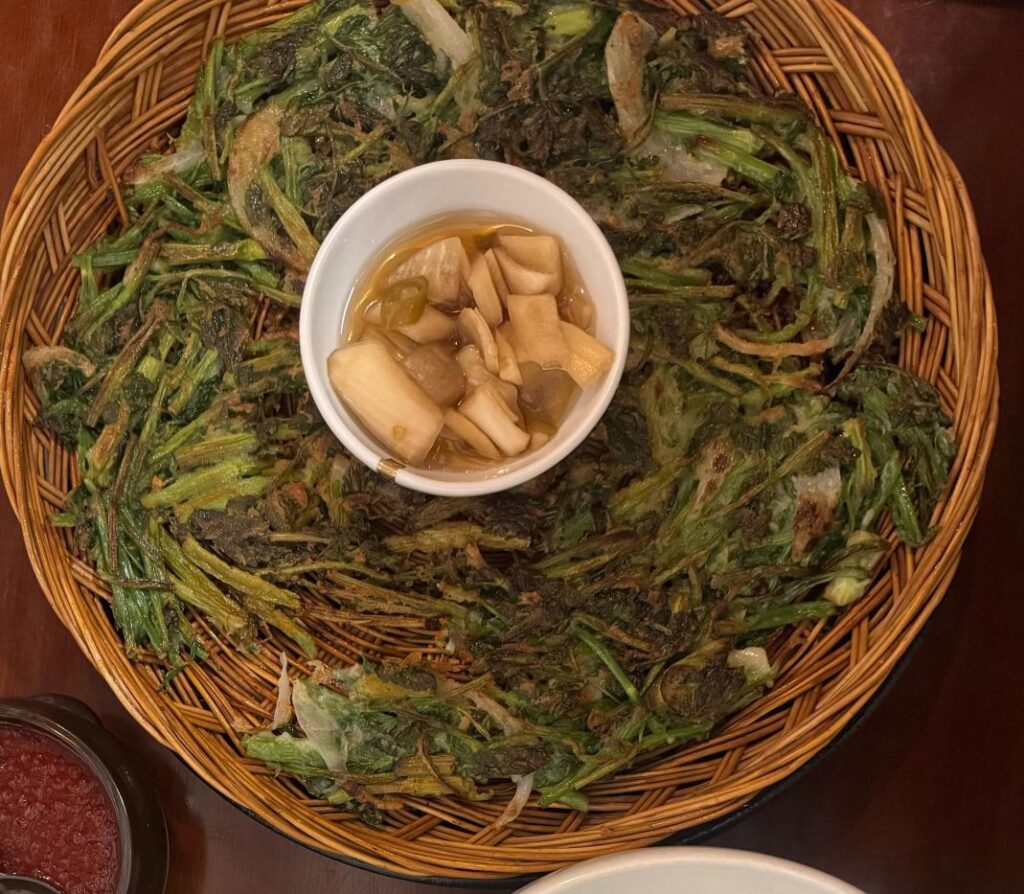
While discussing vegetarian food in South Korea, pajeon has to be on the list!
Long scallions bound together in a light batter and shallow-fried until crisp at the edges. Often paired with a soy-vinegar dipping sauce, pajeon is snack food masquerading as a meal.
Pair it with makgeolli, a milky, slightly fizzy traditional rice wine and it suddenly tastes even better. This is a classic Korean duo worth traveling to South Korea for.
Soondubu Jjigae (Soft Tofu Stew)
A bubbling red stew served aggressively hot, soondubu jjigae is drama in a stone bowl. Silken tofu breaks apart at the slightest touch, soaking up chili paste, garlic, and vegetable broth.
Vegetarian versions skip seafood and still deliver warmth, depth, and the kind of comfort that makes you slow down between spoonfuls.
Hotteok
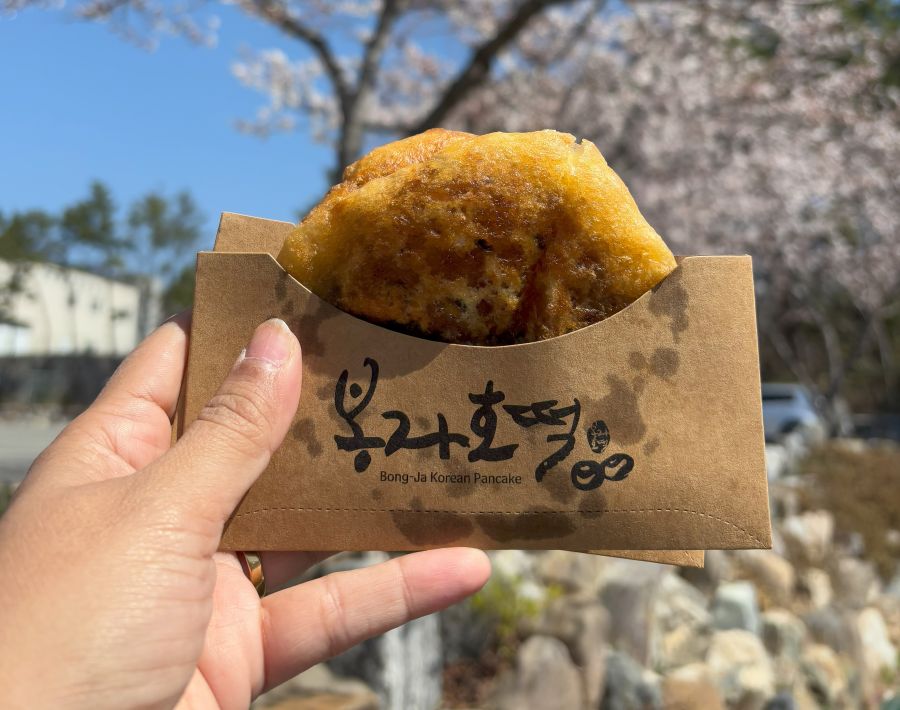
Winter has a smell in Korea, and it smells like hotteok. These street-side pancakes are stuffed with brown sugar, cinnamon, and crushed nuts, then fried until molten inside. One bite and you’ll burn your tongue and also smile. It’s non-negotiable. Ssiat Hotteok is a popular variation from Busan, which is stuffed with various seeds (pumpkin, sunflower, sesame) and nuts.
It gives the warm gooey feeling – the same one gets while watching the rom-com K-dramas!
Also available in other fillings such as Honey, Sweet red bean paste, Chocolate, Nutella and Fruit jam.
Bungeo-ppang
Fish-shaped pastry, filled with sweet red bean paste or custard, is whimsical, nostalgic, and surprisingly filling. It is a street food that doubles as edible joy.
Ramen
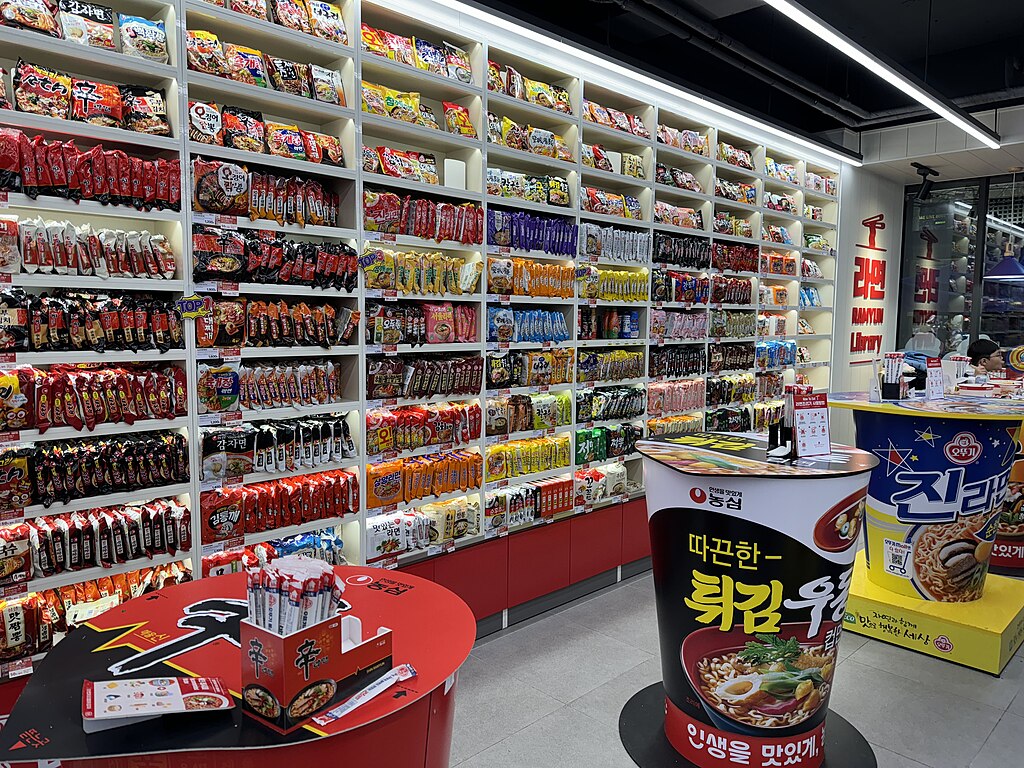
Instant ramen or Ramyeon is practically a soul food in Korea. While there are very few vegetarian options, these instant ramen packets are available in convenience stores. Ask the staff before purchase, just to be sure.
Vegetarian versions often use mushroom broth, gochujang, or doenjang (soybean paste), topped with scallions, tofu, seaweed, and sometimes cheese—because Korea. It’s quick, customizable, and perfect for nights when effort feels optional.
Goguma (Baked Sweet Potato)
Sold steaming hot from street carts, Korean sweet potatoes are naturally sweet, dense, and caramelized inside. No butter, no seasoning, no nonsense. Just tear one open and eat it with your hands like everyone else. Simple food, supreme satisfaction.
Breads and Pastries
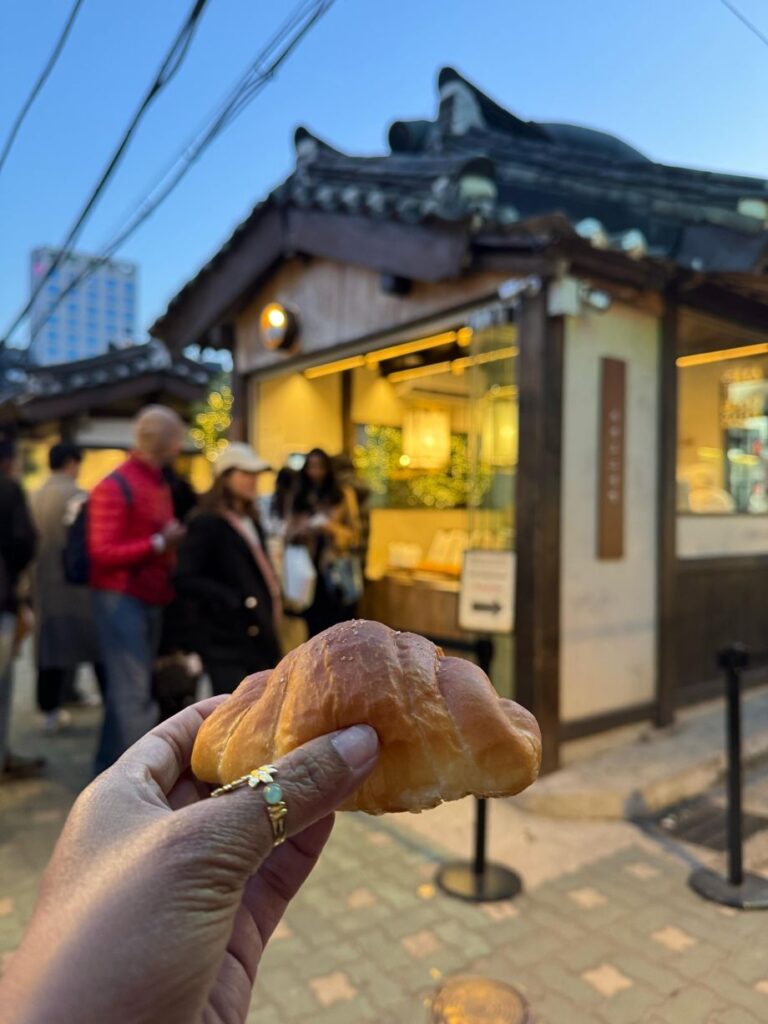
Korean bakeries are a delightful plot twist. Think soft milk bread, cream-filled buns, sweet potato loaves, red bean pastries, and corn-cheese buns that somehow work. Grab a matcha latte or the all season Korean favourite Iced Americano and you have the perfect cafe date with yourself.
The breads sometimes have savoury fillings making it a meal in itself.
VEGETARIAN RESTAURANTS IN SOUTH KOREA
While there are many options throughout the country, Seoul and Busan being tourist hotspots have the most options. Here, I am sharing the vegetarian restaurants in Seoul and Busan.
Vegetarian Restaurants in Seoul
As the capital and cultural heartbeat of South Korea, Seoul is naturally the easiest and most exciting place to eat a vegetarian or vegan meal. The city’s food scene is layered, experimental, and surprisingly accommodating.
During my few days in Seoul, I followed my appetite more than any map. Most evenings ended in Myeongdong, as I grazed my way through street food there more nights than I can count, often standing on the pavement, juggling skewers and paper cups, and wondering why this isn’t considered a perfectly acceptable dinner plan everywhere.
To balance that out, I slowed things down in Insadong, ducking into cosy cafés and traditional eateries where vegetarian-friendly dishes felt more intentional and rooted in heritage.
If you’re travelling vegetarian (or vegan) in Korea, Seoul is where your food journey should begin. These are some of the places and dishes that made my time in the city especially memorable.
Loving Hut
Loving Hut is my go-to answer whenever someone says, “But what will you eat in Korea?”
This international vegan chain does shockingly good plant-based versions of classic Korean comfort food – the kind that makes you double-check the menu to confirm there’s really no meat involved. From dumplings and noodles to saucy mains, everything is hearty, familiar, and deeply satisfying. It’s the place I head to when I’m craving vegetarian mandu and want a guaranteed win.
Bonus: Loving Hut outlets are scattered across Korea, so even if you’re not in Seoul, chances are there’s one nearby waiting to rescue your meal plans.
Paris Croissant

When hunger strikes mid-exploration, Paris Croissant is a quiet hero. Found at train stations, busy intersections, and shopping streets, it’s incredibly convenient and surprisingly reliable. The bakery offers a wide spread of soft breads, pastries, and decent coffee, making it perfect for breakfast on the go or a quick afternoon pause. Not everything is vegetarian, but there’s usually enough choice to piece together a satisfying snack, especially if you, like me, believe carbs are a travel essential.
Plant
Plant is practically a rite of passage for vegetarian travellers in Seoul. One of the city’s most well-known vegan establishments, it has two locations – Itaewon & Yeonnam and both are worth visiting. The food is thoughtfully prepared, globally inspired yet grounded in comfort, and the atmosphere feels warm and welcoming.
Vegan & Beyond
Tucked away near Hongdae/Sinchon, Vegan & Beyond feels like the kind of place you accidentally spend hours in. It’s a charming vegan café that does a bit of everything—baked goods, desserts, international comfort food, cocktails, and more. What makes it special is the vibe: relaxed, community-driven, and consciously curated. The café also hosts events and has a small zero-waste shop, which adds to its thoughtful, feel-good appeal.
Damsot Ikseon
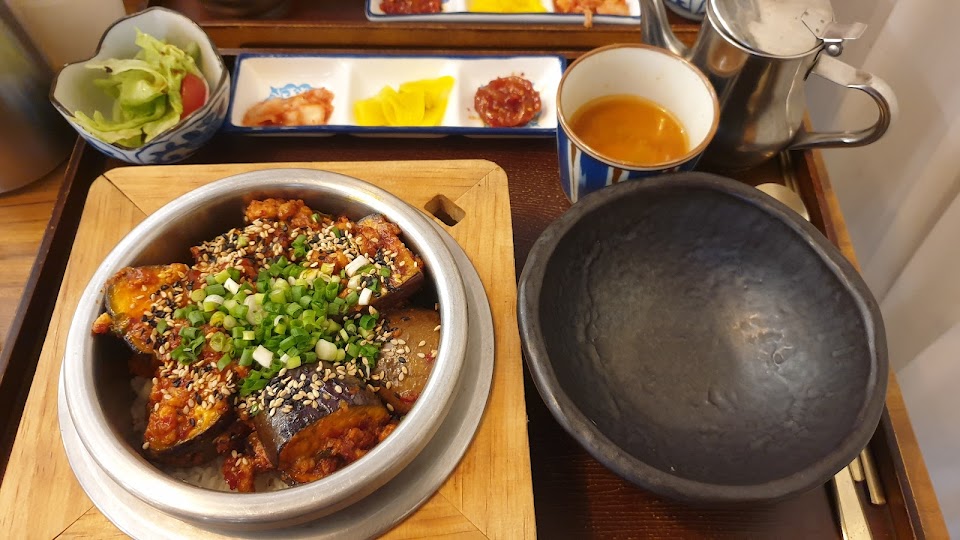
Located in the atmospheric lanes of Ikseondong Hanok Village, Damsot Ikseon is where tradition meets simplicity. The restaurant is known for its rice bowls, with options for meat-eaters and a particularly good eggplant bowl for vegetarians. The flavours are subtle but deeply comforting, making it the kind of meal you appreciate even more when eaten slowly.
Plantude
Situated in COEX at Samseong Station, Plantude is a sleek, modern space that caters well to vegetarians without making a fuss about it. The menu spans Korean dishes, wholesome bowls, and even pasta, making it a great option if you’re dining with a mixed group. It’s polished, approachable, and perfect for when you want something familiar.
Markets and Street Food
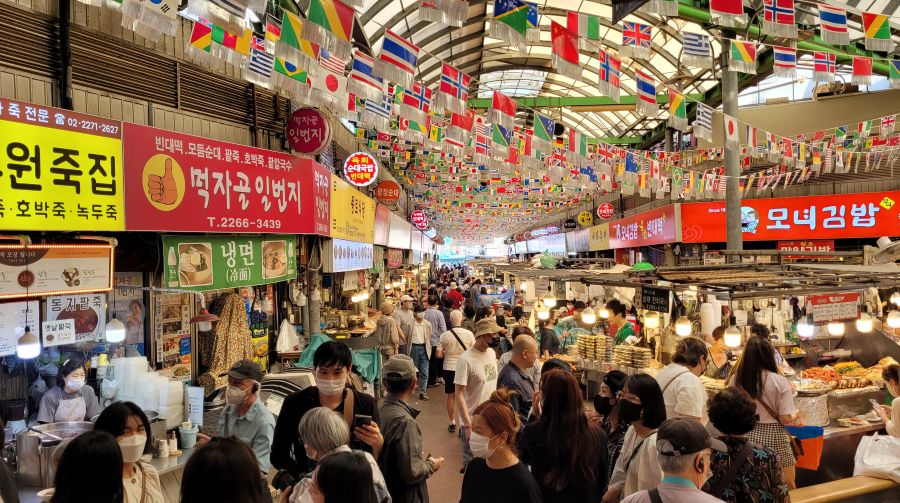
Beyond restaurants and cafés, Seoul’s markets and street-food districts are where vegetarian eating becomes spontaneous, fun, and slightly chaotic—in the best way possible. These places offer some of the most memorable bites in the city.
Myeongdong Street Market: Best for trying tteokbokki, hotteok, grilled corn, bungeo-ppang, cheese-filled pancakes, garlic bread, etc.
Gwangjang Market: It is famous for dishes like bindaetteok (mung bean pancakes), rice cakes, vegetable pancakes, pickled sides, and fresh produce stalls.
Insadong Street Stalls
Namdaemun Market: Options include vegetable kimbap, simple noodle soups, fried snacks, and Korean pancakes.
Vegetarian Restaurants in Busan
While Seoul may steal the spotlight for vegetarian dining, Busan holds its own in a quieter, more understated way.
During my time in Busan, eating vegetarian required a bit more planning—but the reward was meals that felt thoughtful, warm, and refreshingly unpretentious.
Dajeon
Dajeon is one of those places that makes you exhale in relief. Located on the third floor in the middle of Seomyeon, it serves traditional Korean dishes reimagined as fully vegan. The dumplings alone are reason enough to visit—plump, flavourful, and comforting in the way only handmade food can be.
Soban Vegan
Just a few blocks from Dongdaesin metro station, Soban Vegan feels like a neighbourhood staple rather than a restaurant trying to make a statement. The menu focuses on classic Korean dishes and soups, done cleanly and simply. What makes it special is the option to take things home—vegan banchan, condiments, and packaged goodies that let you extend the experience beyond one meal. It’s the kind of place you wish existed near your own home.
Veganarang
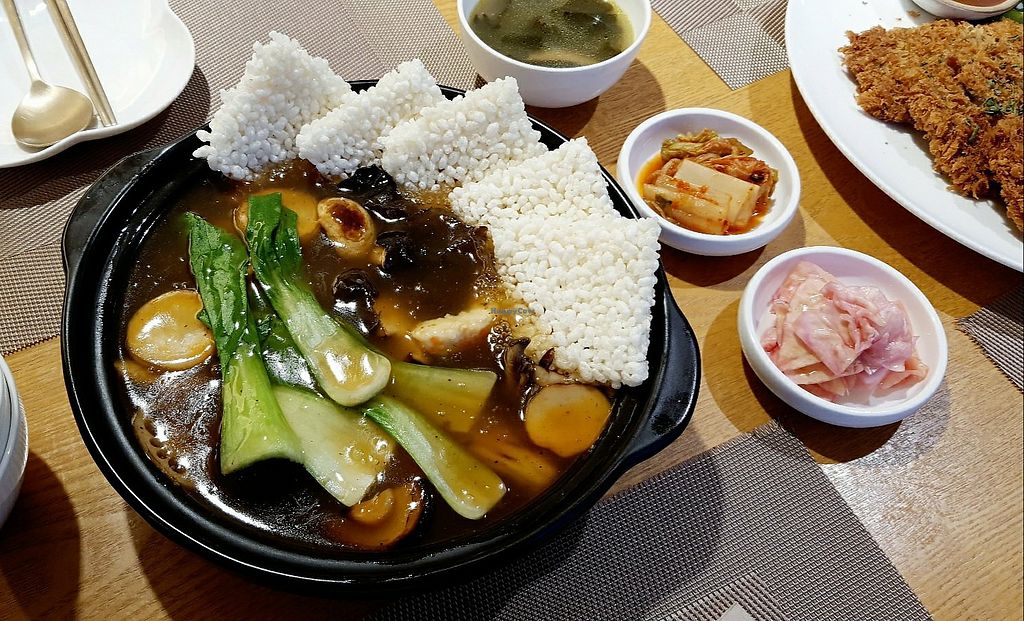
Set inside a high-rise overlooking Suyeong Bay, Veganarang pairs good food with a calming view. It’s popular for a reason—the menu is solid, satisfying, and entirely plant-based, making it a reliable choice when you want to eat well without overthinking. Dining here feels slower, more reflective, and perfectly suited to Busan’s coastal rhythm.
Namaste Haeundae
Sometimes, you just want familiar flavours and Namaste delivers. Located in the heart of Haeundae, this well-reviewed Indian restaurant offers plenty of vegetarian options and generous portions. It’s especially welcome after days of navigating Korean menus, and the warmth of the spices feels grounding after long coastal walks.
Eat Drink Vegan
Tucked away in Seomyeon, Eat Drink Vegan is artsy, cosy, and intentionally small in scope. The menu is limited, but what they do, they do well. It’s the kind of place you go knowing you won’t be overwhelmed by choice—just comforted by consistency and care.
FAQs ABOUT VEGETARIAN FOOD IN SOUTH KOREA
Do hotels serve vegetarian food for breakfast?
Hotels, AirBnBs and Guesthouses in South Korea generally have a few vegetarian options in the buffet breakfast. For vegetarian travellers in South Korea breakfast might be the best meal of the day. Breakfast spread contains bread, salads, fruits, yoghurt, and coffee.
Can you survive on street food?
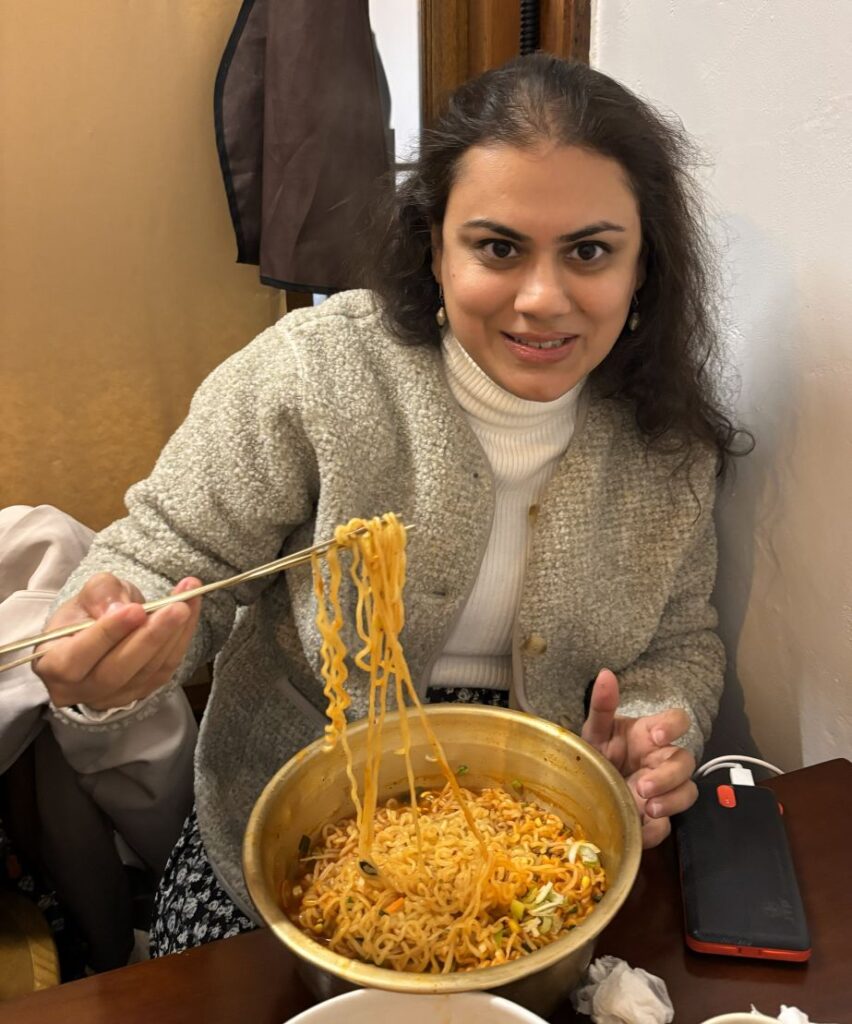
Yes! There are amazing street food options in Korea and most of the food listed above is available as a street food option. Tteok-bokki, baked sweet potato, Hotteok, Pajeon are also affordable and perfect street food to eat while exploring.
How to find vegetarian food in South Korea?
If you have an internet connection (and I highly recommend you to have one), download the Happy Cow app. Based on the current location, it will show you the possible vegetarian and vegan restaurants in the area. The app will show the distance, menu, photos and even reviews left by visitors.
Have you tried any of these foods? Are you planning a trip to Korea and trying to find vegetarian food in South Korea? I hope this guide helps you and clears all the confusion. Let me know your questions and experiences in the comments.
Cost of vegetarian meals in South Korea?
The street food and convenience store food costs between 2,000-10,000 KRW, mid-range restaurant vegetarian dishes/buffets between 12,000-20,000 KRW, while dedicated vegan restaurants or temple food would be higher than 20,000KRW.
Read more posts from South Korea
- One day in Busan
- Chasing cherry blossoms in South Korea
- Souvenirs from South Korea
- Jinhae Cherry Blossom Festival
- Beomeosa Temple Stay
- DMZ Tour from Seoul
- One day in Seoul
- Things to do in Gyeongju
- Best Hotels in Seoul Myeongdong
Disclaimer – This post contains affiliate links. It means it adds no extra cost to you if you book through the link, but I get a referral bonus, which helps me earn a little to keep this website up and running.
PIN THIS POST FOR A LATER READ!

4 comments
Tteokbokki happens to be one of my favourite dishes, partly because I am a big K drama fan and it is also known to be my favorite K drama actor’s favorite dish.
I am not Vegetarian but I was so pleasantly surprised by the cuisine in South Korea. Very healthy, delicious and unique. Glad you found so many great options too.
I found it was so easy to order delicious vegetarian dishes and sample different recips during my three weeks in Vietnam. I look forward to visiting South Korea.
Growing up, my childhood friend was Korean, so our after-school snack was white rice and kimchi. Your round-up foodie post speaks to me! Thank you for the reminder of all the types of Korean cuisine that is available to enjoy. Great post!