Last Updated on July 11, 2026 by Ketki Gadre
First time visitor to Prague? Then you must spend at least 3 days in Prague. Read this blog to cover Prague tourist attractions and all the things to do in Prague including the Prague Castle, Astronomical Clock, Charles Bridge, visiting offbeat museums as well as trying viral foods in Prague.
Unlike many other European cities such as Paris, Rotterdam, Berlin and others which suffered in wars or natural disasters, Prague has been lucky enough to be untouched.
Which is exactly why you can easily get an architecture history class here (from medieval period to modern and contemporary) walking through various Prague districts.
Other than architecture, the Czech capital is a perfect blend of cathedrals, fortresses, cobbled alleys, modern art scene, museums and beautiful cafes. If you are visiting in spring or winter, you can also experience the beautiful Easter markets of Prague and Christmas markets of Prague. There’s a lot to do in Prague in 3 days.
This blog covers the perfect way to cover 3 Days in Prague before moving to other European cities or one day trips from Prague to places such as Cesky Krumlov and Liberec.
Planning a trip to Prague?
| Here are a few quick recommendations for you! I suggest booking these services and activities in advance! 🚅 Getting There: – Bus Transfer Between Prague Airport and the City (Affordable shared transport option) – City Pass with Public Transport access (Ideal if you’re spending a few days) – Private Airport Transfers (For those who plan to fly into Prague) 👣 Activities & Tours: – Old Town Tour (Guided 2-3 hours tour) – Vltava River Cruise (Stunning bridges and historical architecture from a different perspective) – Pilsner Urquell Experience & Beer Tasting (best Czech beer) – Guided Food Tasting Tour 🕰️ Check Local Time: – Time Now |
Table of Contents
3 DAYS IN PRAGUE ITINERARY
3 Days in Prague Itinerary, Day 1 — Old Town, Jewish Quarter & Riverside Prague
Charles Bridge
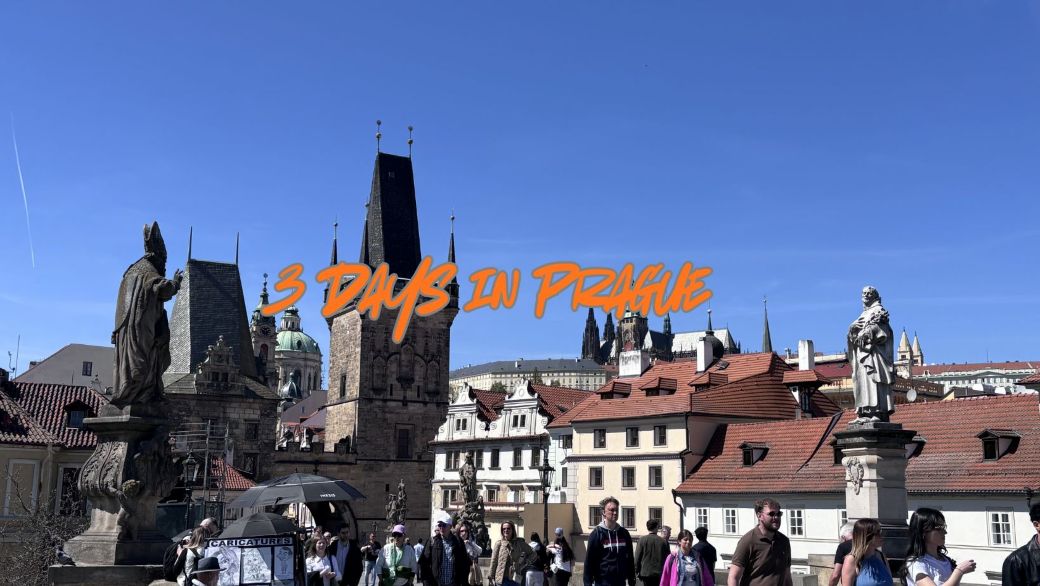
Having recently read Dan Brown’s Secret of the Secrets, I was extremely excited to explore Charles Bridge which is so vividly described in the book.
Start as early as possible by visiting the most popular tourist attraction in Prague – the Charles Bridge. Early morning with its soft sunlight and less crowds is the best way to explore the details of Charles Bridge.
This 14th century pedestrian-only stone bridge served as the sole Vltava river crossing bridge connecting the Old Town to Prague Castle for nearly 500 years.
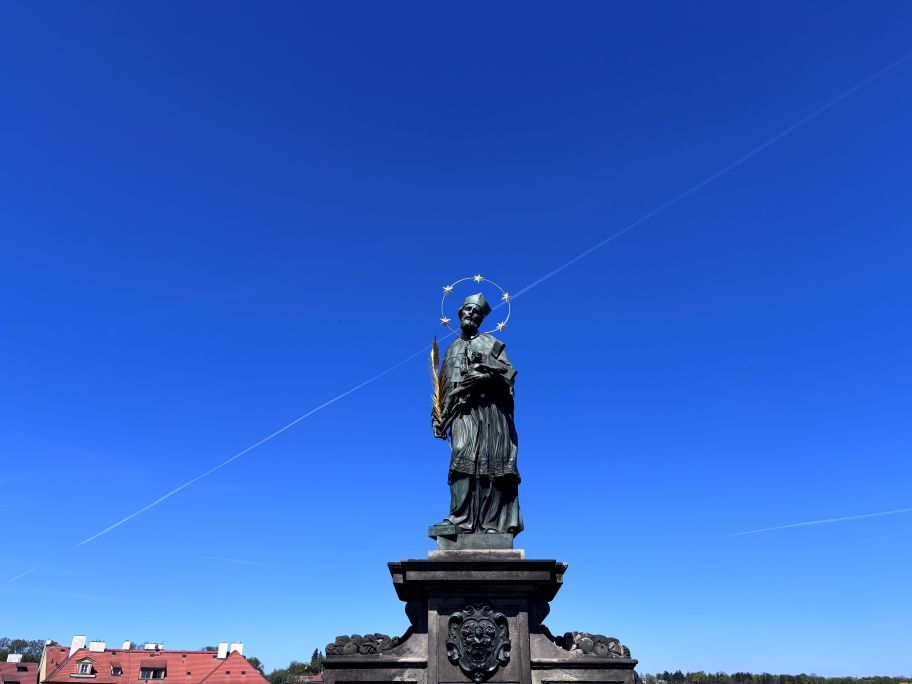
Walk by the many Baroque Statues lined on the sides of the bridge. The most famous statue on the bridge is that of St. John of Nepomuk. According to legend, he was thrown into the Vltava River from the bridge in 1393 by King Wenceslas IV. Touching the bronze plaque at the base of his statue is a popular tradition said to bring good luck and ensure your return to the city.
The bridge also features 16 arches made from sandstone and strengthened with a medieval mortar recipe rumored to include egg yolks. It has outlasted major floods and conflicts for over six centuries.
Notice the many singers and caricature artists on the bridge as you watch ships cross by.
Old Town Bridge Tower
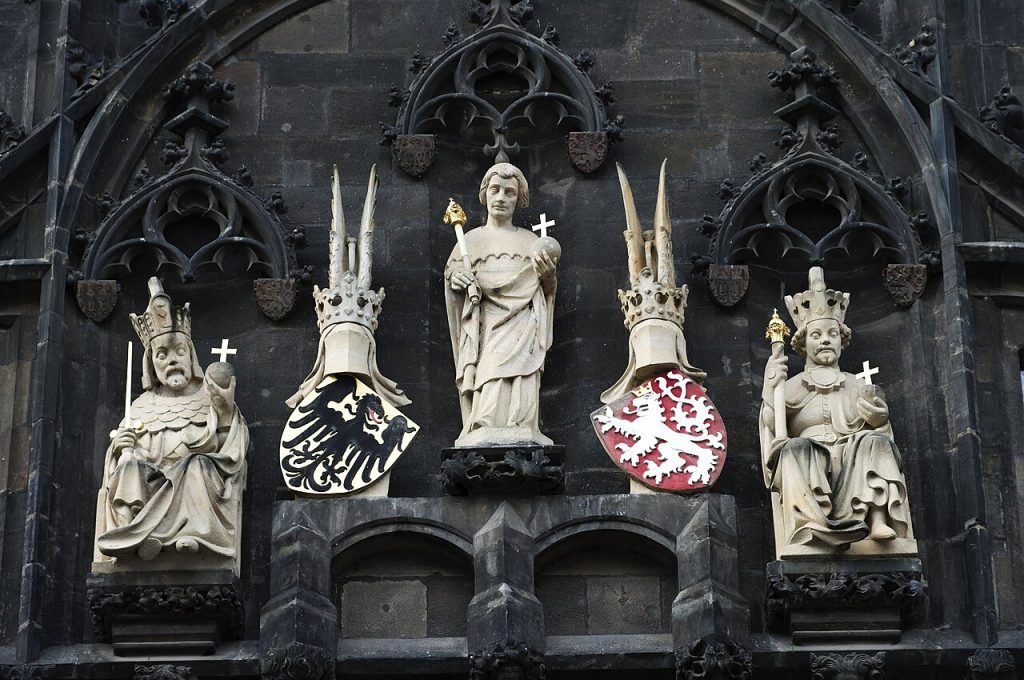
The Old Town Bridge Tower is widely regarded as one of the finest Gothic gateways in the world.
Built in the mid-14th century alongside Charles Bridge, the tower was intended to be far more than just an entrance to the Old Town. It served as a symbolic triumphal arch, welcoming Czech kings during their coronation processions into the historic heart of Prague.
The tower is rich with intricate Gothic detailing, coats of arms, and statues on its exterior; the tower remains one of the city’s most striking medieval landmarks. Those willing to climb its 138 narrow steps are rewarded with sweeping views of Prague’s red rooftops, the Vltava River, and the iconic skyline beyond.
National Library – Klementinum
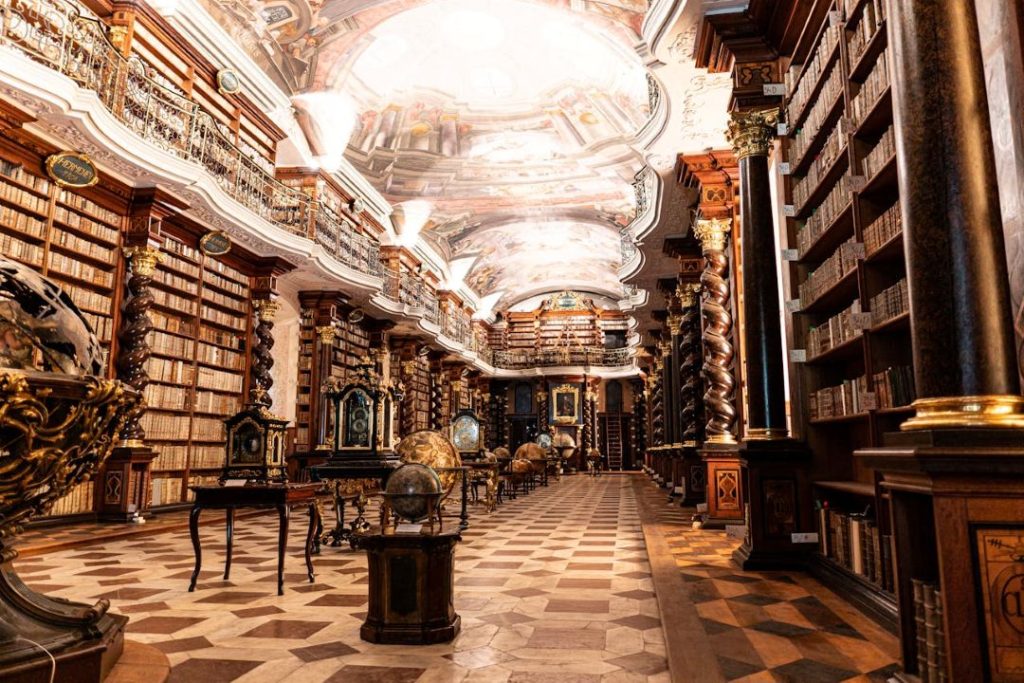
The city of Prague has a lot of buildings but Klementinum is really something special. This place was originally a school for Jesuit priests but is now converted to the National Library. The famous part of Klementinum is the Baroque Library Hall. It has ornate frescoes on the ceiling, old globes and very old books. When you walk into this hall it feels like time has stopped.
Walking around Klementinum is like being in a book about Europe. It is very quiet. Feels like a grand old house. It also has courtyards and a big tower for looking at the stars. These places are nice and quiet, which is a change, from the busy streets of Prague.
Old Town Square
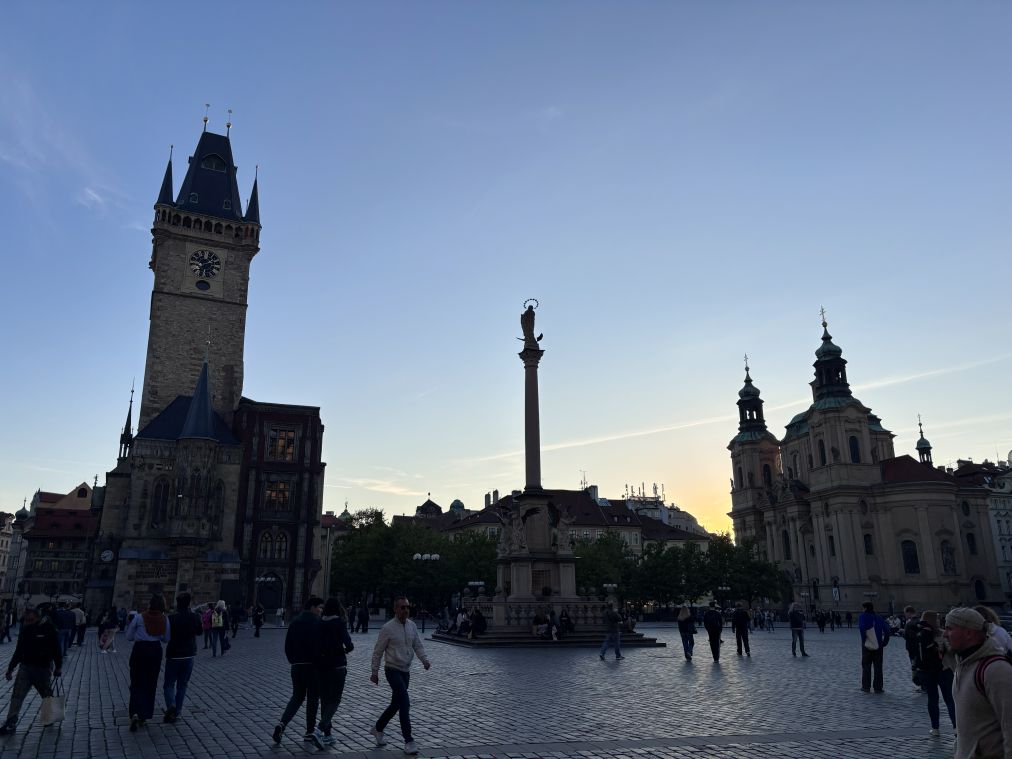
Next, head to Prague Old Town Square, which is the beating heart of the city. Surrounded by beautiful architecturally rich buildings, this square is always busy and it is possible to spend an entire day visiting the many structures and people watching.
One of the most noticeable structures is at the center of the square, you will see the statue of Jan Hus, a 15th-century religious reformer who was burned at the stake.
Understand why Prague is known as the ‘City of Hundred Spires‘ by climbing the Old Town Hall which gives a panoramic view of the old town and the city beyond from all four sides. Not to forget the mountains surrounding the city and the many flights in the sky. You can climb the spiral staircase or take an elevator. You can buy tickets at the visitor center inside the Old Town Hall.
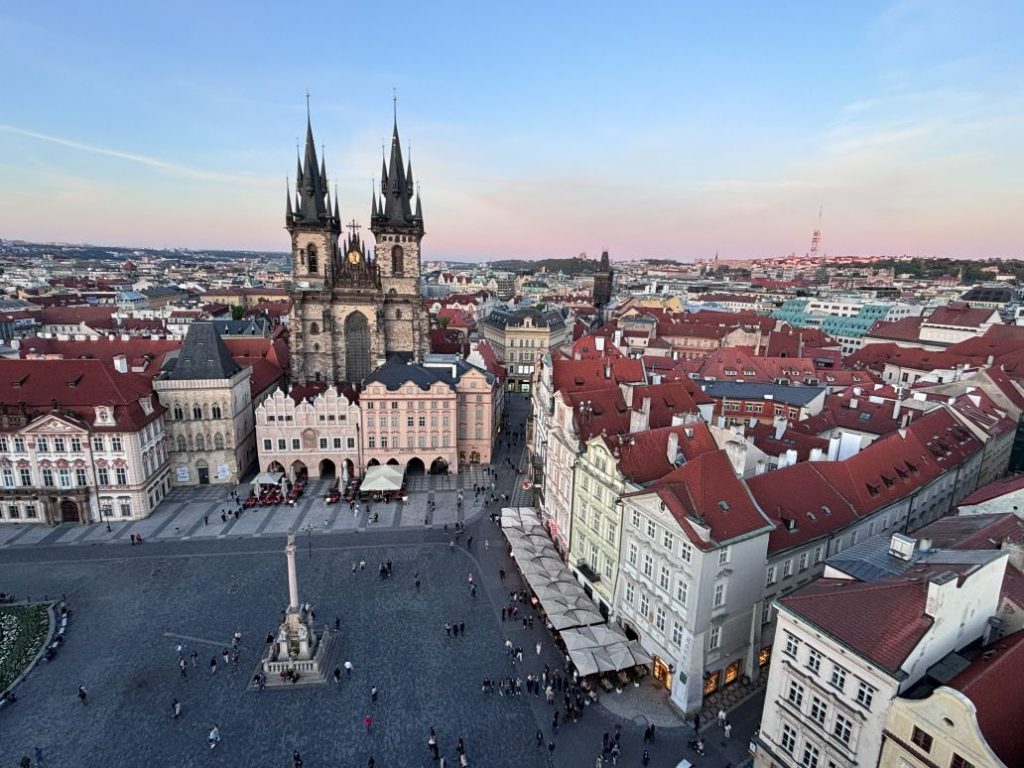
Another noteworthy place to visit is the Kinský Palace – a stunning Rococo-style palace that now houses an art gallery dedicated to the National Gallery Prague.
2 more popular attractions – Astronomical clock and Tyn Church are covered in details down below.
You can also book these tours on Get Your Guide or Viator.
| ✦ Book this tour on Get Your Guide – Old Town, Astronomical Clock and Underground Tour ✦ Book this tour on Viator – Prague Old Town and Jewish Quarter Walking Tour |
Astronomical Clock
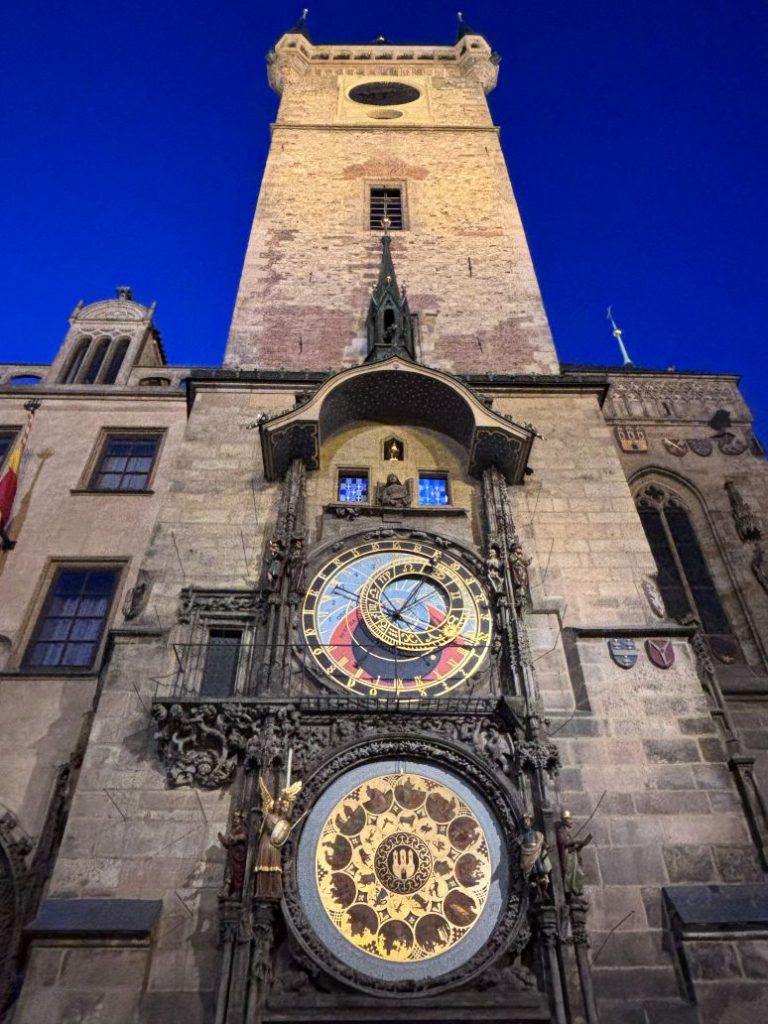
Whether you are spending 2 days or 3 days in Prague, don’t leave Prague Old Town Square without seeing the Prague Astronomical Clock. Located on the southern wall of the city’s Old Town Hall, it is a national icon and rightly so.
The Prague Astronomical Clock is not just one of Prague’s most photographed landmarks, it is also the world’s oldest astronomical clock still in operation.
Installed in 1410, the medieval clock has been fascinating visitors for over six centuries with its intricate craftsmanship and symbolism representing the sun, moon, and passage of time.
Every hour people gather to see the Walk of the Apostles. This is a cool thing that happens for just 45 seconds. The Walk of the Apostles is when the mechanical figures of the Twelve Apostles come out one, by one when the clock strikes. It happens fast you have to pay attention or you will miss the Walk of the Apostles.. That is what makes the Walk of the Apostles so nice.
Church of Our Lady before Týn
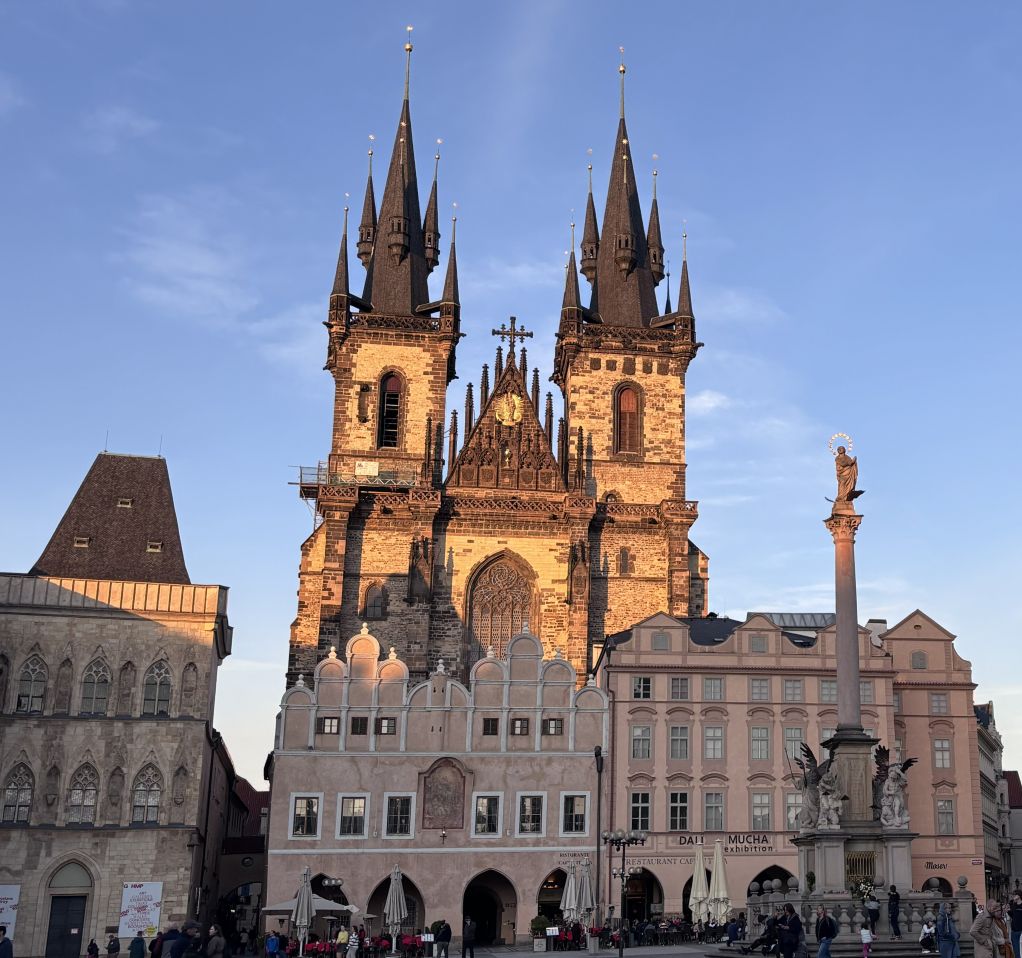
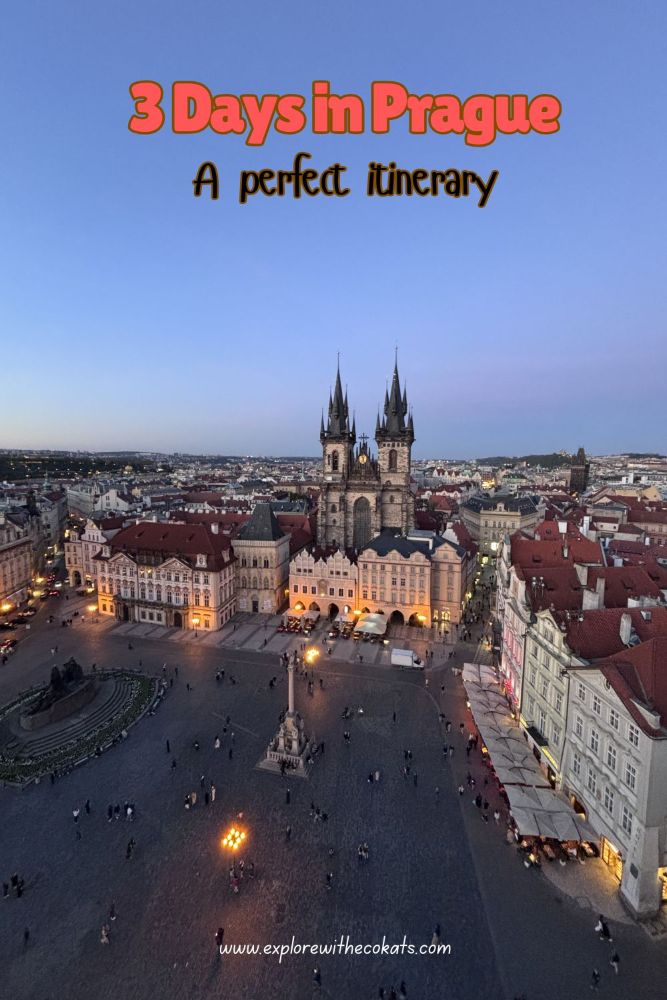
The Church of Our Lady before Týn is really something to see in Old Town Square. It has these two Gothic spires that stick out and you can see them from a distance.
While this 14th century church is beautiful throughout the day, at sundown when it is all lit up it looks like something out of a fairy tale with all the pastel colored buildings around it in Old Town Square.
The inside of the Church is very fancy with lots of details like altars, paintings and old stone ceilings. There are also tombstones that are centuries old and they tell us a lot about the history of Prague and the Church.
Powder Tower
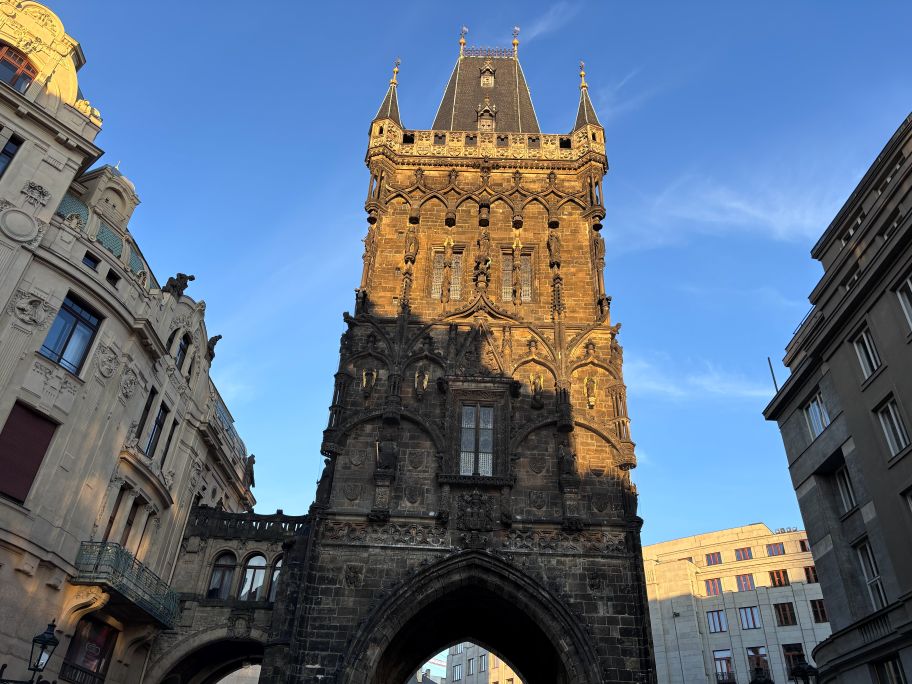
Standing at the edge of Prague’s Old Town and Charles Bridge, the Powder Tower surely gives off medieval vibes like no other building in Prague.
With its dark Gothic facade, pointed spires, and intricate stonework, the tower instantly catches your eye no matter which part of the day you visit.
Originally built in the 15th century as one of the city’s entrance gates, it later became a storage space for gunpowder, which is how it got its name. Today, it marks the beginning of the historic Royal Route once taken by Bohemian kings on their coronation processions.
But beyond the history, what makes the Powder Tower memorable is the atmosphere around it: the constant movement of trams, cafés spilling onto the streets nearby, and the feeling of slowly transitioning from modern Prague into its medieval heart.
Jewish Quarter
Explore Prague’s old Jewish area called Josefov that has an old synagogue called the Old-New Synagogue. This synagogue is one of the oldest in Europe. You can also see sites and the Old Jewish Cemetery here.
The Spanish Synagogue and the Kafka Memorial are also here which are important Prague Tourist Attractions.
The Josefov area has been home to Jew community since the 13th century which is why there are so many monuments dedicated to Jew history.
If you want to know the history of this area, enrol is a 3-hour walking tour. This tour lets you into synagogues and cemeteries. You get to learn a lot about Josefov and its history.
Sunset + Dinner

After a long day of walking through Prague’s cobbled streets, climbing towers, and weaving through centuries of history, there’s no better way to slow down than by spending the evening along the banks of the Vltava River.
As the sun begins to set, the city takes on an entirely different mood – bridges glow softly under golden light, castle views reflect on the water, and the riverside fills with people unwinding over drinks and dinner.
One of the simplest pleasures here is finding a quiet spot by the river with a glass of bubbly or Czech wine and simply watching Prague drift by at its own pace.
If you want to make the evening more special, you can opt for a Prague Sunset River Cruise, many of which include dinner and panoramic views of landmarks like Charles Bridge and Prague Castle beautifully illuminated after dark.
Alternatively, the riverbanks are lined with charming restaurants, floating bars, and cafés where you can settle in for a relaxed meal while listening to the gentle movement of boats on the water.
Since I was on a work trip, we went to Občanská plovárna and it was so good!
3 Days in Prague Itinerary, Day 2 – Prague Castle, Malá Strana & Hidden Café Streets
Prague Castle
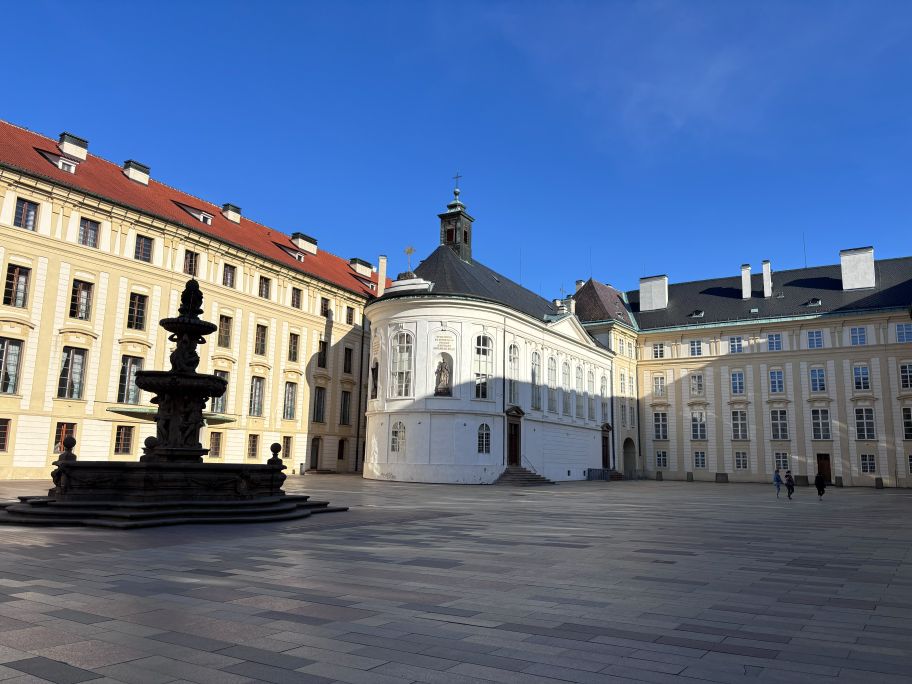
Start the day with a visit to Prague Castle as it will probably take up the entire morning. It’s best to get a ticket online or choose a guided tour with built-in tickets.
Did you know that Prague Castle is the largest ancient castle complex in the world?
Dating back to the 9th century, the castle has served as the seat of Roman emperors, Bohemian kings, and later, Czech and Czechoslovak presidents. Spread across nearly 70,000 square metres, Prague Castle is far more than a single palace, it is a vast complex of grand residences, churches, courtyards, and historic buildings. Exploring it properly can easily take anywhere between three to five hours.
Among its many highlights are St. Vitus Cathedral, the 12th-century Old Royal Palace, St. George’s Basilica, and the charming Golden Lane, a picturesque row of colourful houses once occupied by royal craftsmen and artisans.
| ✦ You can purchase your entry tickets here – Official Entry Ticket to Prague Castle ✦ Or book a guided tour here – Castle Tour with Local Guide and Entry Ticket |
St. Vitus Cathedral
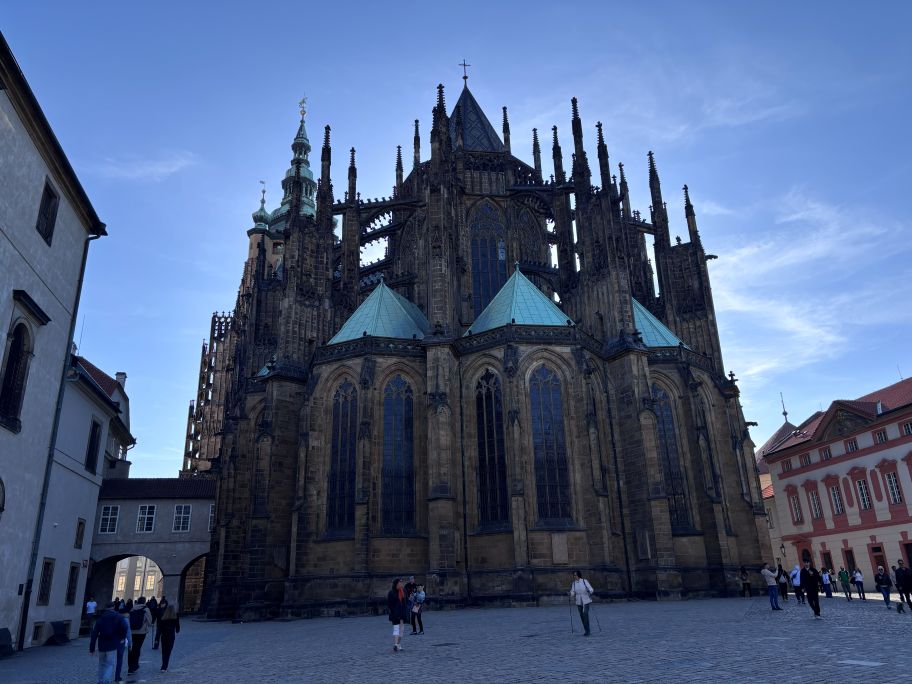
The magnificent St. Vitus Cathedral, where several Bohemian kings are buried, is one of the finest examples of Gothic architecture in Europe. Its spectacular stained-glass windows are particularly captivating, especially the famous Rose Window depicting scenes from the Biblical Creation of the World.
Golden Lane
Golden Lane is a famous part of Prague Castle. It was made at the end of the 1400s when they built walls on the north side. This little street is full of houses that are painted in lots of different colours. Golden Lane has a lot of stories and legends about it. These stories have inspired writers and artists. One of these writers was Franz Kafka. He used to live on Golden Lane. Now some of the houses on Golden Lane have an exhibition that shows what life was like there, over the 500 years. Golden Lane is still an interesting place to visit.
Malá Strana lanes
Malá Strana is right under the castle hill so that should be your next stop on the Day 2 Prague itinerary.
This old neighbourhood has streets made of cobblestones and buildings with ivy all over them. You will see cafes and nice buildings from the Baroque time that look like they have not changed. When you turn a corner you will find a small garden, a very old door or the sound of church bells making you feel lost in the European lanes.
Lennon Wall
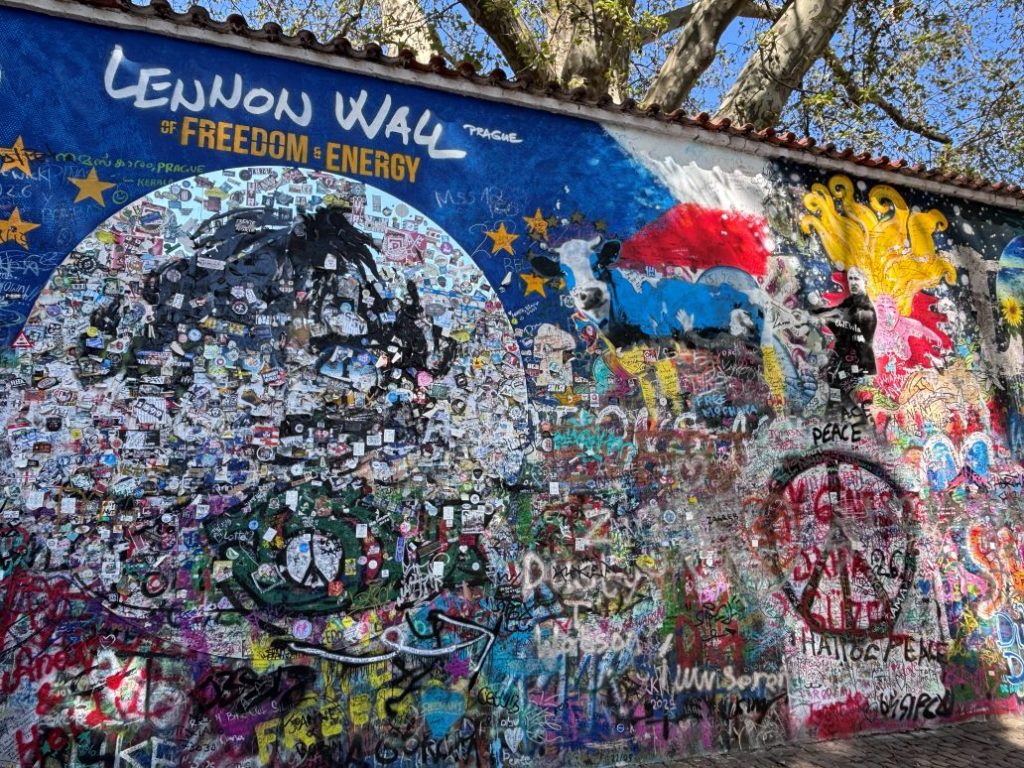
One of the must visit places in Malá Stran is The Lennon Wall. It is a historic legal graffiti wall in Prague which was painted by an anonymous artist after the 1980 murder of John Lennon, a musician.
Over a period of time, more people expanded upon it, the wall slowly became a place for free expression of then communist Czechoslovakia.
The wall has historically been used for demonstrations and carries a central theme of John Lennon, but it also features designs relating to local and global causes such as global warming. The wall has also inspired other walls across the globe, such as the Hong Kong Lennon wall.
Using spray paint is not allowed for visitors, however you can write a message by a marker (if you find a space)
Kabourek
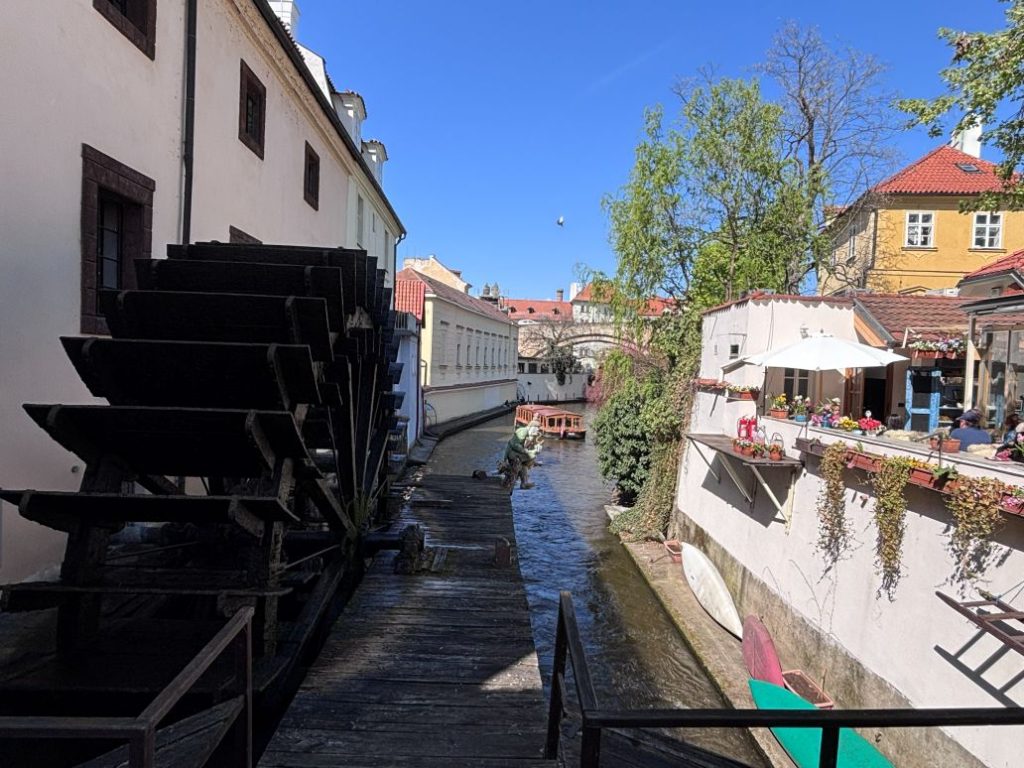
A stone’s throw away is Kabourek, an old water goblin guarding an old mill on the Devil’s Stream in Prague.
The famous water wheel is tucked away beside the narrow Čertovka canal on Kampa Island, in an area often called Prague’s “Little Venice.” The fast-flowing channel once made this an ideal spot for mills, and two historic water wheels still remain here today. The larger and more iconic one, commonly known as the Grand Priory Mill, dates back to the late 13th century. Though restored several times over the centuries, it has retained its original scale, measuring 8 metres in diameter and weighing nearly five tons, making it one of the largest historic mill wheels in Europe.
Sat on the floor level of the water wheel is the little green man. If you see him and have a laugh at his goggly eyes and curly pipe then watch out for he is known as a “Vodník” (known as water goblin in Czech folklore) and is to be respected.
Park Cihelná
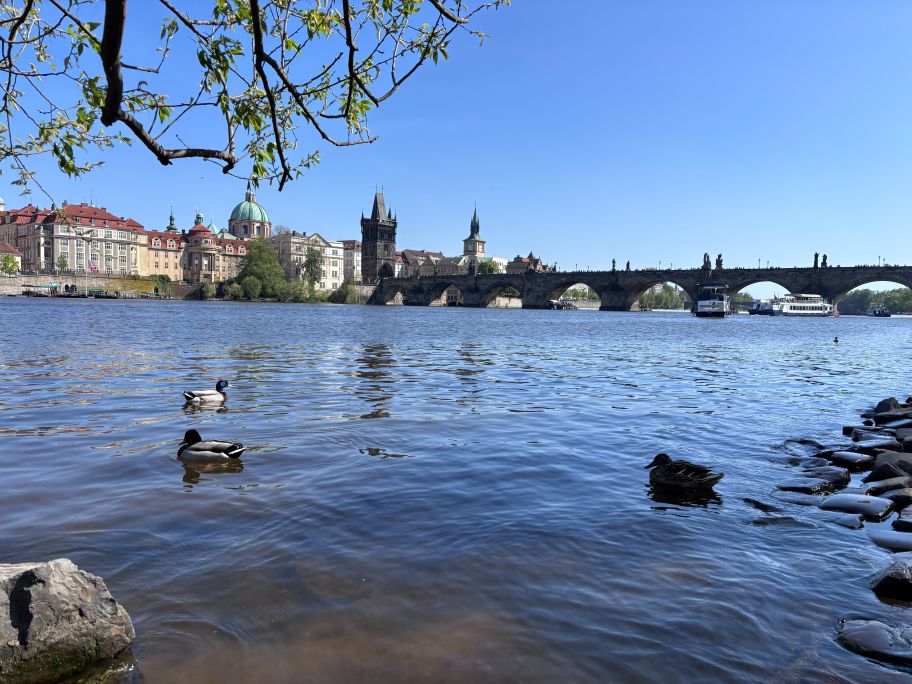
If you’re looking to take the iconic fairytale photo flocked by Mallards and other feathered friends, Park Cihelná is a must visit.
Located on the Malá Strana side of the Vltava River, this area gives you a beautiful vantage point of the Charles Bridge, boats passing by and birds stopping for a quick bite. You can feed them if you have some food like bread.
Being a bird enthusiast, I was utterly excited to watch them in such close proximity!
Vyšehrad Castle
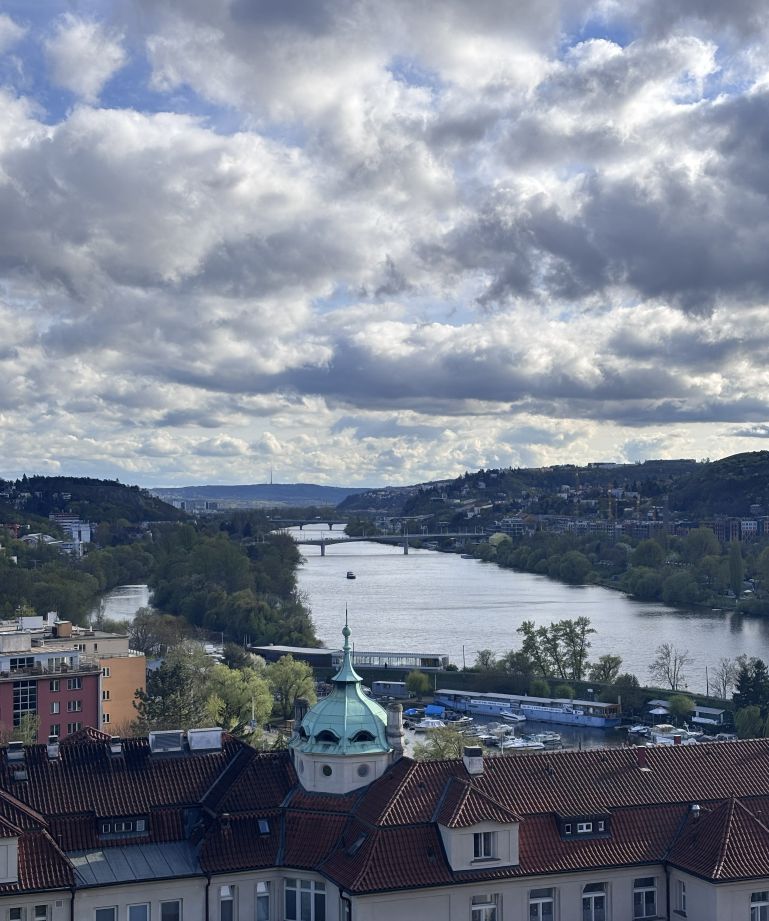
While I wanted to visit the Petřín Hill & Tower for the view of the city from the top as well as catch some Cherry Blossoms in Prague, the funicular to go up the hill was under construction. I was low on energy after exploring the entire Prague Castle so decided to head to Vyšehrad Castle, one because it was close to my hotel and two because it is low on tourists and more on locals.
I am glad I went here because I got a fantastic view of the bridges from here too and so many cherry blossoms in bloom.
The top attractions here include Basilica of St. Peter and St. Paul – A stunning neo-Gothic church with striking twin spires and intricate Art Nouveau interior frescoes and Vyšehrad Cemetery –The final resting place for many of the nation’s most celebrated artists, scientists, and politicians, including composer Antonín Dvořák.
3 Days in Prague Itinerary, Day 3 – Modern Prague, Museums, Shopping & Café Culture
Rotating Head of Franz Kafka
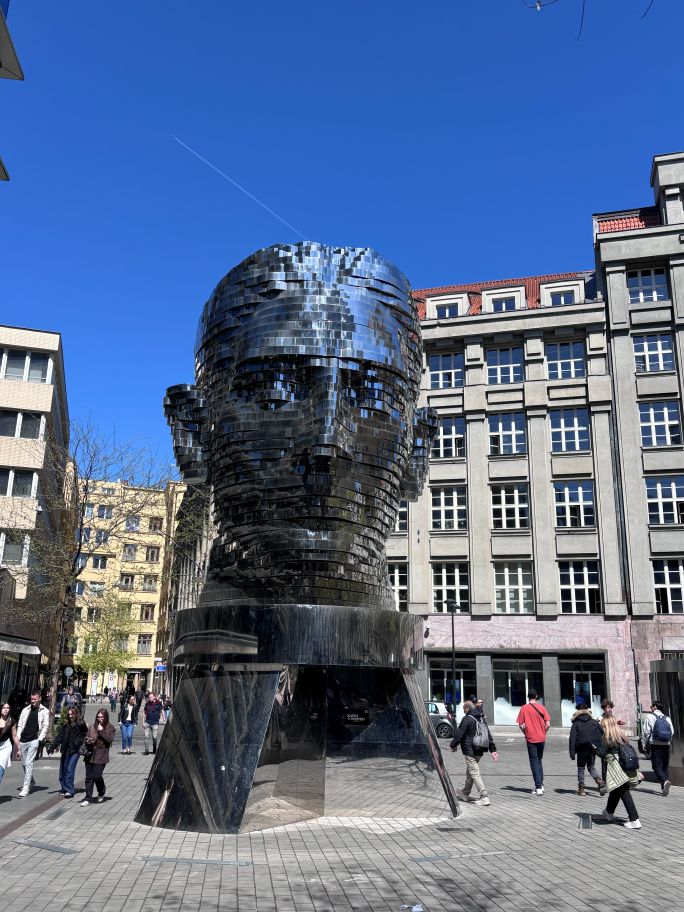
Start your day 3 in Prague by visiting one of Prague’s most fascinating modern landmarks – the rotating head of Franz Kafka, created by renowned Czech artist David Černý.
Located near the Quadrio shopping centre, this giant kinetic sculpture is made up of dozens of mirrored steel layers that rotate every hour for 15 minutes and realign to form Kafka’s face before breaking apart again. Standing nearly 11 metres tall, the artwork feels both futuristic and hypnotic, a fitting tribute to Kafka, whose writing often explored themes of identity, confusion, and transformation.
Dancing House
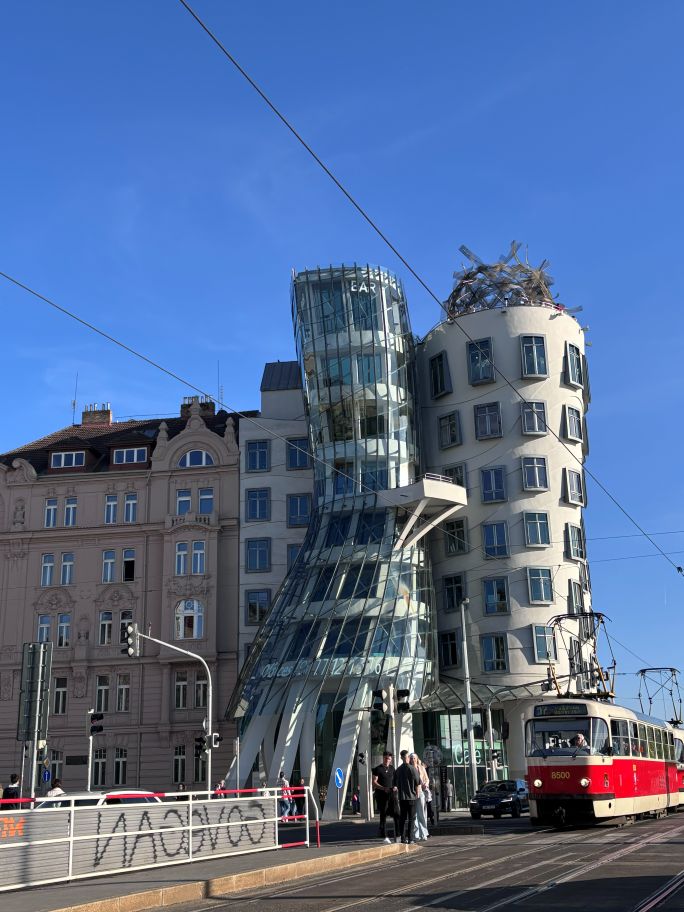
Dancing House is one of Prague’s most striking modern architectural landmarks and a refreshing contrast to the city’s Gothic towers and Baroque buildings. The building’s curved glass and flowing structure resemble two dancers in motion, which is why it is often nicknamed “Fred and Ginger” after the famous dance duo.
One of the best reasons to visit is the rooftop bar at the Dancing House called The Glass Bar, which offers panoramic views of Prague’s skyline, river bridges, and castle spires. Whether you stop by for a coffee during the day or a drink at sunset, the terrace provides one of the city’s most memorable viewpoints away from the usual crowds.
Prague Railway Station
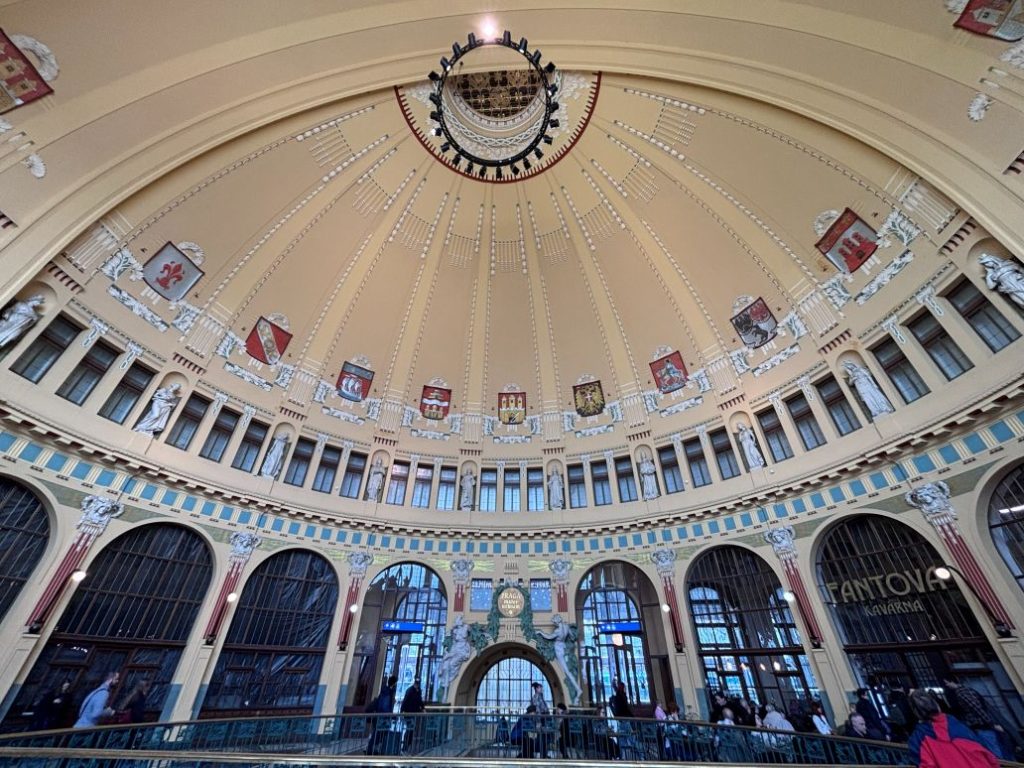
If you are travelling by train to other European cities or catching a Flixbus to Venice or Budapest or Bratislava, then in all probabilities you will transit through Prague Railway Station also known as Praha hlavní nádraží. But if you are not, you must visit for its mindful architecture.
Originally built in the late 19th century and later redesigned in the Art Nouveau style in the early 1900s, the station is considered one of Prague’s finest examples of the movement.
Step inside the historic section of the station and you’ll notice elegant stained-glass windows, decorative arches, floral motifs, ornate ceilings, and beautifully detailed interiors that reflect the artistic style popular across Europe at the time. The Art Nouveau redesign was led by Czech architect Josef Fanta, which is why the historic building is also known as the Fanta Hall.
Wenceslas Square
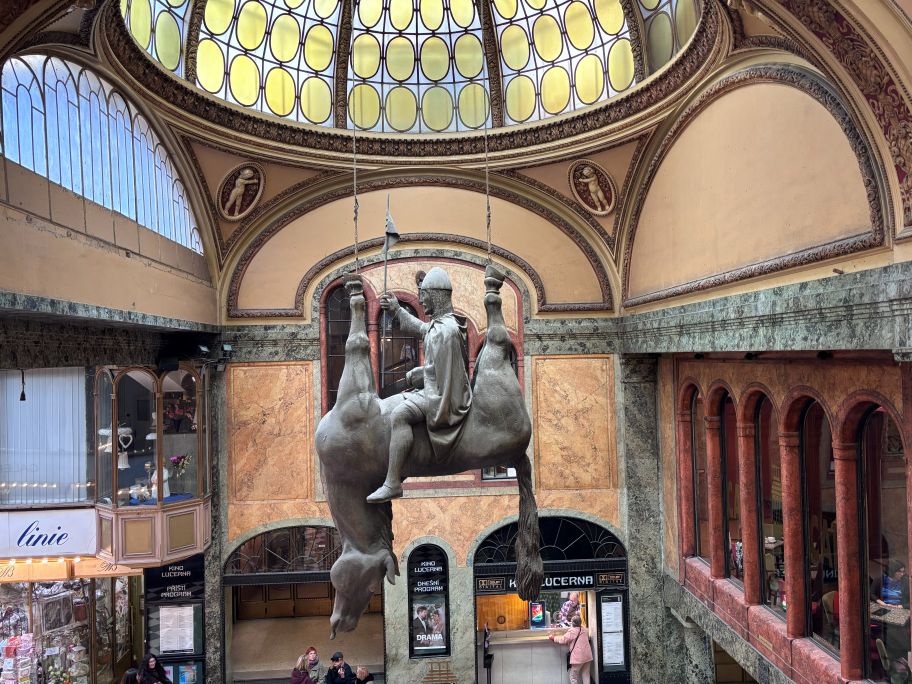
Wenceslas Square is one of Prague’s most vibrant and historically significant boulevards, where grand architecture, modern city life, and Czech history come together. At the upper end of the square stands the iconic equestrian statue of Saint Wenceslas, one of the city’s most recognisable landmarks and a popular local meeting point.
Not far away, tucked inside the nearby Lucerna Passage, you’ll also find the city’s quirky upside-down horse sculpture by artist David Černý, a provocative and humorous take on the traditional statue that perfectly reflects Prague’s artistic spirit.
The area is also known for its striking early 20th-century architecture, with elegant Art Deco facades, historic cafés, old hotels, and beautifully preserved buildings lining the boulevard.
Do spend some time here wandering through the surrounding streets filled with bookstores, souvenir shops, Bohemian crystal stores, Kafka-inspired keepsakes, local design boutiques, and cosy cafés perfect for a leisurely pause.
National Museum
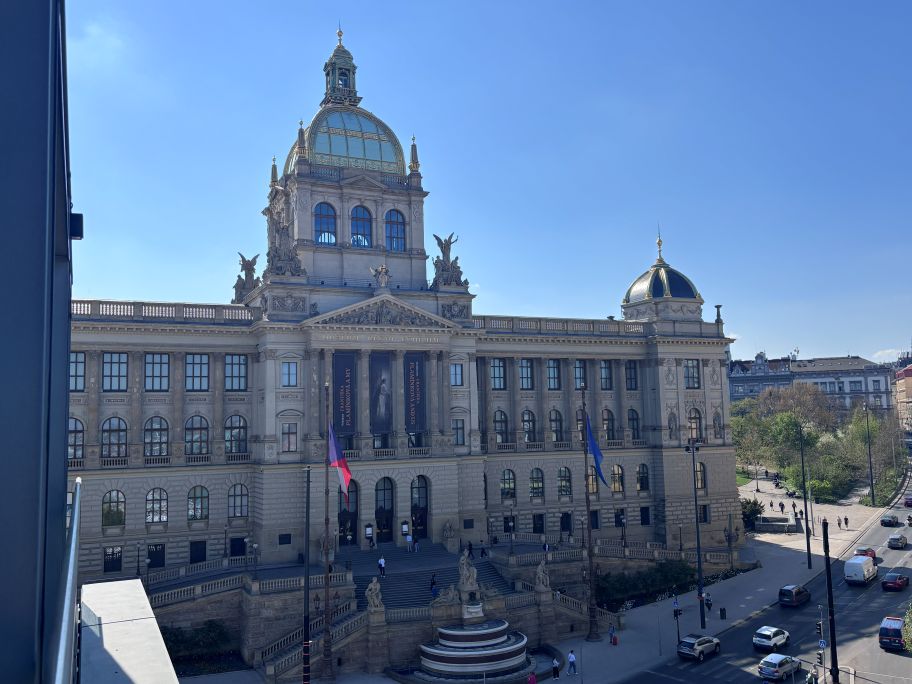
A visit to the National Museum on Wenceslas Square is well worth adding to your 3 Days in Prague itinerary. Housed in a magnificent neo-Renaissance building, the museum is as impressive from the outside as it is within.
Founded in 1818, it brings together fascinating exhibits on Czech history, culture, nature, and science, with everything from sparkling mineral collections to prehistoric life displays and evolution galleries.
The architecture of the museum is beautiful and will make your visit worthy.
DOX Centre for Contemporary Art
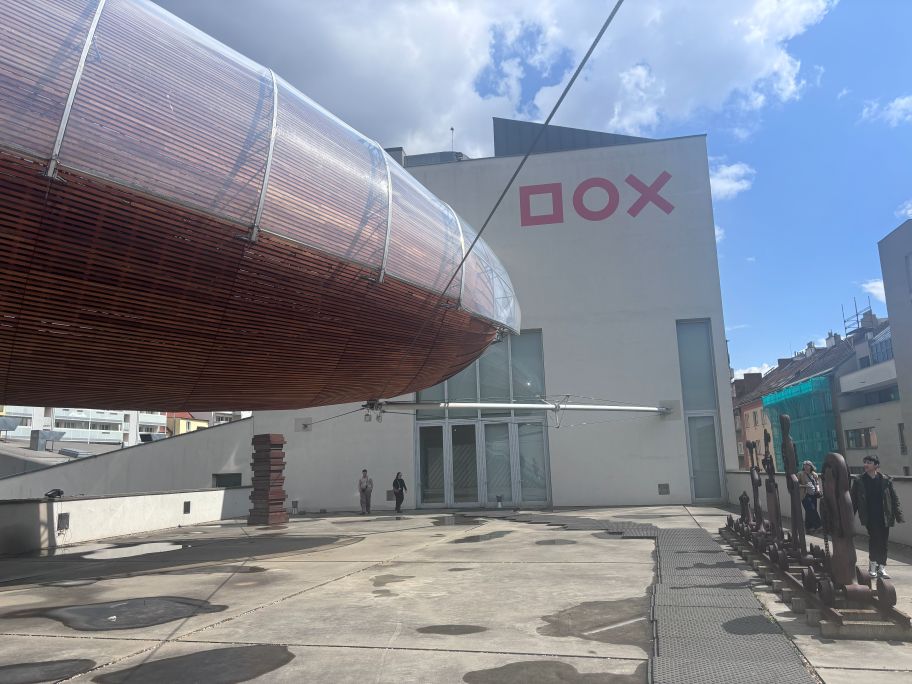
The gallery situated in Praha 7 offers a completely different side of Prague beyond its castles and cobbled lanes. Housed in a former factory building, this contemporary art space is known for bold exhibitions, experimental installations, and thought-provoking discussions around design, architecture, technology, and society.
Even the building itself feels like an artwork, especially the striking wooden airship structure perched on the rooftop. It’s the kind of place where you can spend hours wandering between immersive galleries and unexpected ideas.
Signal Space Gallery
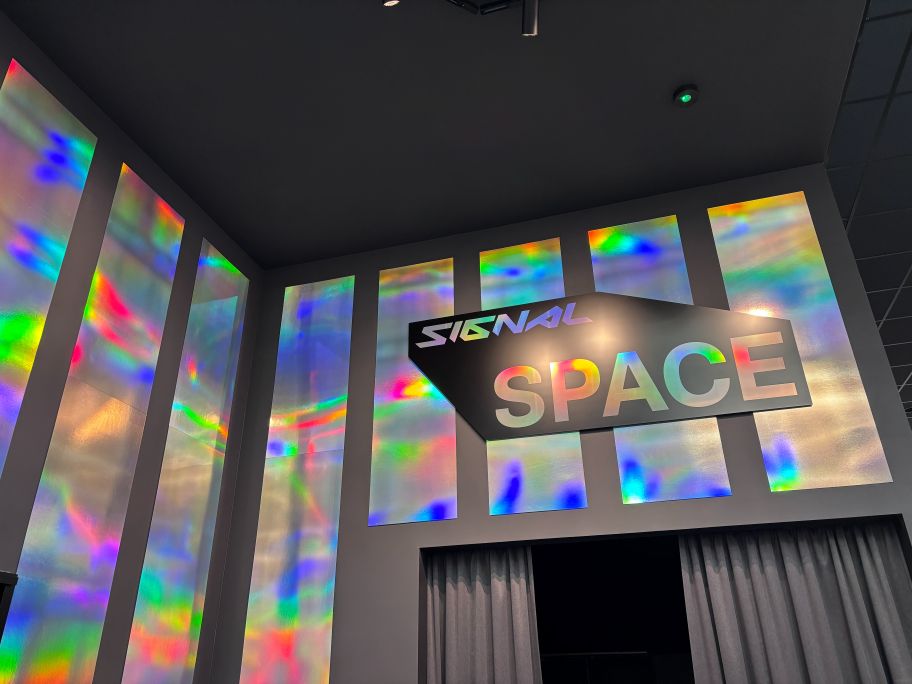
This gallery brings Prague’s creative side to life through digital art, light installations, and immersive multimedia experiences. Created by the team behind Prague’s famous Signal Festival, the space blends technology with storytelling in a way that feels both futuristic and playful. Expect glowing projections, interactive exhibits, and rooms that completely transform your sense of space — a refreshing contrast to the city’s centuries-old architecture outside.
Holešovice
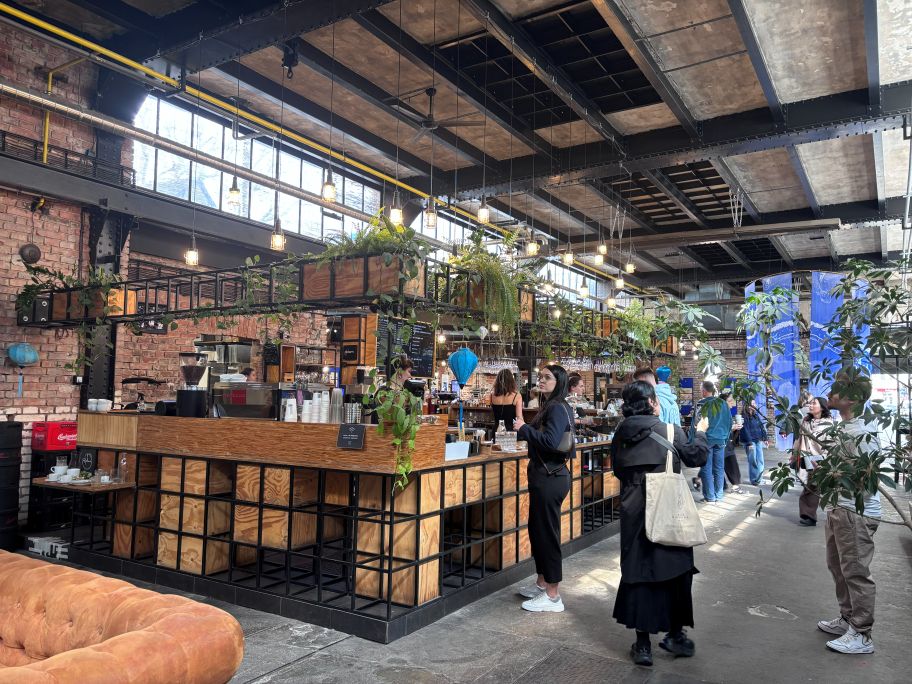
End your day at Holešovice, once an industrial district, now transformed into one of Prague’s coolest creative neighbourhoods.
Its streets are filled with minimalist cafés, independent bookstores, design studios, concept stores, and converted warehouse spaces buzzing with local culture.
The area has a laid-back, artsy atmosphere that feels refreshingly local, making it perfect for slow evening spent café hopping, browsing Czech design, or discovering hidden creative spaces away from the tourist crowds.
VNitro Block is an amazing cafe + working space + meeting space and I loved the vibes there.
MUST TRY VEGETARIAN FOOD IN PRAGUE
While Czech cuisine is meat heavy there are vegetarian versions in most places. However, everything is full of cheese, potatoes and bread.
Dumplings & Cream Sauces
Traditional Czech cuisine is meat-heavy, but many restaurants now offer vegetarian versions of classic dishes with bread dumplings, mushroom sauces, roasted vegetables, or creamy gravies. Trying local dumplings with rich Czech-style sauces is a great way to experience regional flavours without compromising on vegetarian preferences.
Smažený Sýr (Fried Cheese)
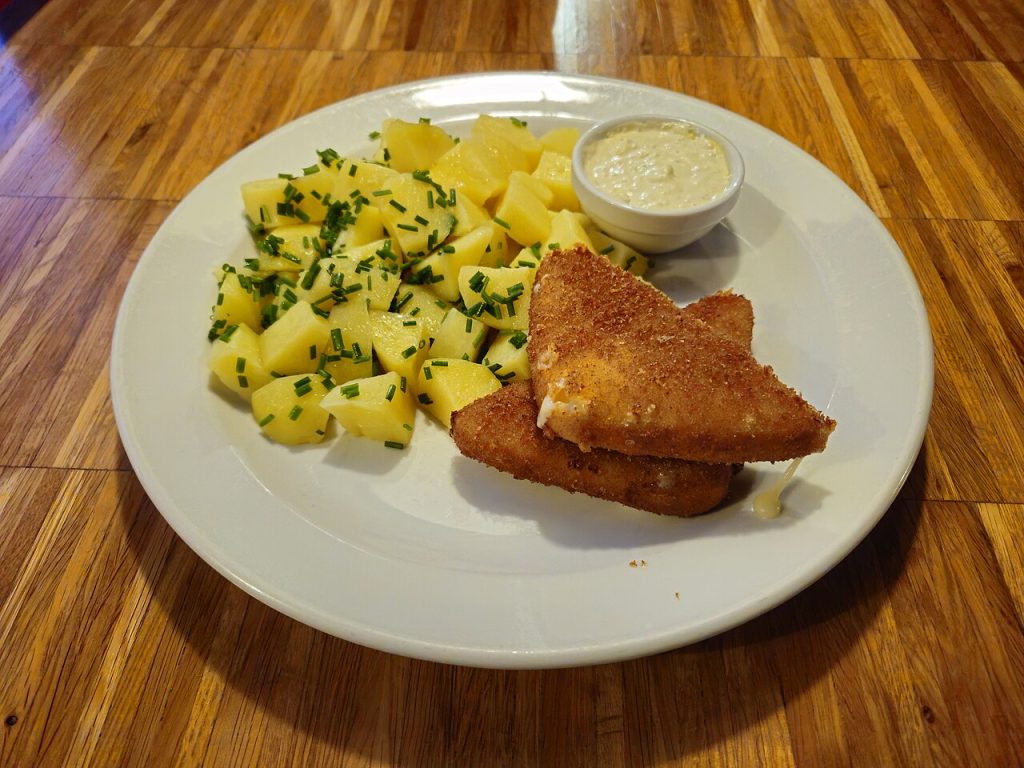
One of the most loved comfort foods in the Czech Republic, this dish features thick slices of cheese coated in breadcrumbs and fried until golden and gooey. It’s usually served with fries, tartar sauce, or salad. It is a heavy dish and can be ordered as main and usually paired with Pilsner Beer.
I did not like its strong pungent aroma and after trying once, did not order again.
Trdelník (Chimney Cakes)
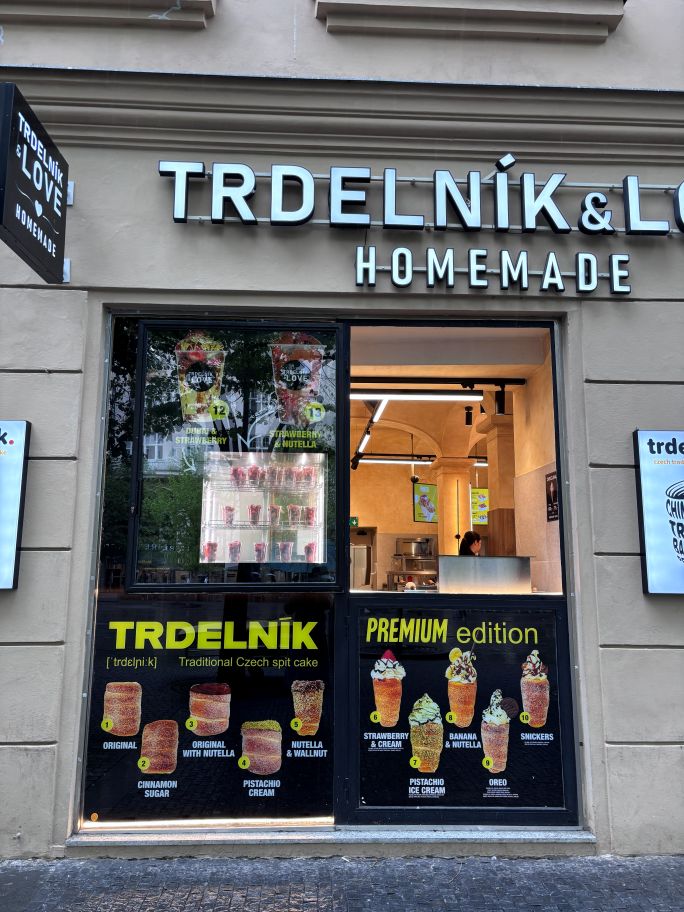
While originally not exclusively Czech, this sweet pastry has become a popular Prague street-food treat. Fresh dough is wrapped around a spit, grilled, coated with sugar and cinnamon, and sometimes filled with ice cream, chocolate, or cream. The aroma alone is hard to resist while wandering through the Old Town.
HOW TO GET TO PRAGUE
If you’re flying into Prague, Václav Havel Airport Prague (PRG) is the one you should be looking for. It is well connected to Europe and the rest of the world. From the airport, you can take Bus 59 and change to Metro Line A to get to the city center. Or book this budget-friendly shared airport transfer for a hassle-free experience.
You can also use Uber or Bolt for this 45 minute ride.
WHERE TO STAY IN PRAGUE
To make the most of your 3 days in Prague, consider staying in a central area, ideally near the old town. The Old Town (Staré Město) is perfect for first-timers, while Malá Strana, located near Prague Castle, is ideal for a quieter stay with a historical feel.
Since I was on a work trip and coming in and out of Prague, I stayed at 3 following hotels which are great in many ways.
Occidental Praha Wilson
This hotel enjoys a prime location directly on Wenceslas Square, beside the National Museum and the historic State Opera. The hotel offers modern comforts along with easy access to Prague’s key attractions, and features a breakfast restaurant, bar, mini market, and complimentary WiFi throughout the property.
Guests benefit from a 24-hour front desk, and many of Prague’s landmarks are within walking distance, including the famous Prague Astronomical Clock, located around a kilometre away. Václav Havel Airport Prague is approximately 18 kilometres from the hotel.
You can book the property here.
Grand Hotel Prague Towers
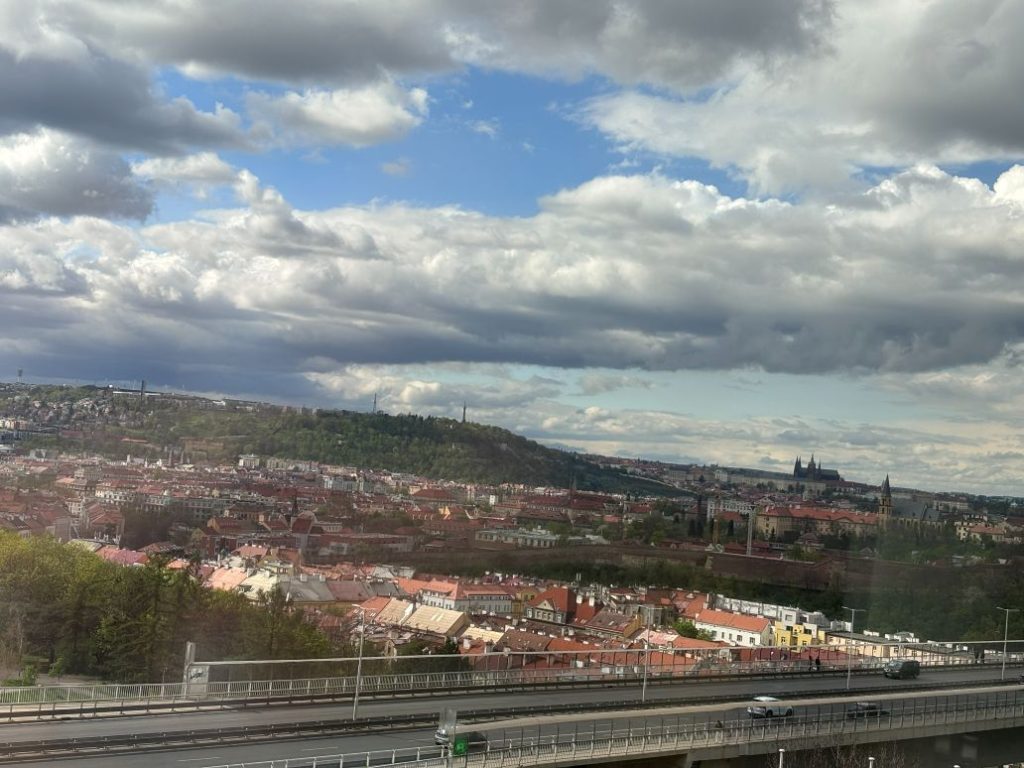
Grand Hotel Prague Towers is an elegant stay located just a couple of metro stops away from Prague’s historic centre. Popular as a business hotel, it has sweeping city views.
The hotel also enjoys a convenient location close to the Vyšehrad metro station, the Prague Congress Centre, and the historic Vyšehrad fortress, one of Prague’s oldest and most atmospheric landmarks dating back to the 11th century.
You can book the property here.
EA Hotel Crystal Palace
This is a budget-friendly contemporary hotel tucked away on a peaceful side street in central Prague, just 800 metres from Wenceslas Square. Despite its quiet setting, the hotel remains well connected, with the nearest tram stop only a short walk away. Landmarks such as the iconic Dancing House are located nearby, while the historic National Theatre can be reached on foot in around 15 minutes.
I reached the hotel around 9pm and my room was in the adjacent building. I was quite spooked as there were no lights and it took me a lot of time to figure out how to open the door and get to my room. However, during daylight it was fine.
You can book the property here.
FAQs ABOUT PRAGUE ITINERARY
How many days do you need in Prague?
I feel 3 days in Prague is good to comfortably experience its highlights without rushing. This timeframe is perfect for exploring the historic center, crossing the Charles Bridge, and visiting Prague Castle.
What is the best month to go to Prague?
While most guides will say summer (May-August) is the best time to visit Prague, I feel spring is better. There’s still a nip in the air and days are sunny and comfortable. You can also catch some blooms in March-April.
What is Prague most famous for?
Prague is famous for its medieval architecture which can be seen in the cathedrals, palaces, buildings as well as cafes. It is also famous for its beer.
FINAL THOUGHTS ABOUT PRAGUE TRIP
Prague is a city that effortlessly blends history, art, architecture, and everyday charm into one unforgettable experience. From its Gothic spires and cobbled lanes to its contemporary art spaces, lively cafés, riverside views, and hidden neighbourhoods, Prague has a way of surprising you at every turn. Whether you spend your days exploring centuries-old castles, discovering local design stores, or simply soaking in the atmosphere with a coffee by the river, the city leaves a lasting impression. I hope this guide helps you plan your own Prague adventure, because no matter how you choose to experience it, Prague is bound to stay with you long after the journey ends.
SUSTAINABLE TRAVEL TIPS FOR 3 DAYS IN PRAGUE
- Carry your refillable water bottle, there are free water refilling stations almost everywhere in the city.
- Do not trash tourist destinations and mass transit systems with wrappers and uneaten food. Use designated areas and right-colored bins for disposing of waste.
- Be mindful of all the signs and follow them respectfully, especially in castles and cathedrals.
- Respect the ancient structures by not sitting on them.
- Do not write on the pillars and walls of archaeological sites and monuments.
- Although credit cards and the euro are accepted almost everywhere, be sure to carry some Czech koruna (CZK) for local markets and smaller shops.
- Getting around Prague is easy with the metro, trams, and buses, which are efficient and affordable. Be sure to validate your tickets at the time of travel.
If you’re staying in Prague for longer than three days, consider taking a day trip to Cesky Krumlov, a Southern Bohemian town or Liberec in Northern Bohemia known for it’s lovely nature hikes.
Read more from Czech Republic:
Disclaimer: This post contains affiliate links. It means it adds no extra cost to you if you book through the link but I get a referral bonus which helps me earn a little to keep this website up and running.
PIN THIS POST!