Last Updated on August 17, 2026 by Ketki Gadre
Off to Georgia (the country) and wondering what to bring home that is affordable, light-weight and authentic? Check out these Georgian souvenirs which can be picked up from across the country!
Whenever a trip is finalized, along with the itinerary making, I generally also google about trinkets to take back home!
Knick-knacks, souvenirs, trinkets are the best way to remember a trip gone by and impress your friends and colleagues – gifting them makes it special as you remembered them on the trip!
So, here are the must buy souvenirs from Georgia.
Table of Contents
GEORGIAN SOUVENIRS
Qvevri
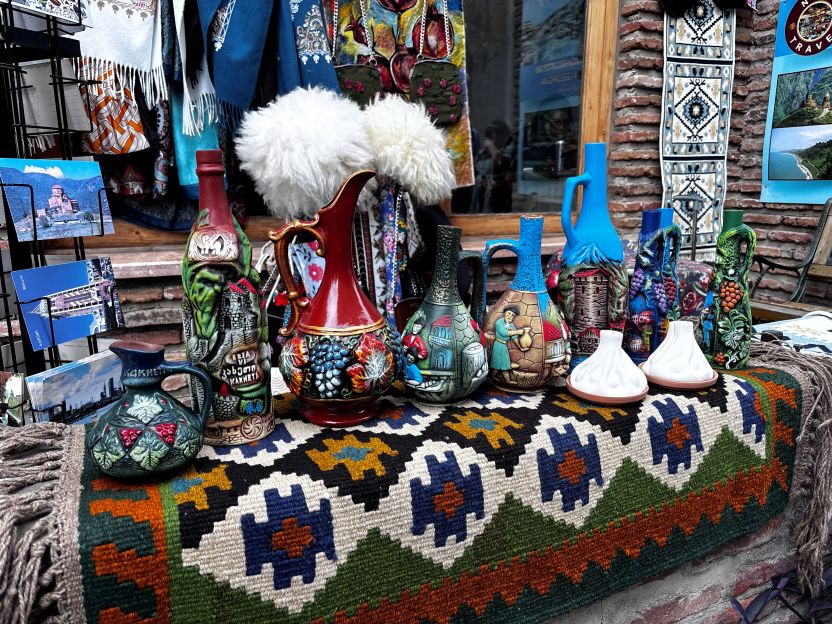
A qvevri is traditionally a clay pot where wine is fermented and stored. So a miniature qvevri is a perfect Georgian souvenir representing the country’s ancient winemaking tradition.
The qvevri souvenirs are coloured or may be decorated with some design to give an aesthetic look. Some may be of a good size and can be used as a water jug.
Cost of qvevri: 15–50 GEL (US$6–19).
Georgian folk art dolls
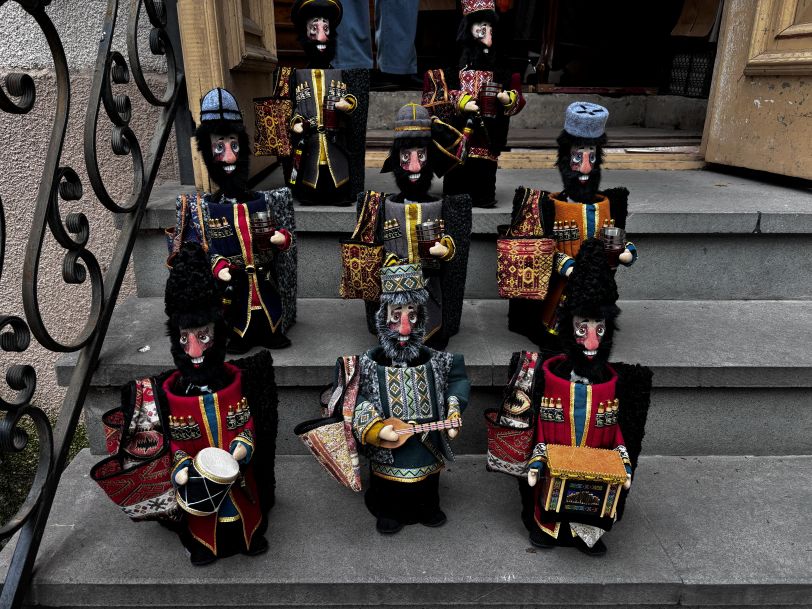
Georgian folk art dolls are crafted as decorative folk art and collectible mementos found at markets in Tbilisi. Their dress has details of Caucasian chokha garments featuring cartridge pockets (gazyrs) on the chest and traditional headwear.
They are generally represented with regional instruments and accessories like the plucked lute (panduri), hand drum (doli), and drinking horns.
There are different versions representing different parts of Georgia, from the mountains of Svaneti to Kartli and Kakheti.
Cost of doll: 30–60 GEL (US$11–22) with elaborate handmade ones costing more.
Ceramics
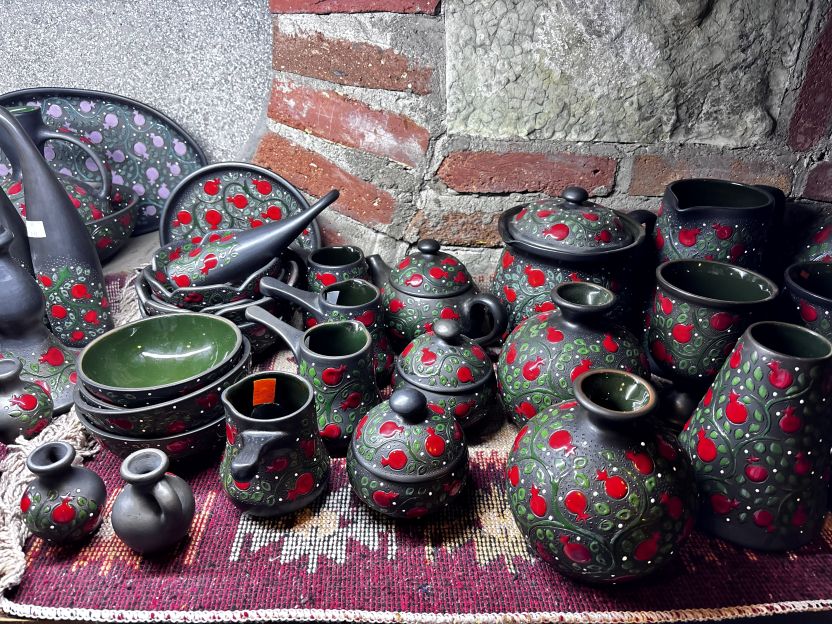
Every country has beautiful ceramics to be picked up!
Georgian pottery has deep roots, and today’s artisans give that tradition a contemporary twist through hand-painted bowls, cups, plates and vases.
Typical Georgian designs include Khinkhali or pomegranate and ceramics that can be picked up are tea sets or serving bowls. They have utility and can actually be used back home rather than sitting forgotten on a shelf.
Cost of Georgian ceramics: 15–30 GEL (US$6–11) for a decorated cup and 40–100+ GEL (US$15–37+) for larger pieces.
Unique salt and pepper shakers
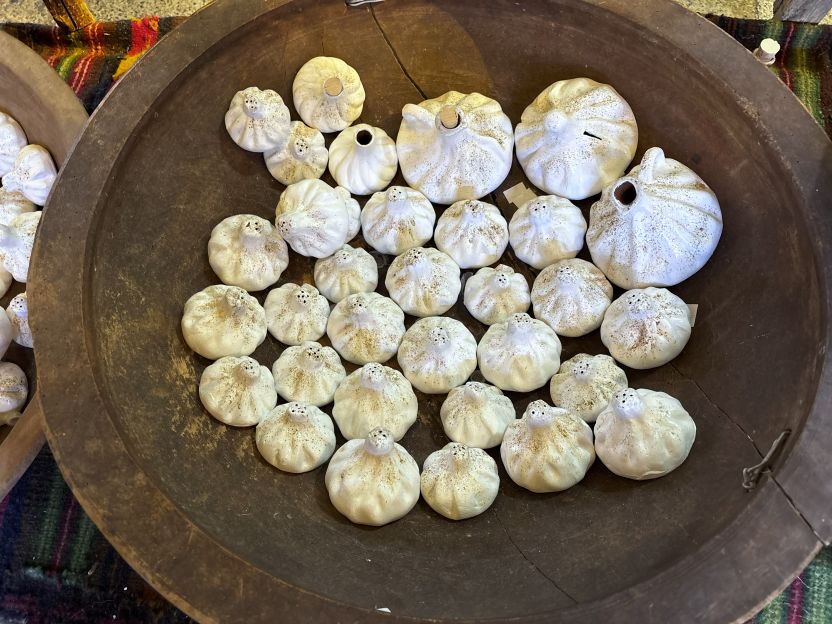
From tiny qvevri-shaped sets to designs inspired by Georgian food, these are the sort of quirky finds that make fun souvenirs.
They are inexpensive, useful and bring a little Georgian personality to the dining table. I especially liked the khinkhali shaped shakers.
Cost of shakers: 15–35 GEL (US$6–13).
Khanjali or dagger
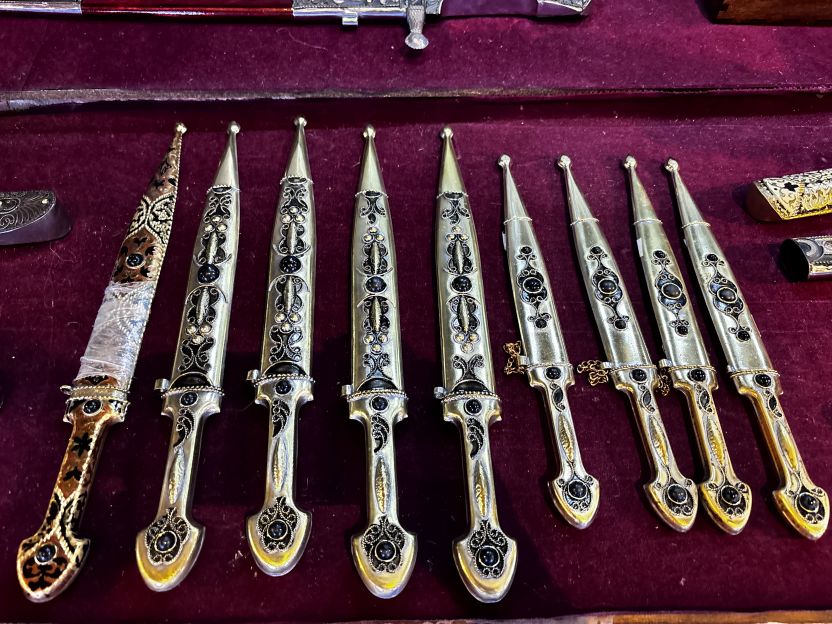
The Georgian khanjali is a traditional dagger associated with the country’s warrior and Caucasian heritage. As souvenirs they come as beautifully decorated pieces that are miniature works of art.
The handles are ornate and can be made of different metals including silver making it a collector’s item!
Cost of Khanjali: 80–250 GEL (US$30–93).
Silver jewellery
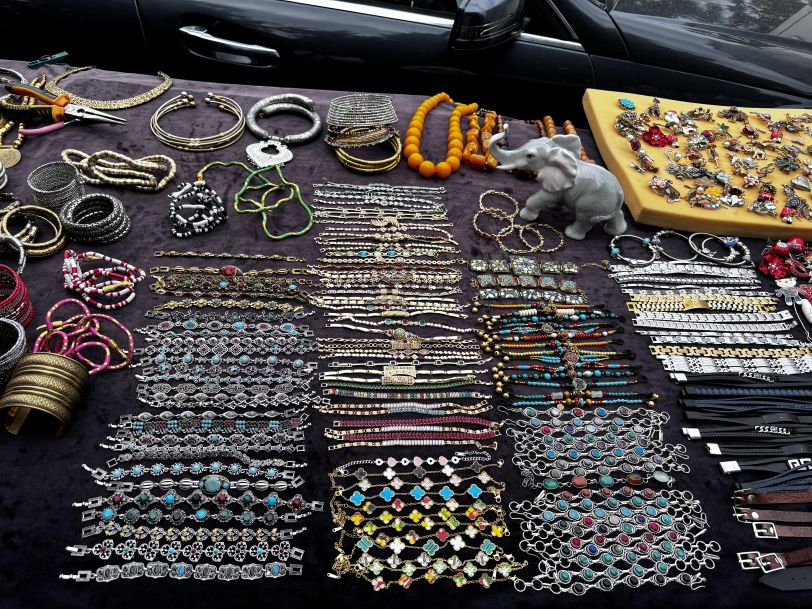
Georgian silver jewellery is a great souvenir to take home.
Look out for silver pieces that incorporate minankari, the country’s distinctive cloisonné enamel tradition. It is similar to India’s meenakari in terms of the basic technique, however, the designs are very different.
Cost of Minankari jewellery: Starts from 100 GEL (US$38), while more elaborate jewellery can run into several hundred lari.
Tote bags
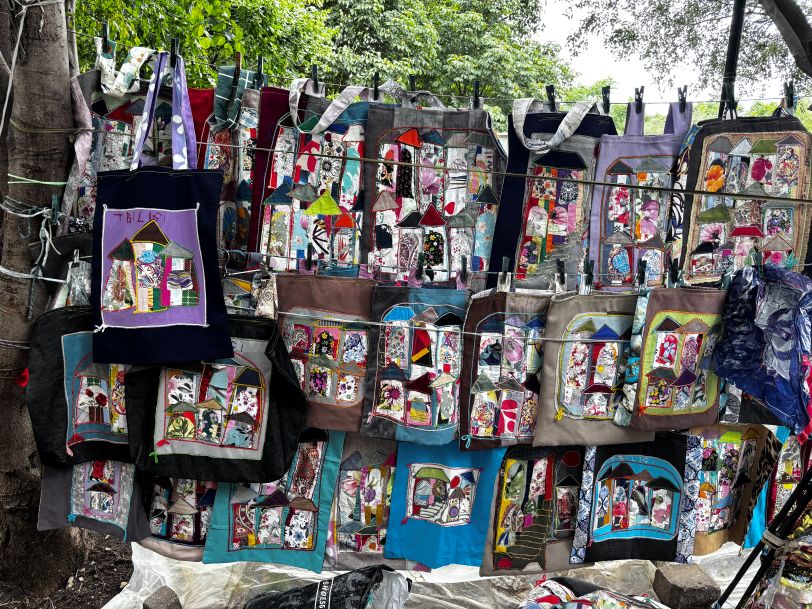
For a lighter, more contemporary souvenir, pick up a tote bag that is hand painted by a local artist or a printed one with Georgian script, folk illustrations or wine motifs. It is a nice way of taking a little bit of Tbilisi’s creative scene home without worrying about fragile luggage.
Cost of Tote bags: 15–50 GEL (US$6–19).
Carpets
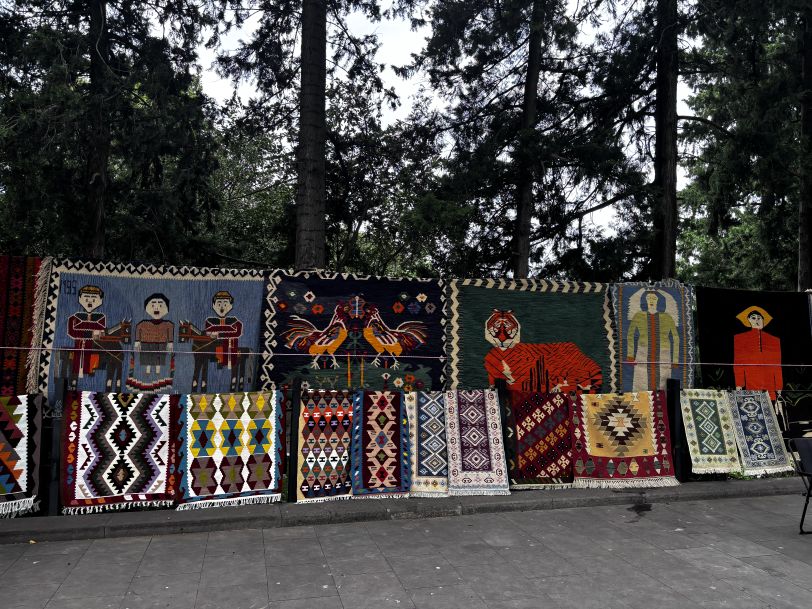
If you like carpets and not live in a non-tropical place then Georgian carpets are beautiful souvenirs to take back home.
Traditional geometric motifs and regional weaving techniques give each piece a distinct character, with small kilims being a more manageable option.
Cost of carpets: 250 GEL and upwards (US$100).
Vinyl records
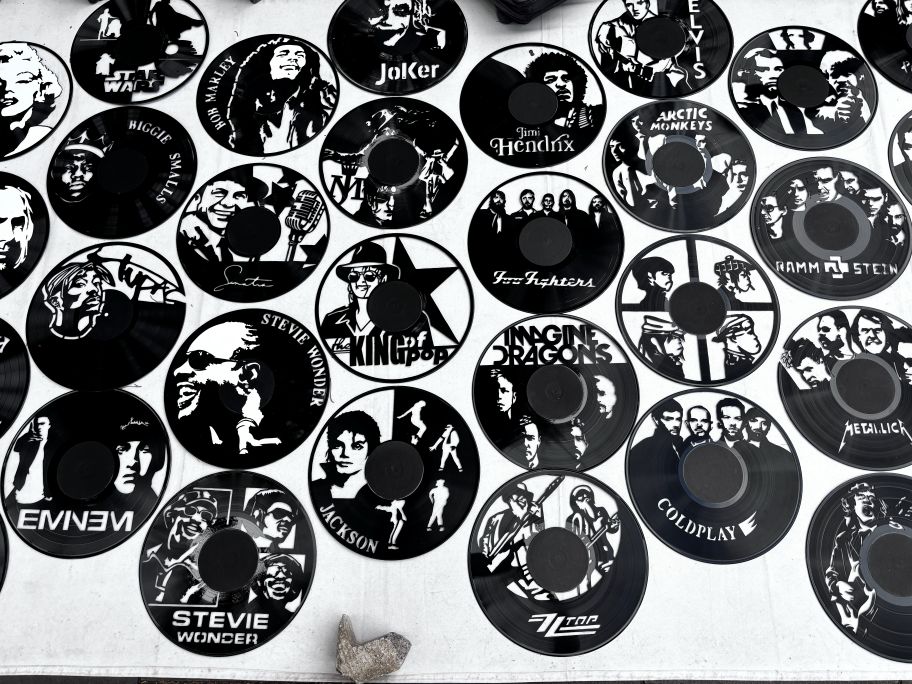
For music lovers, a hunt through Tbilisi’s vintage markets can uncover Soviet-era records, Georgian folk music and recordings by Georgian musicians.
In Tbilisi’s Dry bridge area you will also find artistic vinyl records that are cut up in different faces of famous celebrities and other designs.
Cost of vinyl records: 20–80 GEL (US$7–30).
Cutlery
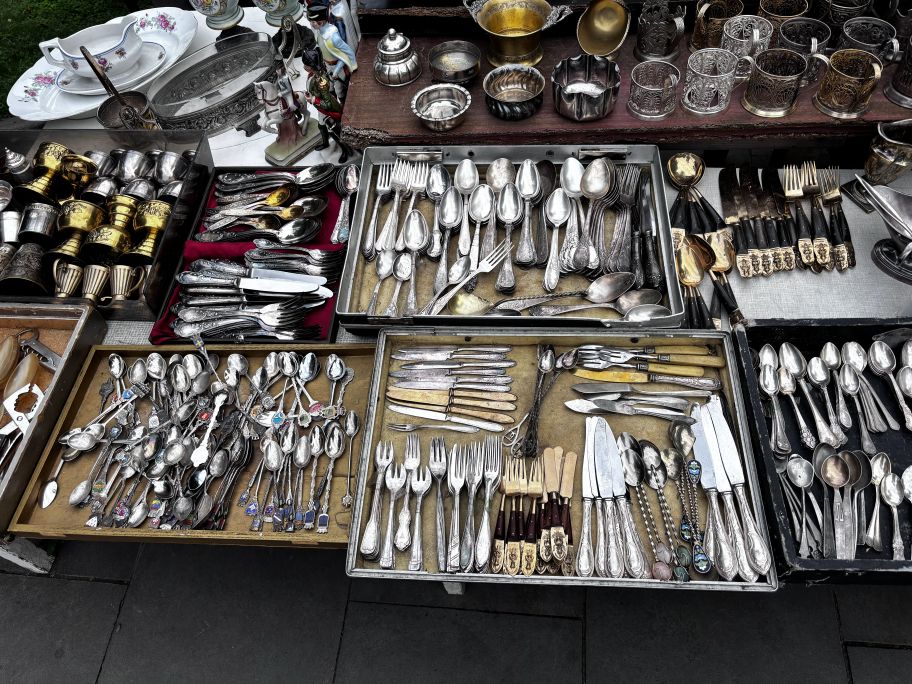
The dining aesthetic is as much about presentation and hospitality as it is about food, making locally crafted cutlery a thoughtful addition to a souvenir haul. Look for engraved or traditionally patterned spoons, forks and serving pieces rather than generic sets.
Cost:20–40 GEL (US$7–15), while decorative sets may cost 60–150 GEL (US$22–56).
Cheese boards
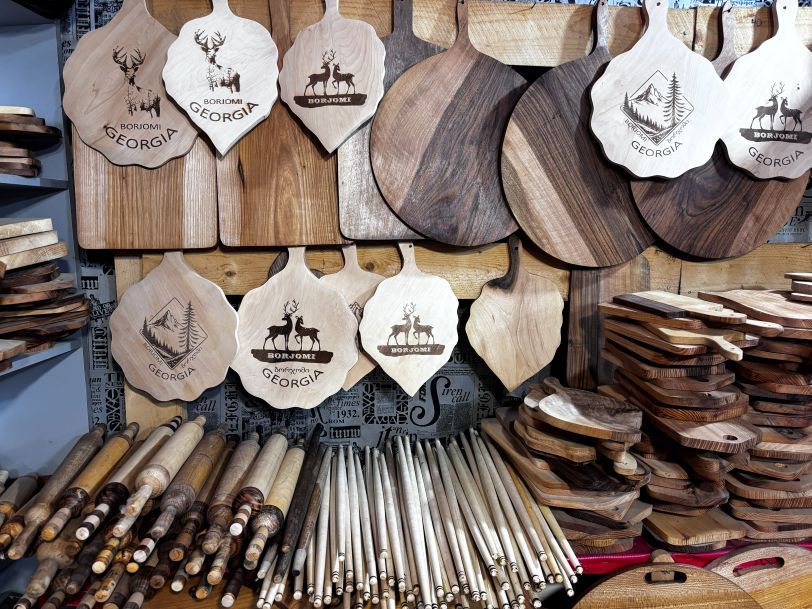
Cheese is an extremely important component of Georgian food which is why cheese boards are a perfect Georgian souvenir.
Wooden boards in Georgia are used to serve cheese, bread, churchkhela and other nibbles with wine. It is best to pick a board engraved with Georgian motifs or grape and vine designs.
Cost: 40–100 GEL (US$15–37).
Drinking horns
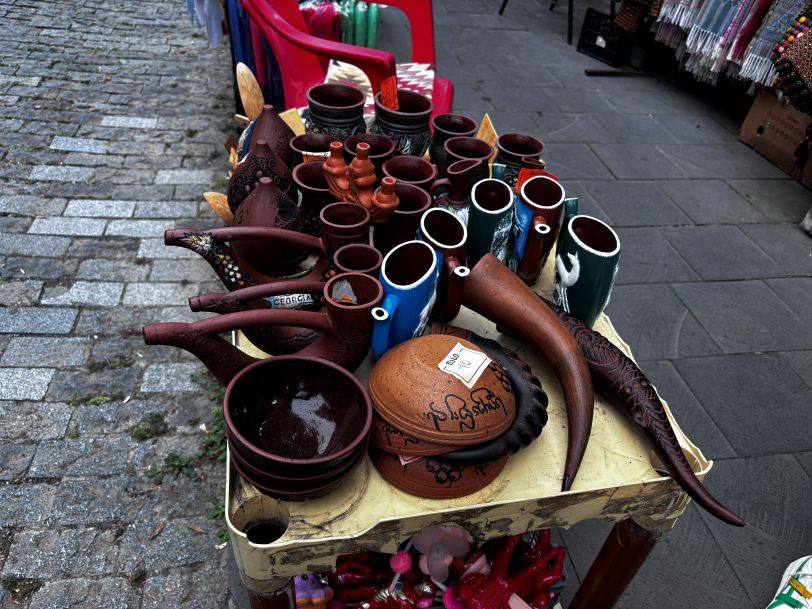
A traditional Georgian drinking horn, known as the khantsi, is a polished horn made from ram, goat or cattle horn. Often embellished with silverwork or intricate engravings, it has long been part of the supra, Georgia’s traditional feast, where it is used to drink wine and raise heartfelt, often poetic toasts.
Cost of khantsi: 20–40 GEL (US$7–15), while handcrafted or ornate versions can reach 200+ GEL (US$74+).
Pomegranate paperweights
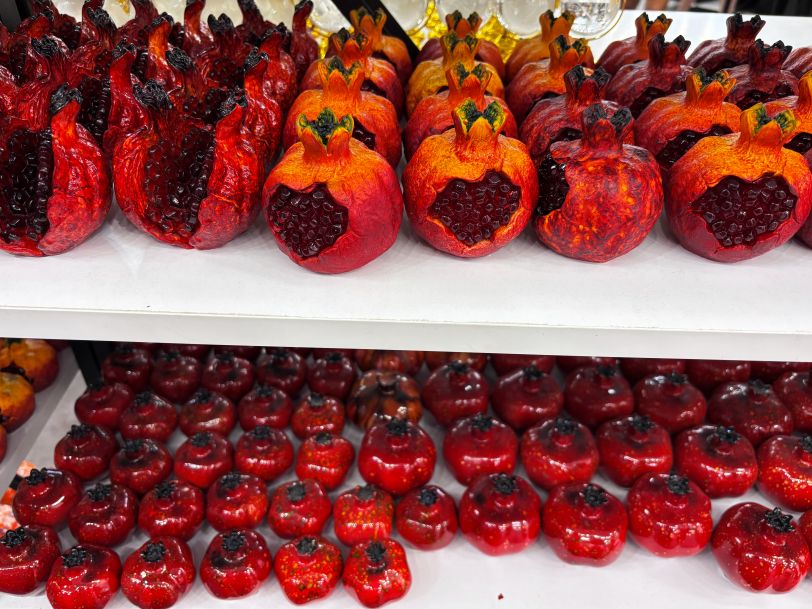
Pomegranates appear frequently in Georgian art and symbolism, associated with abundance, prosperity, life and fertility. A pomegranate-shaped paperweight turns that symbolism into a small, elegant object that works equally well on a desk or bookshelf.
Cost: 20–60 GEL (US$7–22) depending on whether it is ceramic, glass or hand-crafted.
Wine bottle holder/stand
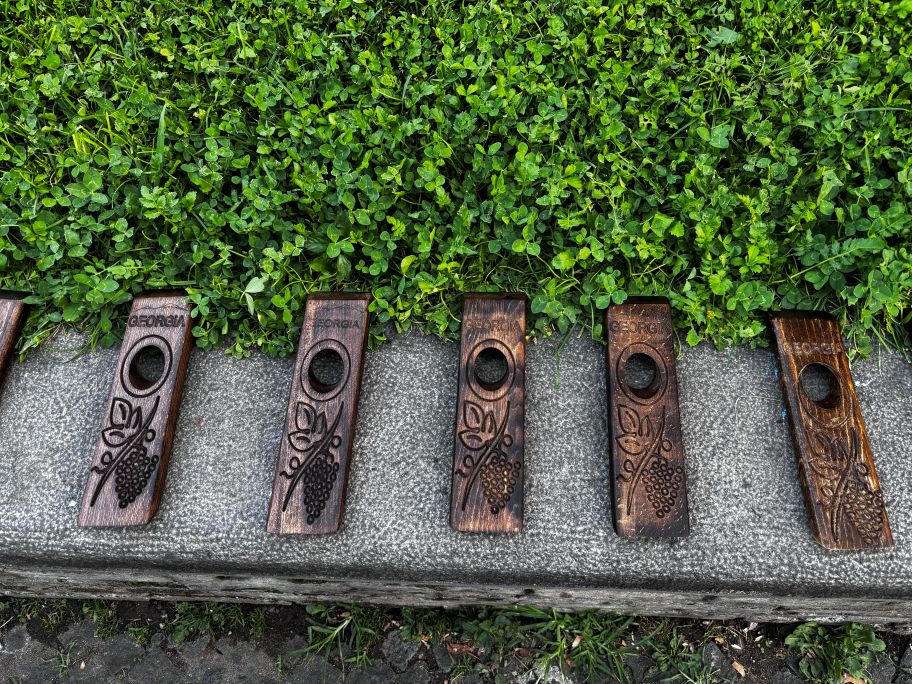
A wine bottle holder is a fitting souvenir in a country where wine is woven into everyday life.
Often crafted from wood, metal or ceramic and inspired by grapes, qvevri or traditional Georgian motifs, it turns a bottle of wine into part of the table setting. It also makes a practical keepsake long after the wine is finished.
Cost: 30–80 GEL (US$11–30).
Socks
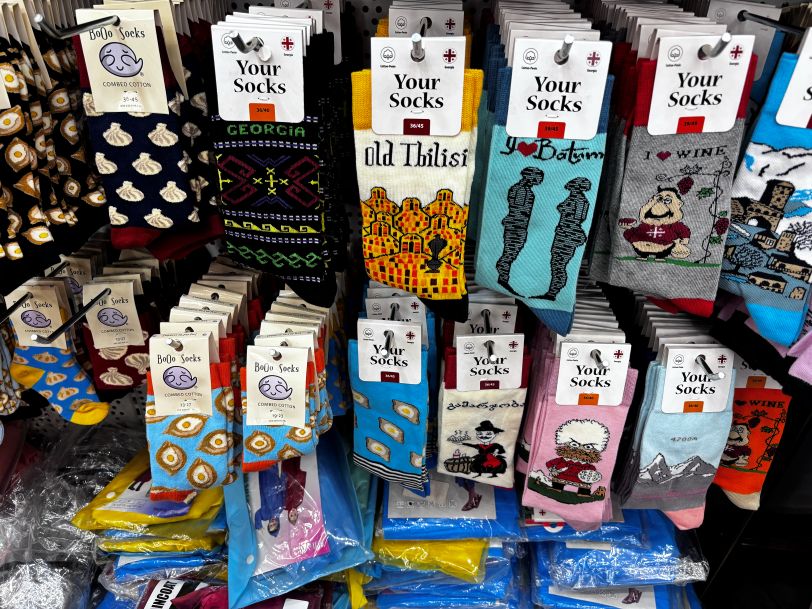
Yes, socks — but Georgian ones can be surprisingly fun, especially those featuring khinkali, wine, Georgian lettering or colourful folk designs.
Woollen socks from the mountain regions are an even better buy, combining practicality with local craftsmanship.
Cost: 15–25 GEL (US$6–9).
EDIBLE SOUVENIRS FROM GEORGIA
Churchkhela
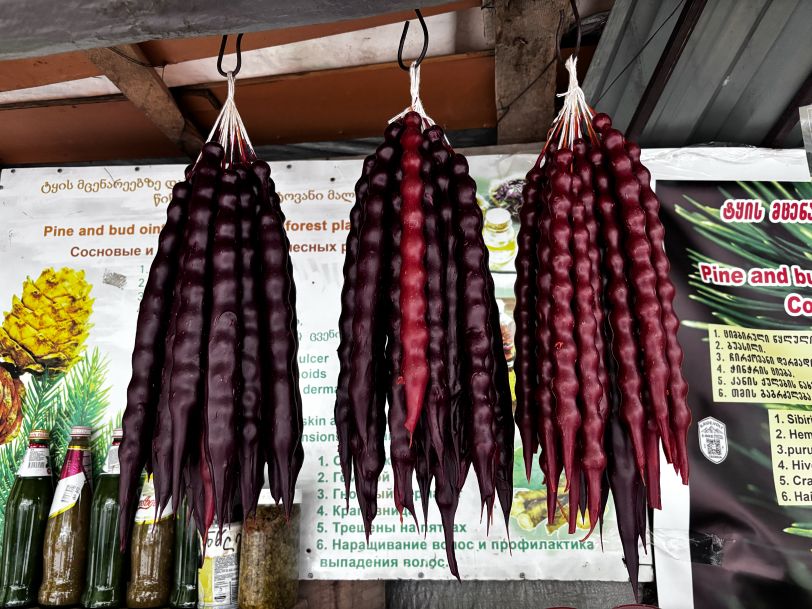
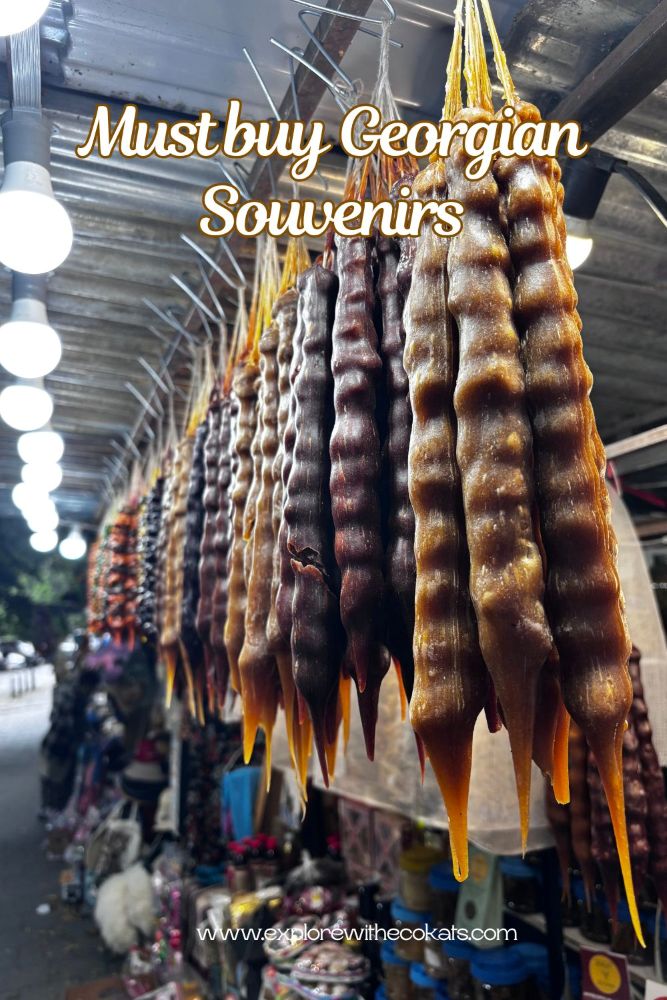
Popular as Georgia’s answer to an energy bar, churchkhela is made by repeatedly dipping strings of walnuts or hazelnuts into thickened grape juice and allowing them to air dry. The modern version has different flavours such as kiwi, orange, strawberry amongst others.
Traditionally churchkhela was prepared at homes and was closely tied to Georgia’s grape and nuts harvest – the extra nuts and the leftover grapes getting turned into a candy – perfect to consume in winter months. But nowadays they are manufactured throughout the year and for tourists as the perfect Georgian souvenir.
Cost of churchkhela: 5 GEL (US$2) per piece.
Wine
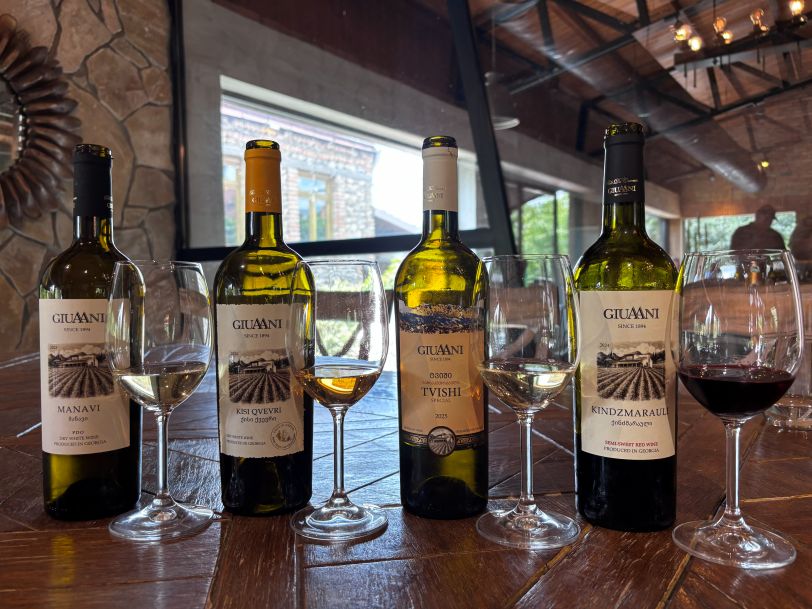
Georgia is the cradle of wine so it is only fair to bring a few bottles back home!
Georgia’s winemaking tradition stretches back to 8000 thousand years using its traditional qvevri method. The wine produced this way is extremely good.
Wine is consumed with almost each meal (breakfast too) by the locals and hence it is the country’s most defining cultural practices.
Look beyond familiar grape varieties and try a bottle of amber qvevri wine or indigenous Saperavi, Rkatsiteli or Kisi.
Cost of wine: 22–60 GEL (US$8–22), with artisanal wines going considerably higher.
Chacha
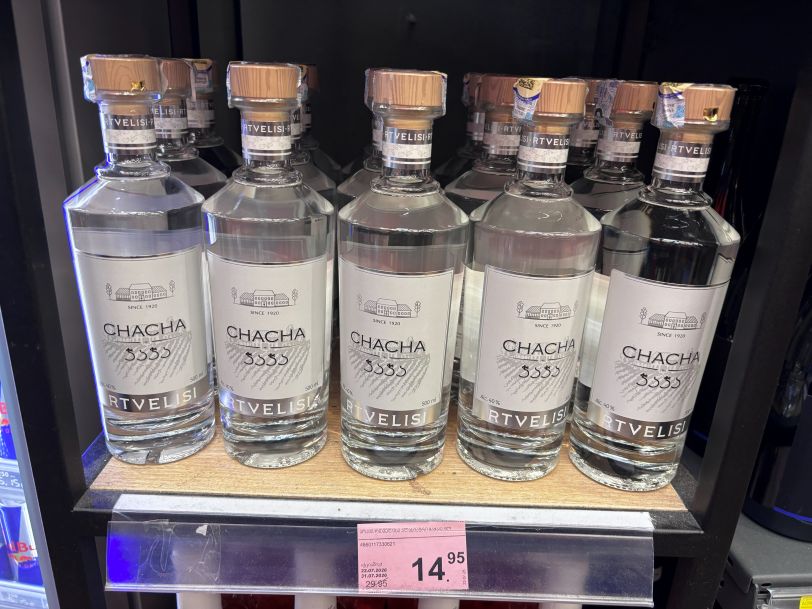
Chacha is Georgia’s answer to Russia’s vodka.
Chacha is traditionally made from grape pomace that is left after winemaking. It is deeply connected to the country’s rural wine-making culture and is often served as part of Georgian hospitality. While the plain chacha is traditional, there are flavoured ones with miniature sizes available in the market that make for a fun Georgian souvenir.
Cost of chacha: 10–60 GEL (US$3.5–22).
Breads
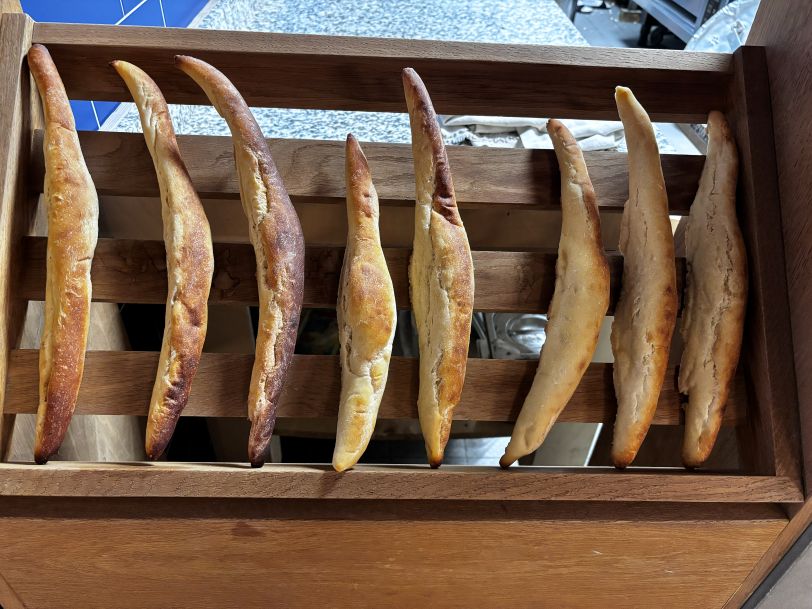
If you love fresh Georgian bread why not carry some back home? While the fresh breads do not have a long shelf life and are difficult to carry in check-in luggage, I carried the bread in my carry-on for my family to taste and consumed it the next day.
Look for varieties such as shotis puri, meskhetian bread or chvishtari, depending on what is available.
Cost of bread: 2–10 GEL (US$1–4).
Dried fruits
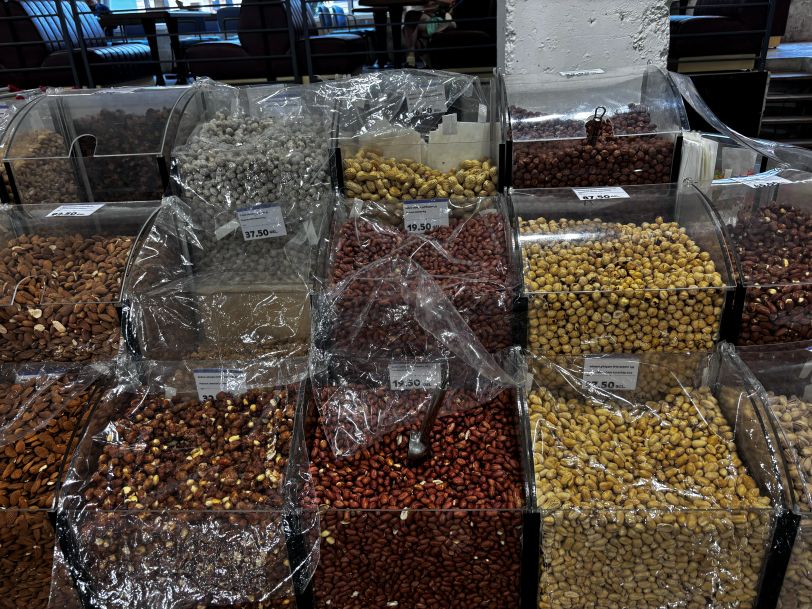
The amount of walnuts used in Georgian cuisine is amazing – they are served as pieces in salads, made into a paste and served with curry or vegetable kebab, sometimes pressed for oil or candied as in the case of churchkhela. So it’s only fair to carry home some of the walnuts.
The country’s weather is also apt for growing other dry fruits such as hazelnuts and fruits too such as grapes (turned into raisins), plums, peaches and apricots (dried)
Pick up naturally dried fruit from a market, or look for beautifully packed assortments of fruit and nuts for delicious souvenirs from Georgia (country).
Cost: 10–25 GEL (US$4–9) per pack.
Spices
If you enjoy cooking, don’t leave Georgia without a stash of its distinctive spices.
Svaneti salt, khmeli suneli, utskho suneli and dried marigold can transform even a simple dish into something recognisably Georgian.
Gift packs are available in the Tbilisi market.
Cost: 5–15 GEL (US$2–6).
Chocolates
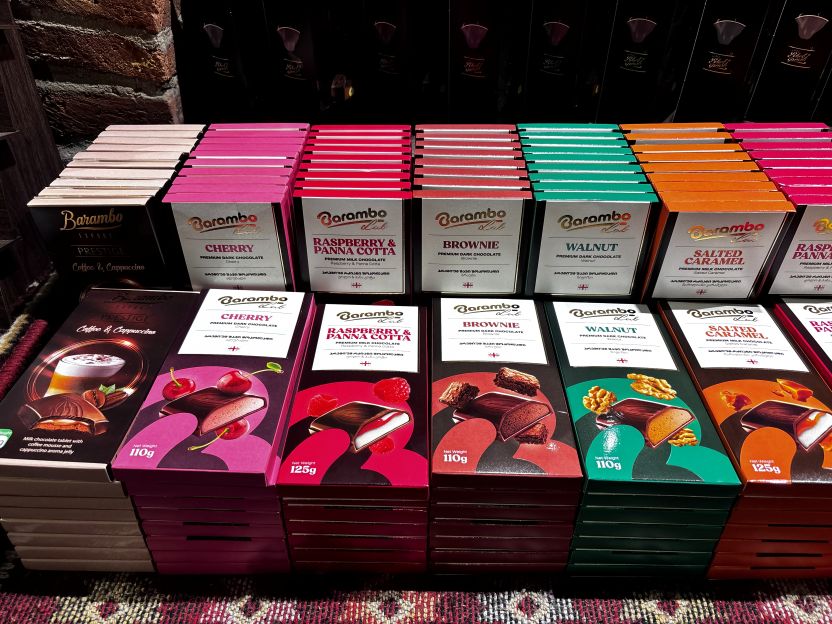
Georgian chocolates make a wonderful gift, especially the ones with walnuts, hazelnuts, dried fruit, wine or local ingredients. There are hand-crafted chocolates available as well as branded ones available in malls. Both are equally delicious and amazing Georgian souvenir.
Cost: 8–25 GEL (US$3–9).
Fruit leather
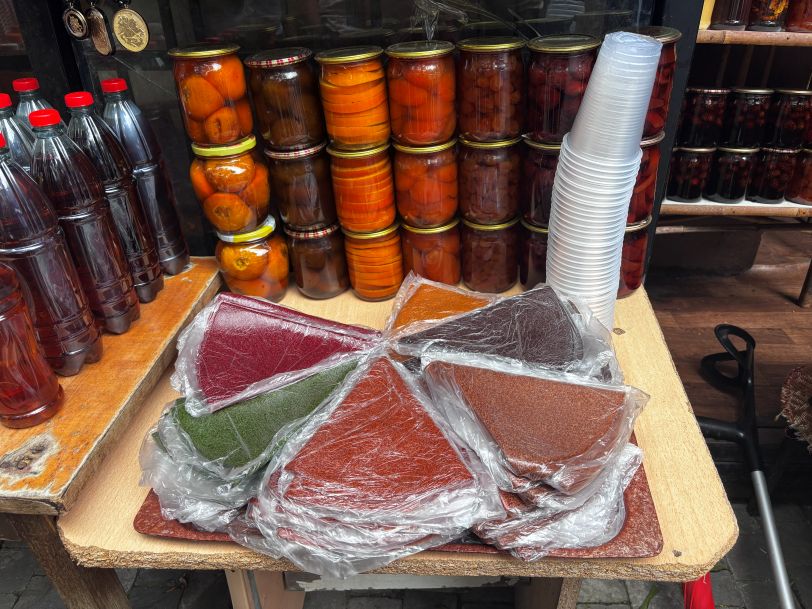
Known as tklapi, Georgian fruit leather is made by spreading fruit purée thinly and drying it into a chewy sheet.
Fruits such as plum, strawberries, grapes, and cherries are used to make fruit leather. The tkemali versions can be sweet, tart or pleasantly sour, making this one of the more unusual edible souvenirs to bring home.
Cost: 8–12 GEL (US$3–4.50).
Honey
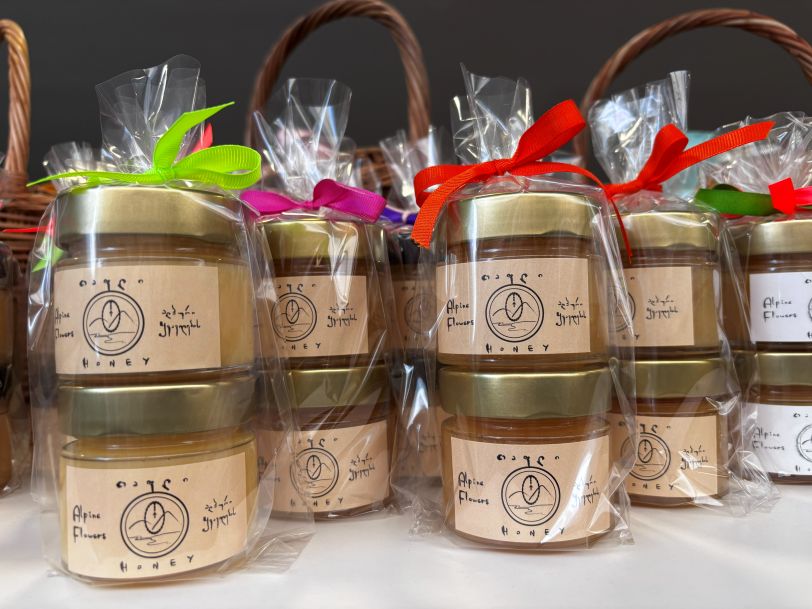
Georgia’s mountains and varied landscapes produce an impressive range of honeys, including wildflower, linden and chestnut varieties.
While a jar of local honey is a simple souvenir, it carries the taste of the Georgian countryside surprisingly well. I found white honey very different and got some for myself.
Cost: 20–35 GEL (US$7–13).
Jam/Murabba
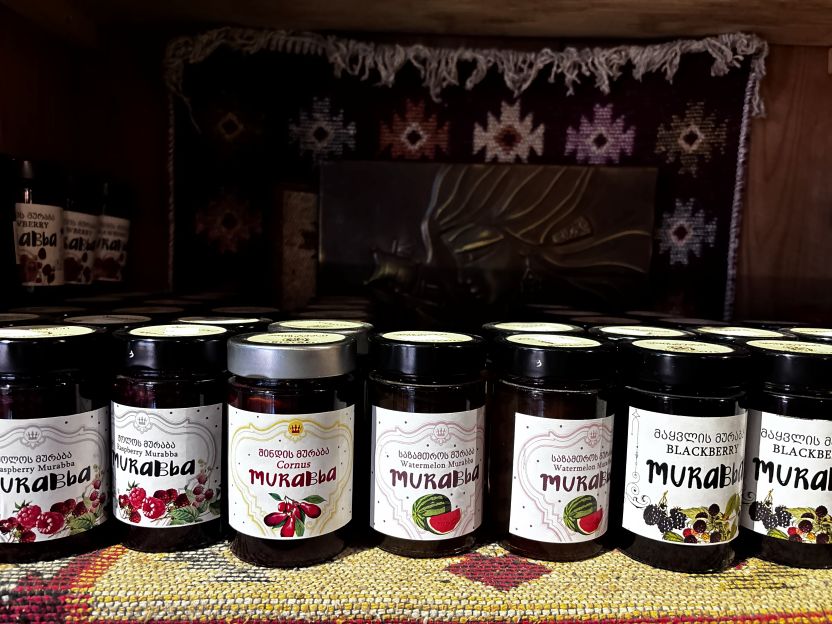
Georgian preserves are where things get interesting: alongside familiar fruit jams, you’ll find unusual versions made with pine cones, figs, rose petals and cornelian cherries.
They make lovely gifts because they are distinctly Georgian without being difficult to use once you get home.
Cost: 15–25 GEL (US$6–9).
Adjika sauce
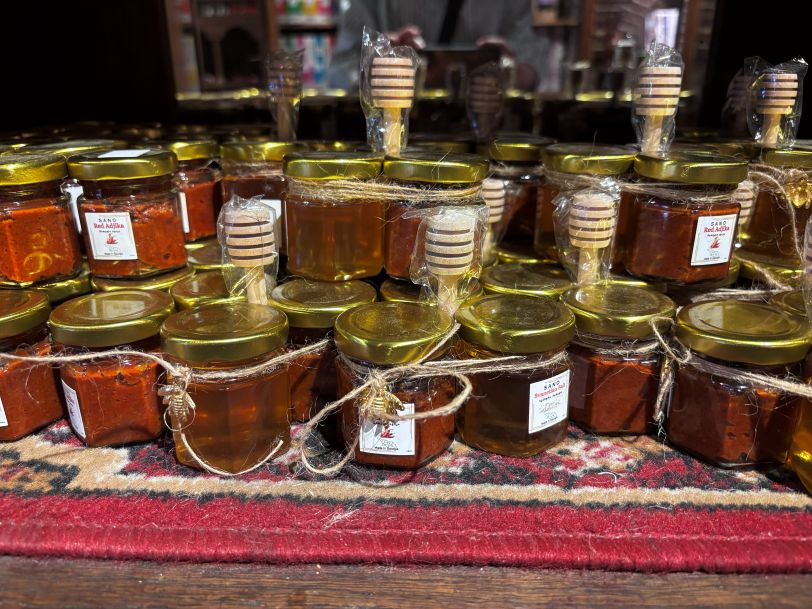
Spicy, garlicky and packed with herbs, adjika is one of the easiest ways to recreate a little Georgian flavour at home. And if you have had meals in Georgia, there are high chances that you’d want to have a similar taste after the vacation is over.
It comes as a paste or dry spice blend, with regional versions varying considerably in heat and ingredients. They are easily available in malls and local bazaars.
Cost: 8–15 GEL (US$3–6).
Borjomi Water
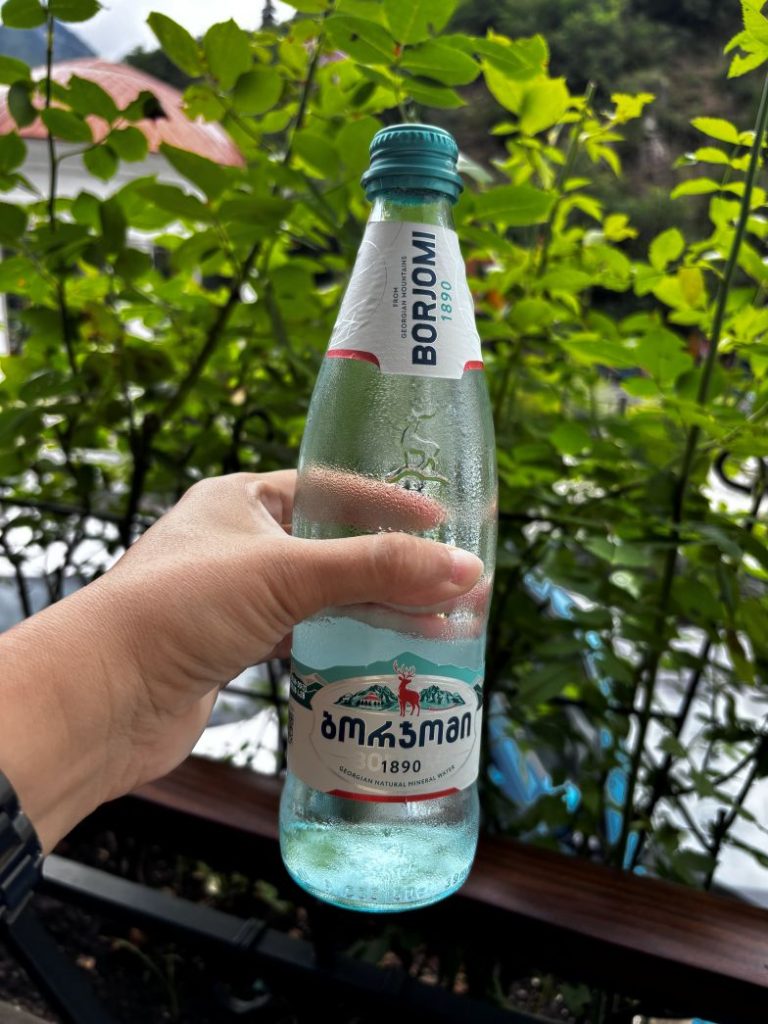
You can hardly visit Georgia without encountering Borjomi, the country’s famous naturally carbonated mineral water from the Borjomi valley.
While a bottle isn’t the most practical souvenir, a small boxed or glass-bottle gift set is a fun way to take home a taste of Georgia’s spa-town heritage.
Cost: 3–4 GEL (US$1).
WHERE TO BUY GEORGIAN SOUVENIRS
Shopping in Tbilisi for Souvenirs
Dezerter Bazaar
If you want to see where Tbilisi locals actually shop, head to Dezerter Bazaar, the city’s sprawling food market near the Central Railway Station. It is a sensory overload in the best possible way, with stalls piled high with colourful spices, dried fruits, nuts, homemade honey, cheeses and churchkhela. Look out for Svaneti salt, khmeli suneli, dried marigold and adjika to take home.
Prices are considerably more local than at tourist-oriented souvenir shops, although bargaining is more appropriate for some stalls than others. Go in the morning, when the market is at its liveliest.
8000 Vintages
If you’re bringing home just one bottle from Georgia, make it a thoughtful one — and 8000 Vintages is a good place to start. Rather than simply stocking the familiar supermarket labels, the shop is known for a broad selection of Georgian wines, including bottles from smaller producers, and offers tastings that help you understand what you’re buying.
Dry Bridge Market
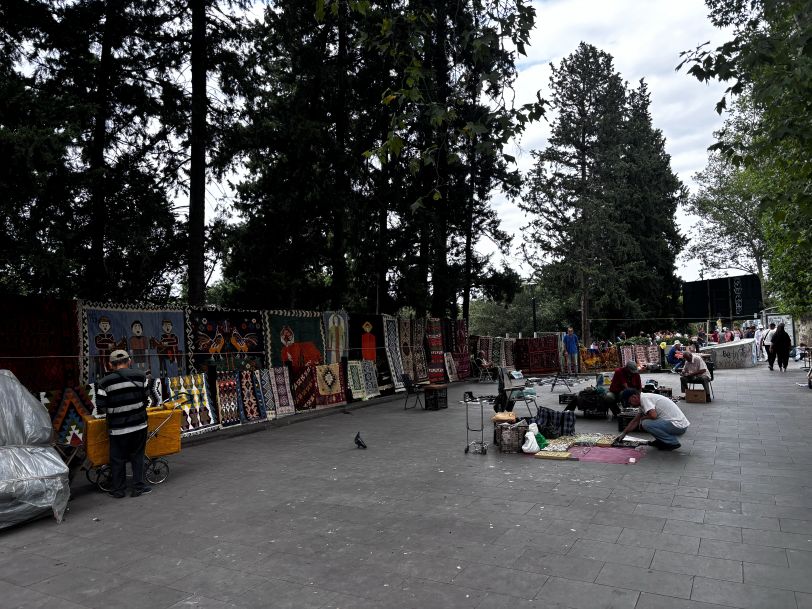
Dry Bridge is where souvenir shopping turns into a treasure hunt. Spread around the bridge and adjoining parks, this open-air flea market is a fascinating jumble of Soviet memorabilia, old photographs, cameras, coins, ceramics, silverware, jewellery, paintings, carpets, books and vinyl records. You may arrive looking for a wine horn and leave with a vintage Georgian record or an old enamel plate you never knew you needed.It is particularly good for travellers who prefer souvenirs with a little history and imperfection.
Shopping for Georgian souvenirs in Borjomi
Borjomi Central Park
The area around Borjomi Central Park is the easiest place to browse local souvenirs. Small stalls and shops sell churchkhela, tklapi, honey, jams, dried fruits, spices, woollens and handmade crafts. It is also a good place to pick up Borjomi-branded gifts and small bottles of the famous mineral water.
BEST SOUVENIRS FROM TBILISI, GEORGIA: TIPS & TRICKS TO BUY
No matter where you travel, the rules of shopping and bargaining remain the same. Here are some of the tips and tricks to remember for souvenir shopping in Georgia.
Buy Local
Make sure that the product you like and buy is locally made. Don’t buy something that you would get in your country for the same or cheaper price!
The bargain game
The shopkeepers know tourists are going to bargain so the prices are anyway increased by a huge margin. So slash the prices by 20-30% and agree to pay 60-70% of the price. Negotiate hard by simply walking away. If the price is possible for them, they will call you back and give you a counteroffer.
If you buy in bulk, they will give you a better discount. This works better in flea markets or street markets.
Beware of custom restrictions
Certain products may be restricted due to potential plant diseases and animal health concerns. It is best not to carry them.
Timing is Key
Know the timings of night markets! I was told the night markets are open till 1 am in Myeongdong but 50% of shops were shut by 11:30 pm. Allow yourself plenty of time to explore the shops and make purchases.
SUSTAINABLE TIPS FOR PURCHASING GEORGIAN SOUVENIRS
- Avoid buying leather bags and artefacts. Try to buy textile-based local products.
- Carry a bag while shopping and avoid plastic bags.
- Encourage shopkeepers to pack fragile items in a newspaper instead of bubble wrap.
- Be polite to the shop owners. In case you don’t buy anything from there, smile at them and say ‘madloba’ (thank you) before leaving.
Read More posts about Souvenirs from around the world
- Souvenirs from South Korea
- Souvenirs from Taiwan
- Souvenirs from Prague
- Souvenirs from Kenya
- Souvenirs from Kutch, Gujarat
- Souvenirs from Jaipur, Rajasthan, India
- Food souvenirs from Tokyo, Japan
- Souvenirs from Vietnam
- Souvenirs from Uzbekistan
I hope this shopping guide on Best Souvenirs from Georgia is helpful to you. If you found this blog helpful, leave a comment to let me know what you purchased.
Disclaimer – This post contains affiliate links. It means it adds no extra cost to you if you book through the link but I get a referral bonus which helps me earn a little to keep this website up and running.
Pin this post!